
![Security in doorway [city]](https://security-guard-training.co.uk/wp-content/uploads/2024/04/4_Security-in-doorway.webp)
Table of Contents
- Demand For SIA-Licensed Security Guards In London: The Short Answer
- What ‘Demand’ Means (And How To Measure It Reliably)
- Why London Has Strong Demand For SIA Security
- Where Demand Is Highest: Sectors Hiring In London (Retail-Focused)
- Which SIA Licence Is Most In-Demand In London?
- What Employers Look For (Beyond The SIA Badge)
- Pay And Shifts In London: What To Expect (Indicative)
- How To Improve Employability Quickly (And Match London Demand)
- Next Steps: Picking The Right Course For Your Target Role
- FAQs About SIA Jobs And Demand In London
- Fun Fact: London Security Hiring Peaks Twice A Year
- Conclusion
What is the demand for SIA-licensed security guards in London?
Demand for SIA-licensed security guards in London remains strong, especially in retail loss prevention, the night-time economy, corporate sites, construction, and major events. The most versatile route is often the Door Supervisor licence. Adding CCTV and first aid can also boost employability. Demand changes seasonally, but vacancies stay steady across key boroughs and sectors.
Most People Start Here: If you want the widest access to London security vacancies (retail, venues, events, and many front-of-house roles), start with a Door Supervisor course in London. Then add first aid or CCTV as your next step.
London is one of the UK’s biggest markets for private security. It combines high-footfall retail, licensed venues, business districts, construction projects, and year-round events. This guide explains how to measure “demand” reliably, which sectors are hiring, which SIA licence route fits best, and how to turn demand into paid shifts.
How We Assessed Demand (Simple Method):
- Job Advert Signals: We reviewed common London job titles, shift patterns, and repeated requirements (licence type, first aid, CCTV, and customer service).
- Supply Indicators: We used the SIA’s official guidance and licensing framework as a benchmark for what employers can legally require.
- Seasonality: We considered typical hiring spikes in summer events and late-year retail trading.
Sources: Security Industry Authority guidance (accessed 2026) and UK labour market context from the Office for National Statistics (accessed 2026).
Demand For SIA-Licensed Security Guards In London: The Short Answer
Yes, London has consistent demand for SIA-licensed security guards across retail, corporate, construction, logistics, events, and the night-time economy. In practical terms, you will often see vacancies for:
- Retail Security Officer / Loss Prevention: Front-of-house deterrence, bag checks (where policy allows), incident reporting, and store support.
- Door Supervisor: Venue entry management, queue control, searching (where authorised), and conflict management.
- Corporate Security Officer / Concierge: Reception cover, access control, patrols, and visitor management.
- CCTV Controller: Monitoring, incident logging, and evidence handling in shopping centres and estates.
- Construction Site Security: Gatehouse duties, patrols, delivery checks, and perimeter inspections.
If you want one licence that matches the widest set of London adverts, the Door Supervisor licence is often the most flexible. For control room work, add CCTV training. For public-facing roles, first aid can improve your chances of being shortlisted.
What ‘Demand’ Means (And How To Measure It Reliably)
Demand is not just a headline about crime or a viral post. For jobseekers, demand means employers keep advertising similar roles, and contracts are staffed across many boroughs and site types.
Job Adverts: Role Titles, Shift Patterns, And Volume Signals
To check live demand, search job boards using the titles employers commonly use in London:
- Retail Security Officer, Store Detective, Loss Prevention Officer: Common in supermarkets, high streets, and shopping centres.
- Door Supervisor, Event Safety Steward (SIA Where Required), Venue Security: Common in the West End and other night-time economy hubs.
- Corporate Security Officer, Concierge Security, Front of House Security: Common in the City, Canary Wharf, and large residential estates.
- CCTV Controller, Control Room Operator: Common in shopping centre control rooms and multi-site estates.
Useful volume signals include repeated recruiter activity, “immediate start” wording, and roles offering regular rota patterns (such as 4-on 4-off) instead of one-off shifts.
SIA Licensing Data As A Supply-And-Demand Indicator
Employers can only assign you to licensable roles if you hold the correct SIA badge. That is why adverts often include a “licence required” filter. Use the official regulator to confirm licence categories, eligibility, and training requirements: Security Industry Authority (SIA).
When an employer asks for a specific licence (Door Supervisor vs Security Guarding vs CCTV), it is usually because the duties are regulated differently, not because of a preference.
Seasonality: When London Security Hiring Typically Spikes
London security hiring often rises at predictable times:
- Spring and Summer: Festivals, outdoor events, stadium schedules, and tourism-led footfall.
- Late Q4 Through January: Black Friday, Christmas trading, and January sales, which increase footfall and shrink pressure.
- Term-Time Peaks: Student areas often see spikes around freshers’ weeks and key nightlife periods.
Why London Has Strong Demand For SIA Security
London’s demand comes from its mix of public-facing spaces and high-value assets. No single factor explains every vacancy. However, these are the most common operational drivers.
Retail Footfall And Loss Prevention Pressures
Retailers deal with ongoing losses from theft and disruption. This often leads to more security cover at entrances, self-checkout areas, and high-theft product ranges. For wider context on UK workforce conditions that can affect hiring, see the Office for National Statistics (ONS).
Night-Time Economy: Licensed Venues And Crowd Management
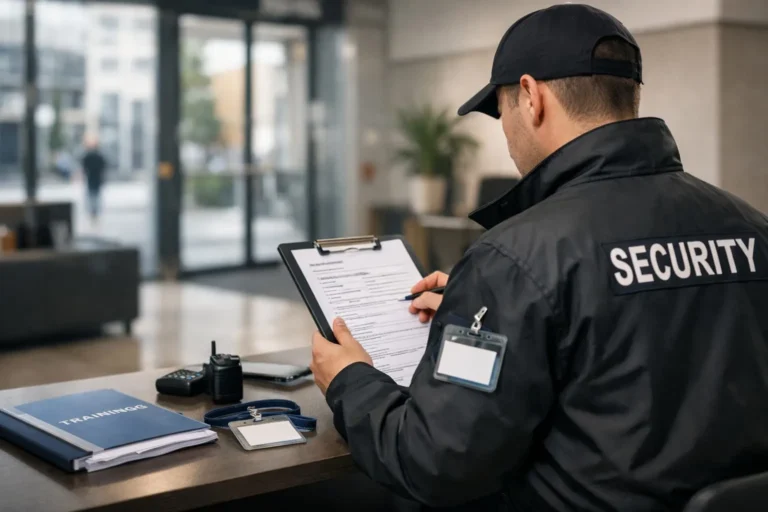
London has dense clusters of licensed venues, especially in central areas. Door supervisors manage entry, reduce overcrowding, and deal with conflict safely. Calm communication under pressure matters more than physicality.
Corporate, Concierge, And Estate Guarding In The City And Canary Wharf
Corporate and estate roles are process-led. Duties often include access control, visitor logs, delivery handling, patrol routes, and incident escalation. Employers also expect strong punctuality and clear report writing.
Construction, Logistics, And Vacant Property Protection
Construction and logistics sites rely on gatehouse checks, vehicle movements, and overnight protection. These roles suit people who prefer routine and structure. They often involve longer shifts and less customer-facing interaction than retail.
Events And Venues: Short-Term Deployments Vs Ongoing Contracts
Events create bursts of short-term demand. A practical approach for new badge-holders is to use event and retail peak periods to build experience. You can then move into a steady rota on a permanent site.
Where Demand Is Highest: Sectors Hiring In London (Retail-Focused)
The table below maps common London job titles to the SIA licence usually requested, plus add-ons that can improve your chances. Always confirm requirements in the advert and with the employer.
London Security Roles And Licence Match (Quick Reference):
| Sector | Common London Role Titles | Typical SIA Licence | Recommended Add-Ons |
|---|---|---|---|
| Retail (High Street, Supermarkets, Shopping Centres) | Retail Security Officer, Loss Prevention Officer, Store Detective | Door Supervisor (Often Requested For Public-Facing Conflict Management) | Emergency First Aid, CCTV Awareness, Strong Report Writing |
| Night-Time Economy | Door Supervisor, Venue Security | Door Supervisor | First Aid, Conflict De-Escalation, Radio Comms |
| Corporate And Estates | Corporate Security Officer, Concierge Security, Front Of House Security | Security Guarding Or Door Supervisor (Role-Dependent) | First Aid, Customer Service, Access Control Systems |
| Construction And Logistics | Site Security Officer, Gatehouse, Mobile Patrol | Security Guarding (Often), Door Supervisor (Sometimes) | First Aid, Site Induction Readiness, Clear Incident Notes |
| Control Rooms | CCTV Controller, Control Room Operator | CCTV (Public Space Surveillance) | Evidence Handling, Incident Logging, GDPR Awareness |
Retail Security: Shopping Centres, Supermarkets, High Street Stores
Retail is one of the most reliable sources of SIA security jobs in London. Footfall stays high, and stores need a visible deterrent and a customer-friendly presence. Expect an emphasis on:
- Customer Service: Supporting staff while staying approachable with genuine customers.
- De-Escalation: Reducing conflict at entrances, self-checkouts, and busy aisles.
- Evidence-Quality Notes: Recording times, locations, descriptions, and actions taken.
If you are targeting retail, searches like “best SIA course for retail security London” often point to Door Supervisor training. Employers value the conflict management content for public-facing roles.
Door Supervision: Bars, Clubs, Late-Night Venues
Door supervisor roles in London often involve late finishes and weekend-heavy rotas. Employers look for reliability, calm communication, and a professional approach to searches and refusals, where venue policy and the law allow.
Corporate Security: Reception, Access Control, Patrols, Control Rooms
Corporate roles suit people who prefer structured duties and consistent standards. Being confident with procedures, visitor systems, and clear handovers can matter as much as presence.
Construction And Logistics: Gatehouse, Patrols, Deliveries
These roles often involve perimeter checks, contractor sign-in, and vehicle entry control. Night shifts are common. Travel planning matters because sites may start early or finish late.
CCTV Controller Roles: Monitoring, Incident Logging, Evidence Handling
CCTV controller jobs in London often appear with shopping centre and estate management employers. The CCTV (Public Space Surveillance) licence supports roles where monitoring and evidence handling are central, not an add-on.
Which SIA Licence Is Most In-Demand In London?
Many London employers filter applicants by licence type first. Choosing the right badge can speed up your job search. Use the regulator to confirm which licence fits the duties you want to perform: SIA official regulator guidance.
Training Routes That Match London Demand (Quick Comparison):
| Route | Best For In London | Why Employers Like It | Explore |
|---|---|---|---|
| Door Supervisor Licence | Retail, Venues, Events, Front-Of-House Sites | Includes conflict management and suits many public-facing roles | Compare Door Supervisor options |
| CCTV (Public Space Surveillance) | Shopping Centres, Estates, Corporate Control Rooms | Supports monitoring, incident logging, and evidence handling | See CCTV SIA course London |
| Emergency First Aid At Work | Retail, Corporate, Events | Improves deployability and builds trust on public-facing contracts | See the latest dates |
| Refresher Training | Existing Badge-Holders Returning To Work | Helps you stay eligible and reduces screening issues | Explore Door Supervisor refresher course London |
| Close Protection | Specialist, Executive, And High-Net-Worth Work | Niche pathway with higher expectations; experience matters | Read about Close Protection training |
Door Supervisor Licence (Often The Most Versatile For London)
The Door Supervisor licence is often the best “one badge” option for London. It appears across retail security officer roles, door supervisor jobs, event deployments, and other public-facing sites where conflict management matters.
If you want to turn London demand into real opportunities, start with Door Supervisor Training through Lead Element Training Wing LTD.
Security Guarding Licence (Manned Guarding And Static Sites)
The Security Guarding licence suits static roles in offices, industrial sites, and some construction work. If you want fewer nightlife-style duties, it can be a good fit. Still, many London employers request a Door Supervisor for broader coverage, so always check adverts.
CCTV (Public Space Surveillance) For Retail And Corporate Control Rooms
If you are aiming for shopping centre control rooms or estate monitoring, CCTV training can lead directly to CCTV controller roles. It also pairs well with Door Supervisor or guarding experience if you want to progress.
Close Protection: Niche Demand And Who It Suits
Close Protection can be relevant in London, but it is selective. It suits disciplined candidates who communicate well and understand planning, risk awareness, and discretion. Many people start in retail, corporate, or events, then move into Close Protection later.
What Employers Look For (Beyond The SIA Badge)
Your licence is step one. Shortlisting often depends on how deployable you look for public-facing sites, and how well you document incidents.
Customer Service And De-Escalation In Retail Environments
- Approachability: Being visible without becoming confrontational.
- Verbal Skills: Giving clear, calm directions and reducing conflict.
- Teamwork: Working smoothly with store staff and managers.
Incident Reporting, Evidence Preservation, And Professionalism
- Accurate Notes: Recording times, descriptions, actions, and who you informed.
- Professional Boundaries: Following site policy and staying within legal limits.
- Reliability: Arriving on time and completing proper handovers.
Tech Readiness: Body-Worn Video, Access Control, Patrol Apps
Many London sites use body-worn video, visitor management systems, and patrol apps. Being confident with basic tech and logging correctly can help you stand out.
Pay And Shifts In London: What To Expect (Indicative)
Pay varies by sector, location, and shift type. Nights and weekends often pay more. Some roles offer steady rotas rather than ad-hoc shifts. For official context on earnings and labour market trends, use the ONS as a baseline, then compare live London adverts.
Typical Hourly Rates By Sector (Retail Vs Corporate Vs Nights)
- Retail: Demand is steady, and pay depends on risk level and responsibilities.
- Corporate And Concierge: Presentation and consistency can be rewarded.
- Nights And Venues: Rates can be higher for late finishes and pressure.
Always check whether the role is PAYE or self-employed, whether breaks are paid, and whether travel limits apply.
Days, Nights, Weekends, Overtime, And Travel Considerations
- Rota Patterns: 4-on 4-off, weekend work, or fixed nights are common.
- Travel: Late finishes can affect transport options and cost.
- Consistency: Shopping centres and corporate sites often offer steadier schedules than events.
How To Improve Employability Quickly (And Match London Demand)
Once you have chosen your core SIA route, first aid can help you stand out in retail and corporate roles. If you want a more site-stable pathway, CCTV can open up control room opportunities.
Emergency First Aid At Work Training Course, Best For Quick Employability Boost
Emergency first aid is one of the quickest ways to strengthen your CV for public-facing roles. It can also help you feel more confident on shift.
Emergency First Aid at Work Training Course is a practical add-on that can improve deployability on retail, corporate, and event contracts.
- Employer Confidence: Helps you look prepared for public-facing incidents.
- Broader Role Fit: Supports applications across retail, venues, corporate, and events.
- Stronger Shortlisting: Often preferred for busy, high-footfall sites.
- On-Shift Practicality: Helps you respond calmly while waiting for emergency services.
Who It’s Best For: New starters who want to improve job prospects quickly in public-facing security.
See upcoming options for an Emergency First Aid at Work course in London for security guards.
First Aid At Work Training, Best For Progression And Higher-Responsibility Sites
If you want deeper training, First Aid at Work is a strong option for higher-responsibility sites. It can also support progression into senior roles.
First Aid at Work Training is a more in-depth route that can suit team leads and sites with stricter compliance.
- Progression Support: Helps when aiming for senior or lead officer responsibilities.
- Site Compliance Fit: Useful where health and safety expectations are higher.
- Public-Facing Readiness: Valuable for high-footfall retail and corporate reception work.
- Confidence On Shift: Supports better judgement during incidents.
Who It’s Best For: Those targeting better contracts, stable sites, or leadership responsibilities.
Explore the First Aid at Work course London for security staff to broaden your options.
CCTV Training, Best For Control Room And Shopping Centre Roles
If you prefer monitoring-focused work, CCTV can be an excellent route. Many control room roles are indoors and process-led.
If your goal is CCTV controller jobs in London, CCTV Training is a strong match for shopping centres, estates, and corporate monitoring.
- Control Room Eligibility: Supports roles where monitoring is the main duty.
- Evidence-Led Work: Builds confidence in incident logging and escalation.
- Retail Relevance: Strong fit for shopping centre and retail CCTV roles.
- Career Progression: Complements guarding experience for supervisory routes.
Who It’s Best For: Candidates who want monitoring-focused work or progression into control room operations.
See course details and dates for a CCTV SIA course in London.
Refresher Door Supervisor Security Training, Best For Staying Eligible
If you already hold an SIA licence and are returning to work, refresher training can help you avoid being screened out.
Refresher Door Supervisor Security Training helps you stay aligned with current expectations.
- Eligibility Support: Helps you meet current London job requirements.
- Confidence Refresh: Revisits key operational knowledge and safety standards.
- Better Shortlisting: Reduces rejections linked to outdated compliance.
Who It’s Best For: Existing badge-holders who want to keep working across London sectors.
Explore the Door Supervisor refresher course London and keep your options open.
Next Steps: Picking The Right Course For Your Target Role
If you are ready to move from research to action, these three pathways match typical London demand.
- New To Security: Start with Door Supervisor Training, then add Emergency First Aid at Work.
- Want Control Room Work: Add CCTV Training for shopping centres, estates, and corporate monitoring roles.
- Already Licensed: Stay current with Refresher Training, then tailor your CV to one target sector.
You can explore all training options on Lead Element Training Wing LTD training courses. You can also check London locations and availability, for example: Westminster, Hackney, Southwark, and Lambeth.
If you want help choosing the best route for your target sector, contact Lead Element Training Wing LTD here: Get in touch.
FAQs About SIA Jobs And Demand In London
Is A Door Supervisor Licence Better Than Security Guarding In London?
Often, yes. It is widely requested for public-facing roles in retail, venues, and events. However, Security Guarding can still suit static sites. Choose the licence that matches the duties in your target adverts.
How Long Does It Take To Become SIA-Licensed?
Training can be completed in a few days, depending on the course. Your overall timeline also includes the SIA application and checks. Use the SIA for the latest steps and requirements.
Do I Need First Aid To Work Security In London Retail?
It is not always mandatory. However, it is often preferred for high-footfall, public-facing sites. Emergency First Aid at Work can improve shortlisting and boost confidence on shift.
Which London Areas Have The Most Security Work?
Demand is often strongest around high-footfall retail and nightlife areas, business districts, major shopping centres, transport hubs, and large residential estates. Search by borough plus role title, then compare commute time for early starts and late finishes.
Fun Fact: London Security Hiring Peaks Twice A Year
Security hiring in London often peaks twice: During summer event season, and during late Q4 retail trading (Black Friday through January sales). For new badge-holders, these periods can be a practical route to early shifts and fast experience, especially in retail and venue entry roles.
Conclusion
Demand for SIA-licensed security guards in London remains strong. Retail loss prevention, venues, corporate sites, construction, and events all create steady vacancy signals. If you want the most flexibility, the Door Supervisor licence is often the best place to start. Then add CCTV for control rooms and first aid for public-facing contracts. To begin, explore Lead Element Training Wing LTD and choose the course route that matches the roles you see most often in your target London areas.

![Are there night shift security jobs in london that require an sia licence in [city]](https://security-guard-training.co.uk/wp-content/uploads/2026/07/Are-there-night-shift-security-jobs-in-London-that-require-an-SIA-licence-768x512.webp)
![Training for security guard [city]](https://security-guard-training.co.uk/wp-content/uploads/2024/03/Door-supervisor-training-city-768x512.jpg)
