![What does a concierge security role in London involve and how do you qualify in [city]?](https://security-guard-training.co.uk/wp-content/uploads/2026/08/male-security-guard-doing-his-job-shift-1.webp)
What does a concierge security role in London involve and how do you qualify?
Direct Answer Summary: A concierge security role in London combines front-of-house customer service with site security. Typical duties include access control, visitor sign-in, patrols, CCTV monitoring, incident reporting, and emergency response. To qualify, you usually need the correct SIA licence for the site (often Door Supervisor or Security Guarding), plus right-to-work checks and, in many cases, first aid training.
Concierge security is one of London’s most in-demand front-of-house security roles. It sits where safety, service, and professionalism meet. Whether you are applying for residential concierge security, corporate reception security, or mixed-use building roles, employers want someone who can manage visitors confidently, keep accurate logs, and stay calm during incidents. Strong customer service matters just as much as security awareness.
This guide explains what the job involves day to day, how concierge security differs from other roles, and how to qualify through the right SIA route. It also covers realistic timelines and employer vetting. To compare course options, browse the full range on Lead Element Training Wing LTD training courses.
Quick Answer: What You May Need For Concierge Security In London
- SIA Licence: Door Supervisor or Security Guarding, depending on the site and duties.
- First Aid: Commonly requested for reception and residential concierge posts.
- Optional Extras: CCTV licence or training if you monitor cameras as part of your role.
If your role involves regular interaction with the public, many London employers prefer the Door Supervisor route. You can explore Door Supervisor Training and add a quick first aid certificate via Emergency First Aid at Work Training Course.
What Is Concierge Security In London?
Concierge security in London is a front-of-house role. You protect people and property while delivering a professional, reception-style service. On many sites, you are the first person residents, staff, guests, and contractors meet. That means you manage both risk and experience.
Where Concierge Security Officers Work (Residential, Corporate, Retail And Mixed-Use)
- Residential Developments: Managing visitor access, deliveries, car park control, resident queries, and reassurance patrols.
- Corporate Offices: Reception cover, pass management, contractor sign-in, and supporting building management processes.
- Retail and Commercial Buildings: Access control, incident response, and liaising with store teams or facilities staff.
- Mixed-Use Sites: Combining residential and commercial needs, often with higher footfall and more complex visitor management.
Concierge Security Vs Security Officer Vs Door Supervisor: Key Differences
Job titles are not regulated. Your SIA licence requirement depends on what you do and where you do it. As a simple rule, the more public-facing the role is, the more likely employers are to prefer a Door Supervisor licence.
- Concierge Security: Front-of-house service plus security, often in residential or corporate settings.
- Security Officer (Guarding): Site protection, patrols, and access control, usually with fewer reception duties.
- Door Supervisor: Public-facing security in licensed venues, or where conflict risk is higher.
What Does A Concierge Security Role Involve Day To Day?
Daily duties vary by site type, client standards, and whether you work days or nights. A useful way to think about the role is to balance five areas: reception service, access control, patrols, monitoring, and reporting.
Front-Of-House Duties: Greeting, Reception Cover, Visitor Management And Deliveries
- Greeting And Customer Service: Welcoming visitors, supporting residents or staff, and keeping a calm, professional tone.
- Visitor Management Process: Signing visitors in, checking appointments, issuing passes, and challenging unauthorised access attempts.
- Deliveries and Contractors: Logging parcels, managing loading bays, checking contractor ID, and following permit-to-work rules.
- Switchboard And Reception Support: Taking calls, using building systems, and handling routine queries without breaching privacy.
Day shift vs night shift:
- Day Shifts: Higher footfall, more deliveries and contractors, and more customer service demands.
- Night Shifts: More patrols, more lone working, and greater focus on unusual activity and noise complaints.
Security Duties: Access Control, Patrols, Key Holding And Incident Reporting
- Access Control Procedures: Checking IDs, managing barriers, confirming resident instructions, and preventing tailgating.
- Security Patrols and Checks: Internal and external patrols, door checks, fire exit checks, and recording findings.
- Key Holding Responsibilities: Following key control policies, signing keys in and out, and reducing access risk.
- Incident Reporting: Writing clear reports with times, locations, names, actions taken, and escalation steps.
High-quality reporting matters in London concierge roles. It protects residents, supports investigations, and shows professionalism to clients and facilities teams. Keep entries factual, timely, and consistent with site procedures.
CCTV And Control Room Tasks (Where Applicable)
Some concierge security officers monitor CCTV as part of their shift. Others cover for a control room team. If your role includes operating CCTV systems, you may need a CCTV licence, depending on your duties and the site requirements.
- CCTV Monitoring Duties: Watching entrances, car parks, lifts, and sensitive areas.
- Evidence Handling: Recording incidents properly, preserving footage, and following rules for exports and access.
- GDPR-Aware Logging: Keeping records relevant, secure, and proportionate to the incident.
To stand out for control-room-linked concierge roles, consider CCTV Training, especially if employers mention monitoring, evidence capture, or control room cover.
Emergency Response: Fire Alarms, Evacuations, Medical Incidents And Conflict De-Escalation
- Fire Alarm Evacuation Procedures: Following site instructions, supporting evacuation, and coordinating with facilities or fire wardens.
- Medical Incidents: Providing first aid within your training, calling emergency services, and recording actions taken.
- Conflict Management: Using de-escalation, keeping a safe distance, and calling for support early.
- Emergency Services Liaison: Guiding the police, ambulance, or fire brigade to the right location quickly.
Many London sites ask for first aid because concierge staff are often first on scene. For workplace guidance, see HSE First Aid at Work guidance.
Which SIA Licence Do You Need For Concierge Security Work?
This is the biggest point of confusion: “Concierge security” is a job title, not a licence type. The correct SIA licence depends on your activities and the environment. The SIA is the UK regulator for private security licensing, see Security Industry Authority (SIA) on GOV.UK.
When Security Guarding Is Enough (Typical Residential Or Corporate Sites)
- Typical Scenario: Access control, patrols, and reception support in private buildings.
- Good Fit When: You are not working on licensed-venue doors and the conflict risk is lower.
- Employer Reality: Some employers still prefer Door Supervisor for flexibility across assignments.
When Door Supervisor Is Required (And Why Many London Employers Prefer It)
- Typical Scenario: Regular public interaction, higher footfall, higher conflict risk, or work at or alongside licensed premises.
- Why Preferred: Door Supervisor training usually covers conflict management in more depth.
- Career Benefit: More versatile for moving between concierge, retail, events, and public-facing roles.
If your concierge role involves managing members of the public, many employers ask for a Door Supervisor licence. Here is the training route: Door Supervisor Training.
When CCTV Licensing May Apply
- Typical Scenario: You actively operate cameras to identify incidents and support security outcomes.
- Site Variation: Some sites use dedicated control room operators, while others combine reception and CCTV.
- Best Next Step: Confirm your exact duties with the employer, then train accordingly.
Quick Decision Table: Licence Needed By Site Type And Duties
| Site Type And Duties | Most Common SIA Licence | CCTV Licence Likely? | Why Employers Choose It |
|---|---|---|---|
| Residential concierge, access control, patrols | Security Guarding or Door Supervisor | Sometimes | Door Supervisor adds flexibility and stronger conflict skills. |
| Corporate reception security, contractor management | Security Guarding or Door Supervisor | If monitoring cameras | Client-facing standards, reporting, and access control. |
| Retail or public-facing mixed-use front desk | Door Supervisor | Possible | Higher public interaction and higher conflict likelihood. |
| Control room cover, active CCTV operation | CCTV Licence (plus Guarding or Door Supervisor as needed) | Yes | Evidence handling, monitoring, and incident support. |
Training Options (Popular For London Concierge Roles)
- Versatile Licence Route: Door Supervisor Training
- Control Room Employability: CCTV Training
How Do You Qualify? Step-By-Step Route To Becoming A Concierge Security Officer
Most candidates qualify in three phases. First, you confirm eligibility and gather paperwork. Next, you complete training and exams. Finally, you apply for your licence and complete employer screening.
Eligibility Basics: Age, ID, Right To Work And Communication Skills
- Age: You must meet the SIA minimum age requirements for licensing.
- ID and Address History: You need valid identity documents and a clear address history for checks.
- Right To Work: Employers will verify your right to work in the UK.
- Communication Skills: You must communicate clearly in person, over radio or phone, and in writing.
Training And Exams: What To Expect On An SIA Course
SIA training covers legal knowledge, safety, searching (where applicable), conflict management, and workplace scenarios. London concierge employers often value Door Supervisor training because it supports calm, confident public interaction.
To compare options and dates, start with Door Supervisor Training through Lead Element Training Wing LTD.
Applying For Your SIA Licence: Fees, Timescales And Checks
You apply for your licence through the official process and must pass identity and criminality checks. For current guidance, use Apply for an SIA licence (GOV.UK).
Realistic timeline (typical, but varies):
- Training: Often completed over several days, depending on the course format.
- Licence Processing: Varies based on checks, demand, and application accuracy.
- Onboarding: Site induction and employer vetting after the badge is granted.
Vetting And Screening (DBS, Referencing And BS 7858-Style Checks)
Beyond SIA licensing, London employers often apply security screening similar to BS 7858 expectations. Be ready to evidence your identity, employment history, and references. Many employers also require a DBS check. For an overview, see DBS checks on GOV.UK.
Documents checklist to prepare:
- Identity Documents: Passport or other accepted ID.
- Proof of Address: Recent utility bill or bank statement, where required.
- Address History: Full history for the required period, with postcodes.
- Employment History: Accurate dates and contact details.
- References: Supervisors or HR contacts who can confirm employment.
- Right To Work Evidence: Share code or documents, if applicable.
If you are unsure which route fits your target site, Lead Element Training Wing LTD can advise. Use contact Lead Element Training Wing LTD to discuss your goal role and the most suitable course plan.
Skills London Employers Look For In Concierge Security
London concierge security is judged as much on how you behave as on what you do. Employers want someone who keeps standards high, even under pressure.
Customer Service And Presentation (Hotel-Style Front-Of-House Standards)
- Professional Appearance: Clean uniform, good grooming, and a calm presence.
- Discretion: Avoid sharing resident, guest, or client details unless it is necessary.
- Service Mindset: Solving problems politely while enforcing rules firmly.
Communication, Report Writing, and Radio Or Phone Etiquette
- Clear Verbal Updates: Concise briefings to colleagues, facilities teams, or managers.
- Radio Procedure: Using proper call signs and avoiding personal data on open channels.
- Security Log Entries: Writing factual, time-stamped notes that stand up to review.
Situational Awareness, Safeguarding And GDPR-Aware Logging
- Situational Awareness: Noticing behaviour changes, unusual loitering, or access attempts.
- Safeguarding: Responding appropriately to vulnerable people and escalating concerns.
- GDPR-Aware Logging: Recording what is necessary, keeping records secure, and following retention rules.
Add-On Qualifications That Boost Employability
To stand out for London concierge posts, these short add-on courses are often requested. They can also support progression into control rooms or premium assignments.
First Aid Training (Why It Is Commonly Requested On Concierge Posts)
In a front-of-house role, you may be first on scene for a medical incident. Employers often prefer candidates who can respond confidently until emergency services arrive.
Emergency First Aid At Work Training Course, Best For Fast, Practical Cover

The Emergency First Aid at Work Training Course is a practical certificate that supports the emergency response side of concierge security work.
- Quick To Add To Your CV: A practical certificate often requested for reception and concierge roles.
- Improves Emergency Readiness: Supports CPR, the recovery position, and immediate response skills.
- Supports Safer Shift Coverage: Useful when you are front-of-house or lone working.
- Boosts Employer Confidence: Particularly for residential and mixed-use sites.
Who it’s best for: Candidates applying for concierge security officer roles where medical incidents are plausible and first response is expected.
Explore Emergency First Aid at Work here: View course details.
First Aid At Work Training, Best For Premium Sites And Added Responsibility
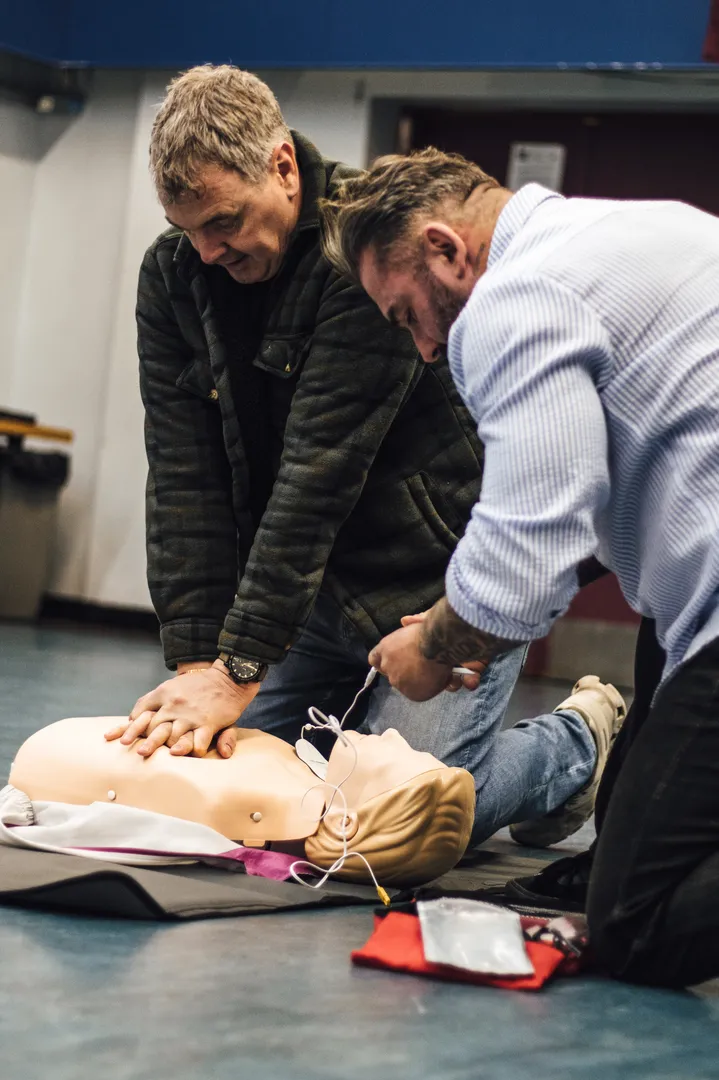
First Aid at Work Training is a step up if you are aiming for premium residential concierge work, busy mixed-use sites, or leadership progression.
- Broader Workplace Coverage: A stronger option for busy buildings and higher-responsibility posts.
- Improves Incident Confidence: Helps you stay calm and capable under pressure.
- Supports Leadership Paths: Useful for team leader or supervisor progression.
- Aligns With Workplace Expectations: Complements employer first aid arrangements.
Who it’s best for: Candidates targeting high-end residential, corporate HQ, or mixed-use developments with larger occupancies.
See the latest course availability here: First Aid at Work Training.
CCTV Training And Evidence-Quality Incident Documentation
If a concierge role includes camera monitoring, employers may want proven CCTV competence. Training can also improve how you document incidents and handle footage requests.
CCTV Training, Best For Control Room And Camera Monitoring Duties

CCTV Training helps you build confidence in monitoring, documentation, and evidence handling. This is valuable for many London concierge security roles.
- Supports CCTV Monitoring Duties: Ideal if your concierge role includes camera observation.
- Improves Evidence Handling: Helps with documentation, footage handling, and incident quality.
- Boosts Employability: Useful for buildings with control rooms or shared monitoring.
- Strengthens Reporting: Helps create clear, reviewable incident records.
Who it’s best for: Applicants for concierge security roles in London that mention CCTV, control room cover, or evidence capture.
Explore CCTV Training here: View course details.
Refresher Training (When You Need It And Why It Helps)
If you already hold an SIA badge, refresher training can be essential. It helps you maintain eligibility and avoid gaps that may cost you shifts or job offers.
Refresher Door Supervisor Security Training, Best For Licence Renewal And Employability

Refresher Door Supervisor Security Training supports professionals who need to renew and stay employable for London concierge security and reception posts.
- Protects Your Employability: Helps you stay current for London front-of-house roles.
- Reduces Work Gaps: Avoids lapses that can delay job starts.
- Updates Key Knowledge: Reinforces professional standards and current expectations.
- Useful For Career Stability: Supports ongoing access to shifts and assignments.
Who it’s best for: Working security professionals renewing and staying eligible for concierge or reception security posts.
See dates and requirements here: Refresher Door Supervisor Security Training.
Close Protection (Career Progression For High-End Residential And Corporate Sites)
Close protection is not required for concierge roles. However, it can be a progression route if you want to move into premium assignments over time.
Close Protection Training, Best For Progressing Into Premium London Assignments

Close Protection Training is a recognised progression path for higher-end residential and executive environments.
- Clear Progression Route: A step beyond concierge into higher-end security work.
- Improves Planning and Awareness: Useful for executive or high-net-worth environments.
- Supports Career Ambition: Helps you work towards premium roles over time.
- Relevant For Certain Sites: Particularly high-end residential and corporate clients.
Who it’s best for: Experienced concierge security staff who want to progress into high-end residential or executive environments.
Explore the programme here: Close Protection Training.
Refresher Close Protection Training, Best For Returning Professionals

Refresher Close Protection Training supports continuing professional development. It is particularly useful if you are returning to high-end work.
- Keeps Skills Current: Helps you maintain professional standards for premium work.
- Supports Re-Entry: Useful if you are returning after time away.
- Builds Confidence: Reinforces key skills and readiness.
Who it’s best for: Licensed professionals refreshing knowledge to stay competitive for high-end assignments.
Read more here: Refresher Close Protection Training.
Mini Comparison Table: Which Add-On Course Fits Which Concierge Role?
| Your Target Role Scenario | Recommended Course | Why It Helps |
|---|---|---|
| Reception and residential front desk | Emergency First Aid at Work | Shows you can respond to medical incidents quickly. |
| Busy mixed-use or premium development | First Aid at Work | Broader capability that supports added responsibility and progression. |
| Control room cover or camera monitoring | CCTV Training | Improves monitoring competence and evidence-quality incident handling. |
Pay, Hours And Career Progression In London
Pay varies by site prestige, responsibilities (such as CCTV, key holding, and first aid), and whether you work days, nights, or weekends. Many roles also offer progression if you keep standards high and maintain strong incident logs.
Typical Shift Patterns (Days Vs Nights, 4-On-4-Off, Weekends)
- Days: Reception-heavy shifts with higher visitor and contractor volume.
- Nights: More patrols, more lone working, and more focus on prevention and reassurance.
- 4-On-4-Off: Common for 24/7 sites and provides a predictable rotation.
- Weekends: Often quieter, but with different risks such as unauthorised access attempts.
Progression Routes: Team Leader, Control Room, Supervisor, Close Protection
- Team Leader or Senior Concierge: Leading handovers, supporting new starters, and managing standards.
- Control Room Operator: Moving into monitoring, dispatch, and incident coordination.
- Site Supervisor: Client liaison, staffing, quality audits, and compliance.
- Close Protection Path: A progression route for high-end residential or executive environments.
If you are planning your next step, explore Close Protection Training. You can also browse more advice in the Lead Element Training Wing LTD blog.
FAQ: Concierge Security In London (Licences, Checks And Timelines)
Do You Need Both Door Supervisor And CCTV Licences?
Not always. You may only need a Door Supervisor or Security Guarding licence for general concierge work. If your job includes active CCTV operation as part of your security duties, CCTV licensing may apply. Confirm the exact duties with the employer and align your training to match.
Do You Need First Aid To Work Concierge Security?
It depends on the site, but first aid is commonly requested. Concierge security staff are often first on scene. If you want a quick boost, consider Emergency First Aid at Work Training Course. For premium sites, First Aid at Work Training is a stronger option.
How Long Does It Take To Become SIA Licensed?
Training can be completed over a short period, but the full timeline depends on course availability, application accuracy, and the time needed for checks. Use GOV.UK SIA licence application guidance for the latest process details.
Recommended Courses For Concierge Security In London
If you want a simple plan, these courses map well to concierge security requirements in London. You can compare availability across the full catalogue on Lead Element Training Wing LTD training courses.
- Door Supervisor Training: Best all-round entry route for public-facing concierge roles.
- Emergency First Aid at Work Training Course: Fast add-on for reception and residential posts.
- First Aid at Work Training: Strong option for premium sites and progression.
- CCTV Training: Best for control room duties and evidence handling.
- Refresher Door Supervisor Security Training: Helps maintain eligibility and avoid work gaps.
- Close Protection Training: Progression route for high-end assignments.
- Refresher Close Protection Training: CPD for returning professionals.
Fun Fact: “Security With Hospitality” Is A Real Standard
Concierge security is often described as “security with hospitality”. On many London residential and corporate sites, service standards can influence shift allocations and progression, alongside incident logs and compliance.
Conclusion
A concierge security role in London blends customer service with core security tasks such as access control, patrols, CCTV monitoring (where applicable), and emergency response. To qualify, choose the correct SIA licence for your target site, prepare your paperwork for screening, and strengthen your CV with high-value add-ons such as first aid and CCTV.
If you want help choosing the right training path, browse Lead Element Training Wing LTD courses or contact Lead Element Training Wing LTD to match the best option to your intended concierge role.

![Are there night shift security jobs in london that require an sia licence in [city]](https://security-guard-training.co.uk/wp-content/uploads/2026/07/Are-there-night-shift-security-jobs-in-London-that-require-an-SIA-licence-768x512.webp)
![What is the difference between sia refresher training and initial training in the uk [city]](https://security-guard-training.co.uk/wp-content/uploads/2026/05/What-is-the-difference-between-SIA-refresher-training-and-initial-training-in-the-UK-768x512.webp)