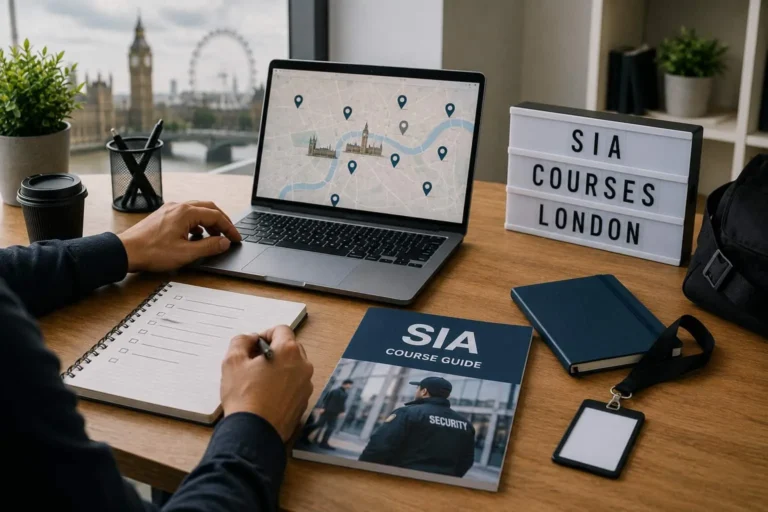
How Do You Become a Door Supervisor in the UK?
To become a door supervisor in the UK, you must complete an SIA-approved Door Supervisor training course (including Emergency First Aid at Work), then apply to the Security Industry Authority for a Door Supervisor licence. You will need a valid ID, evidence of your right to work, and you must pass criminality checks. Once licensed, you can legally work at licensed venues and events.
Many people get stuck because they mix up training (the qualification) with licensing (the SIA application). This guide separates them, so you can follow the correct order. It also includes a practical document checklist to help you avoid delays.
For official rules, current fees, and processing times, cross-check with GOV.UK, Apply for an SIA licence and the Security Industry Authority (SIA).
Quick Checklist Before You Start
- Eligibility: Be 18+, have the right to work in the UK, and have suitable English skills for training and assessments.
- Training First: Book and pass an SIA-approved Door Supervisor course, plus Emergency First Aid at Work.
- Licence Second: Apply online to the SIA and complete identity and criminality checks.
- Work Legally: Start door supervisor work once your SIA licence is granted.
Door Supervisor Training, Best For Getting Licensed Fast

If you want to work legally on doors in the UK, start by booking the right course. Door Supervisor Training from Lead Element Training Wing LTD takes you from beginner to assessment-ready. You can then move on to your SIA licence application with confidence.
- Clear pathway to licensing: Covers the core knowledge you need before you apply for the SIA Door Supervisor licence.
- Exam-focused learning: Helps you learn what you will be assessed on, not just the theory.
- Real-world relevance: Prepares you for venue and event scenarios, including busy queues and conflict situations.
- Convenient booking: Makes it easier to plan around work, family, and travel.
Who it’s best for: New starters searching for an “SIA Door Supervisor training course near me” who want a clear, compliant route into door work.
Explore course dates and booking options here: See Door Supervisor Training.
What Is A Door Supervisor (And Do You Need An SIA Licence?)
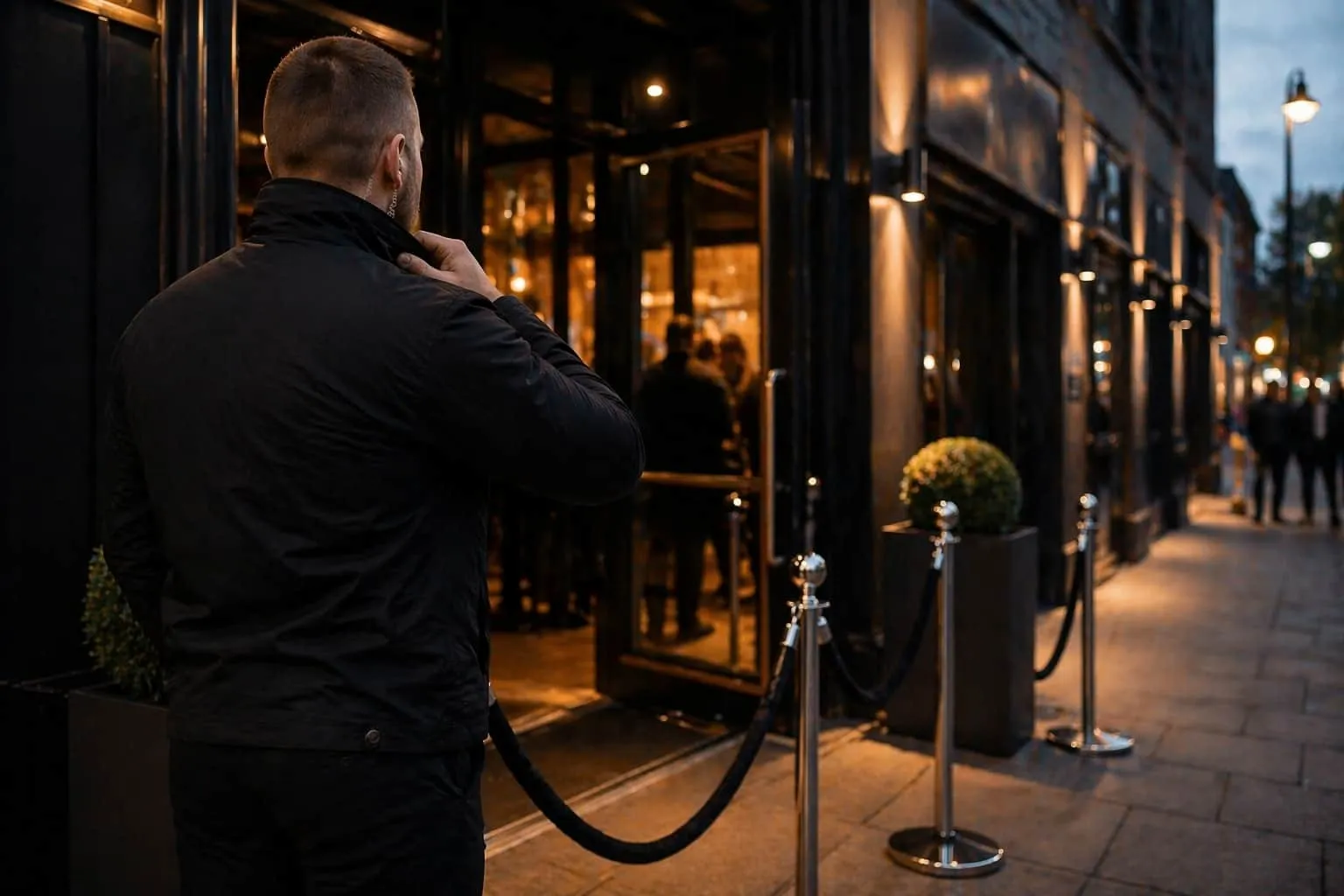
A door supervisor is a licensed security professional who helps keep people safe at venues and events. The work often involves alcohol, crowds, and controlled entry. In most cases, if you check IDs, control entry, search people, or manage crowds at licensed premises, you are doing licensable activity. That means you need an SIA licence.
You can confirm whether a licence is required on GOV.UK, Security Industry Authority (SIA) licence.
Door Supervisor Vs Security Guard: What’s The Difference?
Both roles sit within the private security industry. However, they usually cover different settings and responsibilities.
- Door supervisor: Usually works in pubs, bars, clubs, hotels, festivals, and events. The focus is on entry control, conflict management, and public safety.
- Security guard: Often works in retail, offices, warehouses, and construction sites. The focus is on patrols, access control, and site security.
Many people choose the Door Supervisor route because it can open up more frontline options. It is also useful for roles that include searching and venue security.
Where Door Supervisors Typically Work (Venues, Events, Festivals)
Door supervisor work can look very different from one job to the next. It depends on the venue, the client, and the shift pattern.
- Night-time economy venues: Pubs, bars, and clubs.
- Hospitality and leisure: Hotels, student events, and live music venues.
- Large events: Concerts, stadium events, festivals, and conferences.
- Private functions: Weddings and corporate events that hire security staff.
Requirements To Become A Door Supervisor In The UK
Before you spend money on training, check that you meet the basic requirements. You should also make sure you can complete the licence application without delays.
Age, Right To Work, And English Requirements
- Age: You must be 18 or over to apply for an SIA licence.
- Right to work: You must have the legal right to work in the UK.
- English skills: You need spoken and written English strong enough for the course, the assessments, and safety-critical communication.
Criminality Checks: What SIA Looks At (High-Level Overview)
The SIA runs criminality checks as part of the licence decision. There is no single answer that fits every offence. Decisions depend on the offence type, the context, and how long ago it happened.
- Honesty matters: Declare information accurately, because mismatches can delay an application.
- Context matters: Some offences carry more weight in a security setting.
- Time matters: How long ago an offence happened can affect the decision.
For the most reliable guidance, read the latest SIA application information on GOV.UK. If you are unsure what to declare, take time to gather accurate details first.
ID And Documents You’ll Need For The Licence Application
Missing documents are a common reason applications slow down. Prepare these before you apply:
- Identity documents: Valid ID that meets SIA requirements, such as a passport or other approved documents.
- Proof of address: Documents that support your current and recent address details.
- Five-year address history: A full record of where you have lived, including postcodes and dates.
- National Insurance number: Needed for identity checks.
- Right to work evidence: Documents that show you can legally work in the UK.
- Email address and payment method: Needed for the online application and licence fee.
If you want a full walkthrough, read how to get an SIA licence in the UK.
Step-By-Step: How To Become A Door Supervisor
Follow these steps in order, from booking training to starting work.
Step 1: Book An SIA Door Supervisor Training Course
Start by choosing an SIA-approved Door Supervisor course with the right support for learning and assessments. If you are comparing location, timetable, and price, browse Lead Element Training Wing LTD training courses.
Useful Next Step
Compare Door Supervisor course dates and book online. If you want help choosing the right option, message the team via contact us.
Step 2: Complete Emergency First Aid At Work (EFAW)
Emergency First Aid at Work is required for many learners on the Door Supervisor route. If you do not already have a valid first aid qualification that the SIA accepts, you will need to complete it before or alongside the course.
- Why it matters: Door supervisors may deal with injuries, intoxication, crowd incidents, and medical emergencies.
- What to expect: Practical scenarios and basic life support skills.
Learn more at Emergency First Aid at Work or, for longer workplace roles, First Aid at Work. For wider context, see HSE first aid at work guidance.
Step 3: Pass The Training Exams And Assessments
Most courses include several units, each with its own assessment. To improve your chances of passing the first time, focus on practical revision.
- Revise the key topics: Learn legal responsibilities, safety procedures, and communication techniques.
- Practise exam-style questions: Get used to the wording and the scenario format.
- Turn up prepared: Bring any required ID for training days and arrive early.
For revision support, use the How to prepare for the SIA training exam article.
Step 4: Apply Online For Your SIA Door Supervisor Licence
After you pass the training, apply online to the SIA and pay the licence fee. This is separate from training. It is also where identity and criminality checks take place.
- Create your online account: Follow the official steps on GOV.UK.
- Complete your details carefully: Your address history and personal details must match your documents.
- Provide what’s requested: Missing or unclear information often causes delays.
- Pay the fee: Check the latest SIA fee before you apply, as it can change.
If you are planning your budget, see the SIA licence cost in the UK for a clear breakdown of training fees versus licence fees.
Step 5: Wait For A Decision And Start Applying For Work
After you submit your application, the SIA will process checks and issue a decision. While you wait, you can prepare for interviews and start job searching.
- Prepare your CV: Highlight customer service, conflict management, safety awareness, and reliability.
- Start looking for roles: Shortlist venues, event firms, and security companies.
- Get job-ready: Think through common scenarios, such as refusals, intoxication, queues, and complaints.
Important: In most cases, you cannot do licensable door supervisor work until the SIA grants your licence. Always confirm expectations with the employer and follow SIA rules.
What You Learn On The SIA Door Supervisor Course (Modules And Skills)
Door Supervisor training prepares you for real work and the assessments. Providers may structure courses differently, but the outcomes usually focus on safety, legality, and professionalism.
Conflict Management And Communication
- De-escalation: Use calm communication to reduce tension before it becomes a safety issue.
- Customer service: Manage queues, entry decisions, and complaints professionally.
- Professional boundaries: Stay in control under pressure while following venue policies and the law.
Strong door supervisors prevent problems early. They do not wait for situations to escalate.
Safety, Searching, And Incident Response
- Searching principles: Learn safe, respectful search processes and when searches are appropriate.
- Incident reporting: Record key details clearly for management, police, or insurers.
- Emergency response: Know what to do during evacuations and medical incidents.
These skills link directly to daily responsibilities. They also apply in related work, including event security and some retail security roles.
Terror Threat Awareness And Public Protection
- Vigilance: Recognise suspicious behaviour and report concerns correctly.
- Crowd safety: Help maintain safe flow and prevent dangerous build-ups.
- Teamwork: Work with venue staff and emergency services when needed.
How Much Does It Cost To Become A Door Supervisor?
Costs usually fall into two parts: training and the SIA licence application. Your total will vary by provider, location, and whether first aid is included.
Training Course Fees Vs The SIA Licence Fee
- Training: You pay the Door Supervisor course fee to the training provider. This covers teaching and assessments.
- Licence: You pay the SIA licence fee to the SIA during your online application.
Because fees can change, check the current licence fee on GOV.UK, Apply for an SIA licence. For a simple budget view, use Lead Element Training Wing LTD’s cost guide.
Extra Costs To Plan For (ID Checks, Travel, Replacement Documents)
- Travel and parking: Factor in multiple training days.
- Food and time off: Budget for lunches and any time away from work.
- Replacement documents: Replacing lost ID or missing proof of address can cost money and add delays.
- Retakes: If you fail an assessment, you may need to pay resit fees, depending on the provider's policy.
How Long Does It Take To Qualify And Get Licensed?
A realistic timeline includes training, certification, and SIA processing time. Delays usually happen when documents are missing or when details do not match.
Typical Training Duration
Many Door Supervisor courses run over several days, often around a working week. If first aid is included, it may add time. Your timetable depends on how the provider schedules the course.
Typical SIA Application Timeline (What Can Slow It Down)
SIA processing times vary. Missing address details and unclear ID information are common causes of delays.
- Prepare your documents first: Having everything ready reduces back-and-forth.
- Be consistent: Make sure names and addresses match across your documents.
- Apply promptly: Apply as soon as you are eligible after training.
Door Supervisor Licence Renewal And Top-Up Training (What To Know)
Your SIA Door Supervisor licence does not last forever. If it expires, you may lose shifts and need extra steps to return to licensable work.
When You Need a Refresher And Top-Up Training
When you renew, you may need refresher or top-up training based on current SIA rules. This keeps knowledge current and supports safe practice.
Refresher Door Supervisor Security Training (Top-Up), Best For Licence Renewal

If you already hold a Door Supervisor licence and you are renewing, Refresher Door Supervisor Security Training (Top-up) from Lead Element Training Wing LTD is a practical way to stay compliant. It can also help reduce the risk of delays when you renew.
- Renewal readiness: Helps you meet current requirements before you apply.
- Confidence refresh: Rebuilds knowledge in safety, searching, and incident response.
- Work continuity: Helps you plan ahead, so you can reduce disruption to shifts.
- Clear next steps: Gives you a structured route back to renewal.
Who it’s best for: Existing door supervisors whose badge is due to expire and who want to complete the required refresher or top-up training before renewing.
Check course details here: View the Door Supervisor top-up course.
For more guidance on timing and preparation, read the refresher Door Supervisor training guidance.
Getting Your First Door Supervisor Job
Once you are licensed, early jobs often come down to reliability and professionalism. Strong communication matters just as much as confidence.
Where To Apply (Venues, Security Firms, Event Companies)
- Local venues: Ask bars, clubs, and live music venues who supplies their security team.
- Security companies: Many recruit regularly for weekend shifts and events.
- Event companies: Festivals and seasonal events often scale staffing quickly.
- Networking: Referrals from licensed colleagues can help you get shifts sooner.
CV Tips And Interview Scenarios
- Show customer service: Door work is public-facing, so people skills are key.
- Prove reliability: Highlight punctuality, shift work experience, and calm decision-making.
- Prepare scenario answers: Explain how you handle refusals, intoxication, aggression, and emergencies.
If you want help choosing the right training route for the roles in your area, speak to Lead Element Training Wing LTD via the contact page.
Career Progression After Door Supervisor Training
After you build experience, you can broaden your options by adding specialist licences and skills. Two common routes are CCTV operator training and close protection.
CCTV Operator (CCTV) Route
CCTV roles often suit people who prefer observation, reporting, and control room work. The environment can also feel more predictable than frontline venue shifts.
CCTV Training (SIA CCTV Operator Route), Best For Control Room Roles

CCTV Training from Lead Element Training Wing LTD is a strong next step if you want to move into monitoring, incident logging, and supporting on-site teams. It can also complement experience from door work.
- Broader job options: Adds a recognised route into CCTV operator roles.
- Skills that transfer: Builds attention to detail and report writing skills.
- Good complement to door work: Helps you understand incidents from both the floor and the control room.
Who it’s best for: Door supervisors who want to widen opportunities into CCTV operator and monitoring work.
Explore the CCTV operator course here: See CCTV Training options.
Close Protection Route
Close protection is a specialist area with higher responsibility. It often suits people with strong professionalism, planning skills, and experience working under pressure.
Close Protection Training, Best For Moving Into Bodyguard Work

If your long-term plan includes bodyguard work, Close Protection Training from Lead Element Training Wing LTD provides a structured route to build the knowledge expected in the role.
- Professional development: Builds on your frontline security experience.
- Higher-responsibility focus: Suits those ready for advanced protective duties.
- Career progression: Opens doors to specialist roles beyond venues and events.
Who it’s best for: Experienced security professionals aiming to progress into close protection and protective security roles.
Learn more here: View Close Protection Training.
| Pathway | Typical Environment | Best For |
|---|---|---|
| Door Supervisor | Venues, events, festivals, hospitality | People who want frontline, public-facing security work |
| CCTV Operator | Control rooms, monitoring stations, and large sites | People who prefer observation, evidence, and reporting |
| Close Protection | Protective duties, travel, high-profile environments | Those aiming for specialist, high-responsibility work |
FAQs About Becoming A Door Supervisor
Can I Do The Course Without A Passport?
Yes, some learners can still train and apply without a passport. However, you must meet the SIA identity requirements using acceptable documents. As document combinations can change and depend on your circumstances, check the current list on GOV.UK and prepare early.
Do I Need Experience To Start?
No. Many learners start with customer service, retail, hospitality, or warehouse experience. What matters most is professionalism, communication, and staying calm under pressure.
Can I Work While Waiting For My Licence?
In most cases, you cannot do licensable door supervisor duties until the SIA grants your licence. You may be able to do non-licensable work, depending on the role. Confirm duties with the employer and follow SIA guidance.
Can I Pay In Instalments?
Payment options vary by provider. If you need flexibility, contact Lead Element Training Wing LTD to discuss booking and payment options: get in touch here.
Fun Fact: Why “Door Supervisor” Is The Official Term
The title “door supervisor” became the standard term after regulation tightened under the Private Security Industry Act 2001. “Bouncer” is still common slang, but the licensed role is defined and regulated, with training outcomes designed to improve public safety in the night-time economy.
Conclusion
To become a door supervisor in the UK, follow the correct order: check eligibility and documents, complete SIA-approved training (including Emergency First Aid at Work), then apply for your SIA Door Supervisor licence. If you want a straightforward route with supportive training options, start by browsing Door Supervisor Training or explore all options on Lead Element Training Wing LTD’s training page.
Ready To Start?
Compare courses, check entry requirements, and book when you are ready: See the latest Door Supervisor course availability. If you want personalised guidance, use the contact form.

![How much does a security guard course cost [city]](https://security-guard-training.co.uk/wp-content/uploads/2026/04/How-Much-Does-a-Security-Guard-Course-Cost-768x512.webp)