
![What is the difference between emergency first aid and first aid at work [city]](https://security-guard-training.co.uk/wp-content/uploads/2026/06/What-is-the-difference-between-emergency-first-aid-and-first-aid-at-work.webp)
What is the difference between emergency first aid and first aid at work?
Emergency First Aid at Work (EFAW) is usually a 1-day course. It covers immediate, life-threatening emergencies such as CPR, choking, severe bleeding and shock. First Aid at Work (FAW) normally lasts 3 days and covers a wider range of workplace injuries and illnesses. Your HSE-style first-aid needs assessment should determine which course you need.
If you are comparing emergency first aid vs first aid at work for UK compliance, start with your real risks. Consider shift patterns, lone working and public access. Then document your decision in your first-aid needs assessment.
Ready To Book Training?
Emergency First Aid At Work Vs First Aid At Work: The Key Difference
The key difference is depth. EFAW focuses on what to do in the first few minutes of an emergency, until help arrives. FAW includes EFAW skills, plus broader workplace first-aid knowledge and more scenario practice.
Quick Overview: Duration, Depth And Best Fit
- EFAW (Usually 1 Day): Immediate emergencies, low-risk sites, smaller teams and simpler cover needs.
- FAW (Usually 3 Days): Broader injuries and illnesses, higher-risk environments, larger workforces and more complex cover across shifts.
- Both Are Workplace Qualifications: Choose based on an HSE-aligned first-aid needs assessment, not guesswork.
What Is Emergency First Aid At Work (EFAW)?
Emergency First Aid at Work (EFAW) is an entry-level workplace first-aid qualification. Many lower-risk workplaces choose it when their assessment shows they mainly need emergency response cover.
Emergency First Aid At Work Training Course, Best For Rapid Emergency Cover

Emergency First Aid at Work training course is practical and emergency-focused. It is designed to build confidence in the critical first minutes of an incident, which matters in retail and customer-facing settings.
- Fast Qualification: A time-efficient route to workplace first-aid cover.
- High-Impact Skills: Focused on CPR, choking, severe bleeding and shock.
- Practical Confidence: Helps staff act quickly until emergency services take over.
- Workplace-Relevant Scenarios: Useful for offices, shop floors, reception areas and public-facing roles.
EFAW suits employers whose needs assessment points to basic emergency response cover. It also works well when you need a recognised starting point quickly. Explore Emergency First Aid at Work training here.
Typical Duration, Delivery And Assessment
- Duration: Typically 1 day, often around 6 hours of learning time.
- Delivery: Usually classroom-based with practical skills, sometimes with pre-course learning depending on the provider.
- Assessment: Commonly practical demonstration plus ongoing trainer assessment, rather than only a written exam.
What EFAW Usually Covers (Core Topics)
Exact content varies by awarding body, but EFAW commonly includes:
- Roles And Responsibilities: Assessing the scene, calling for help and basic infection control.
- Primary Survey: A DRABC-style approach and prioritising life threats.
- CPR And AED Awareness: What to do in suspected cardiac arrest, and how an AED fits into the response.
- Choking: Adult choking recognition and immediate first-aid steps.
- Severe Bleeding And Shock: Controlling bleeding and recognising shock.
- Unconscious Casualty: Management, including the recovery position when appropriate.
For medically reviewed first-aid steps, see the NHS first aid guidance.
Who EFAW Is Best For (UK Workplace Examples)
- Low-Risk Offices: Admin teams with limited hazards beyond slips, trips and sudden illness.
- Small Retail Premises: Smaller shops and kiosks where staffing is low and risks are usually manageable.
- Reception And Front Of House: Public access with a need for immediate response while waiting for paramedics.
- Security Support Roles: Control rooms or concierge-style security where hazards are often lower, but emergencies can still happen.
What Is First Aid At Work (FAW)?
First Aid at Work (FAW) is a more comprehensive workplace first-aid qualification. Employers often choose it when risks are higher, teams are larger, or they need stronger cover across shifts and multiple areas.
First Aid At Work Training, Best For Broader Workplace Risks
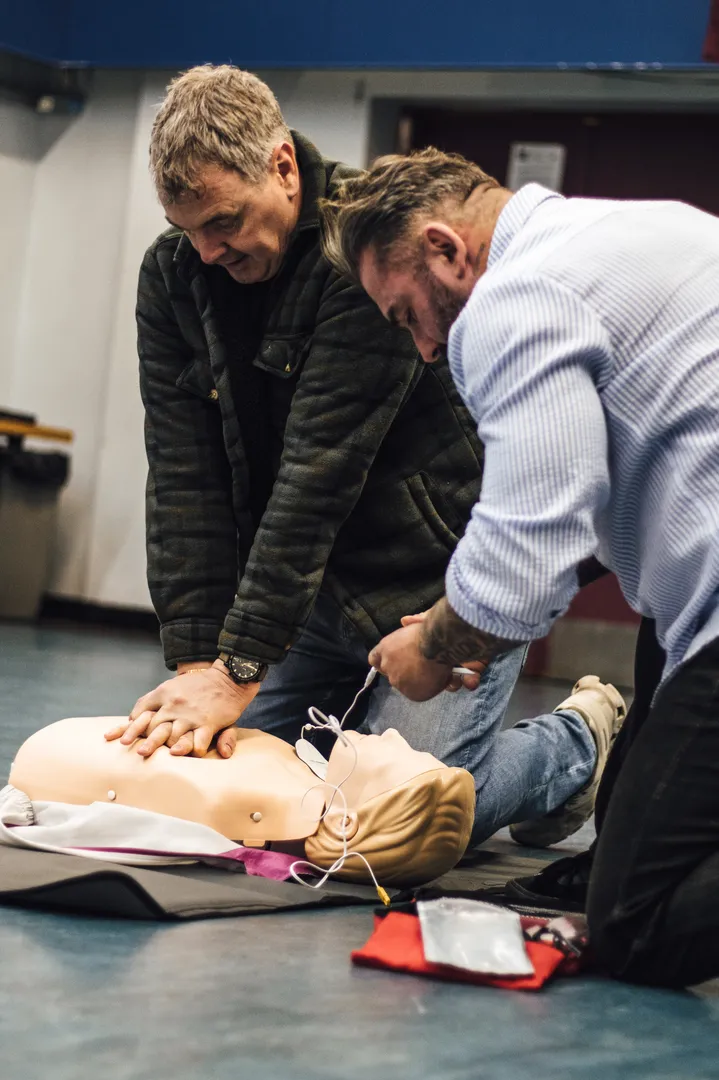
First Aid at Work training goes beyond immediate emergencies. It helps first aiders handle a wider range of conditions before an ambulance arrives, which can be important in stockrooms, warehouses and busy retail sites.
- More Comprehensive Syllabus: Helps first aiders manage injuries and illnesses beyond the EFAW core.
- More Scenario Practice: Builds better decision-making under pressure.
- Better For Higher-Risk Workplaces: Useful where accidents are more likely or more serious.
- Stronger Shift Resilience: Supports planning for multiple first aiders across teams.
FAW suits employers whose needs assessment shows higher hazards, larger headcount, or wider public interaction. See First Aid at Work course options here.
Typical Duration, Delivery And Assessment
- Duration: Typically 3 days, often delivered over consecutive days, or split depending on the provider.
- Delivery: Classroom and practical learning, with scenario-based exercises.
- Assessment: Practical assessment and trainer observation, sometimes supported by written questions depending on the qualification.
What FAW Usually Covers (Expanded Topics)
FAW includes EFAW-style emergency response, plus broader topics that often include:
- Workplace Injuries: Fractures, sprains, strains, head injuries, burns and eye injuries.
- Medical Conditions: Asthma, diabetes, seizures, stroke and awareness of heart-related incidents.
- Wounds And Bleeding Control: More depth on monitoring, aftercare and escalation.
- Record-Keeping: What to document after treatment and why it matters.
For CPR and defibrillation terminology and updates, refer to the Resuscitation Council UK.
Who FAW Is Best For (UK Workplace Examples)
- Higher-Risk Sites: Warehousing, light industrial settings, or areas with machinery and manual handling.
- Larger Teams: More people usually means more incidents, and a bigger need for reliable cover.
- Public-Facing Venues: Shopping centres, events and transport hubs where crowding can increase risk.
- Security Teams In Active Environments: Door supervision, events and mixed-use complexes.
EFAW Vs FAW: Side-By-Side Comparison Table
Length, Syllabus Breadth, Scenarios And Workplace Suitability
| Feature | EFAW (Emergency First Aid At Work) | FAW (First Aid At Work) |
|---|---|---|
| Typical Duration | 1 Day | 3 Days |
| Main Focus | Immediate life-threatening emergencies | Wider range of injuries and illnesses |
| Scenario Depth | Core emergency scenarios | More conditions and extended scenario practice |
| Best Fit | Lower-risk, smaller teams and simpler cover needs | Higher-risk, larger teams and complex or public-facing sites |
| Certificate Validity (Typical) | 3 Years | 3 Years |
Choose Your Course Quickly
- Small Office Or Low-Risk Retail: Start with EFAW training.
- Warehouse, Events, Or Higher Hazards: Choose FAW training.
- Mixed-Use Sites (Office Plus Warehouse): Consider FAW cover for higher-risk zones, plus EFAW to strengthen overall shift resilience.
Which Course Do You Need? Use A First-Aid Needs Assessment (HSE-Aligned)
UK guidance expects employers to provide "adequate and appropriate" first-aid equipment, facilities and personnel. The right training level is the one your needs assessment supports, based on hazards and working patterns. The HSE explains the approach in its First aid at work guidance.
Key Factors: Risk Level, Headcount, Shifts, Remoteness And Public Access
Use this checklist to record why you chose EFAW, FAW, or a mix:
- Risk Profile: Identify hazards such as machinery, sharp tools, manual handling, chemicals, work at height, or conflict risk.
- Workforce Size: Consider normal staffing and peak periods, including overtime.
- Shift Patterns: Ensure cover exists on nights, weekends and split shifts.
- Site Layout And Remoteness: Consider multiple floors, large footprints and ambulance response times.
- Public Access: Include customers, visitors, contractors and event attendees.
- History Of Incidents: Review accident reports and near misses to spot patterns.
- Vulnerable Workers: Consider young workers, new starters, lone workers and people with known health risks.
Low-Risk Workplaces: Typical First-Aid Provision
In lower-risk environments, employers often choose EFAW-trained first aiders and back this up with clear processes. This can suit many small retail sites and office-based teams.
- Training: EFAW may be sufficient where hazards are limited.
- Cover: Plan for breaks and absence so you do not rely on one person.
- Equipment: Keep first-aid kits accessible, with clear signage and a simple incident record process.
Higher-Risk Workplaces: Typical First-Aid Provision
Where risks are higher, organisations often step up to FAW-trained first aiders. This is common where manual handling, machinery, deliveries, or higher footfall increase the chance of injury.
- Training: Use FAW for designated first aiders, with extra modules where your hazards require it.
- Numbers And Distribution: Spread first aiders across departments and higher-risk areas.
- Response Time: Reduce time to treatment with smart kit placement and clear escalation routes.
Security And Public-Facing Settings: Lone Working, Nights And Violence-Related Injuries
Security and public-facing workplaces can change your needs assessment quickly, even when the site looks low risk on paper. Retail security, event security and transport hubs often face unpredictable incidents.
- Conflict And Crowd Risk: Injuries can include bleeding, head injuries, intoxication-related collapse and panic-related incidents.
- Lone Working: A single officer on a night shift needs a clear plan for summoning help and accessing equipment.
- Remote Positions: Car parks, perimeter posts and patrol routes may be far from the nearest kit.
- Public Duty Of Care: You may be first on scene for customers, visitors or contractors.
If your security teams work in higher-risk, public-facing environments, it can help to pair robust first-aid cover with role training that supports safer incident management. For example, explore Door Supervisor training for venue and retail security, or Close Protection training for higher-risk assignments.
Multi-Site And Shift Cover: Planning Resilience (Holiday, Sickness And Peak Times)
A common compliance gap is having "enough" first aiders on paper, but not in practice. Build resilience so cover still exists during holidays, sickness and peak trading hours.
- Shift Minimums: Ensure each shift has cover, not only the site overall.
- Absence Cover: Account for annual leave, sickness, training days and staff turnover.
- Peak-Time Spikes: Increase cover during busy trading hours, events, deliveries and seasonal surges.
- Multi-Site Consistency: Standardise kit locations, signage and reporting across locations.
Next Step Once Your Assessment Is Written
- If You Need A 1-Day Option: Book Emergency First Aid at Work.
- If You Need A Broader 3-Day Option: Book First Aid at Work.
- If You Are Still Comparing: Read EFAW guidance and FAW guidance, or browse all training courses.
Legal Duties And Terminology (UK)
What The Health And Safety (First-Aid) Regulations Require
UK employers must provide adequate and appropriate first-aid equipment, facilities and personnel, based on workplace circumstances. The legal framework is the Health and Safety (First-Aid) Regulations 1981, supported by HSE guidance on how to apply it in practice.
First Aider Vs Appointed Person: What’s The Difference?
- First Aider: Someone trained and qualified in first aid (such as EFAW or FAW) who can give first aid to a casualty.
- Appointed Person: Someone who takes charge of first-aid arrangements, such as looking after the kit and calling the emergency services. They are not automatically trained to provide first aid unless you also train them.
This matters because an appointed person does not replace trained first aiders when your needs assessment shows training is required.
Certificate Validity, Requalification And Refresher Expectations
- Validity: EFAW and FAW certificates are commonly valid for 3 years.
- Requalification: Plan renewal before expiry so you do not lose cover.
- Refresher Training: Many employers schedule annual skills refreshers to keep confidence and competence high, especially for CPR and AED use.
If you manage multiple compliance cycles, it can help to align renewals. See Refresher Door Supervisor security training and Close Protection refresher training.
Practical Implementation Beyond Training
Training is only one part of "adequate and appropriate" first-aid provision. You also need a system that works under pressure, including on nights, weekends and busy retail periods.
First-Aid Equipment: Access, Restocking And Checks
- Placement: Put kits where incidents happen, not where they are easiest to store.
- Checks: Assign responsibility for routine checks and restocking.
- Access: Ensure kits are accessible on all shifts, including nights and weekends.
- Consistency: Standardise kit contents and locations across sites to reduce confusion.
AED Considerations: Siting, Signage And Maintenance
- Siting: Place AEDs where they can be reached quickly, especially in large sites or public areas.
- Signage: Use clear signs so staff and the public can locate the AED quickly.
- Maintenance: Check pads, batteries and readiness indicators on a schedule.
- Training: Ensure staff practise how AEDs fit into CPR, so hesitation is reduced.
Records, Reporting And Post-Incident Review
- Record Book: Document what happened, what was done and whether escalation occurred.
- RIDDOR And Internal Reporting: Follow your normal accident reporting processes where applicable.
- Review: After incidents, review response time, kit access and whether your needs assessment still reflects reality.
Security teams often use structured incident logs already. If your staff monitor incidents as part of their role, CCTV training can support better observation, escalation and reporting.
FAQs
Can EFAW Be Enough For A Small Business?
Yes, if your first-aid needs assessment shows low hazards, a small headcount and straightforward cover needs. If you have public access, multiple floors, lone working, or higher-risk tasks, FAW or mixed cover may be a better fit.
Is Online-Only First Aid Accepted For Workplace First Aid?
Workplace first aid is practical. Online learning can support knowledge, but employers should ensure first aiders can demonstrate practical competence. In most workplaces, in-person practical elements remain essential.
How Many First Aiders Do We Need?
There is no single number that fits every workplace. Use your risk level, workforce size, shift patterns, layout and incident history to decide. Plan for real availability so you still have cover during breaks, holidays and sickness.
Do We Need Both EFAW And FAW Trained Staff?
Sometimes. Mixed cover often works well for multi-area sites, such as a shop floor plus a stockroom or warehouse area. FAW-trained first aiders can cover higher-risk zones, while EFAW can improve resilience across the wider team.
What’s Different For Security Teams (Door Supervision, Control Rooms, Close Protection)?
- Higher Likelihood Of Public Incidents: You may be first on scene for customers and visitors.
- Greater Conflict Risk: Factor in the potential for bleeding, head injuries and intoxication-related collapse.
- Shift And Lone Working: Nights and single-operator posts increase the importance of kit access and back-up.
- Travel And Remoteness: Close protection and mobile roles may justify stronger cover and clearer escalation routes.
For role development, see SIA Door Supervisor training and Close Protection training resources on Lead Element Training Wing LTD.
Sources
- Health and Safety Executive (HSE), First Aid at Work
- Health and Safety (First-Aid) Regulations 1981 (legislation.gov.uk)
- NHS First Aid Advice
- Resuscitation Council UK
Fun Fact: Why AED Placement Matters
In sudden cardiac arrest, every minute without CPR and defibrillation reduces the chance of survival. That is why many workplaces pair EFAW or FAW training with clearly signed AED placement to cut the time to first shock.
Conclusion
EFAW is typically the 1-day emergency response course. FAW is usually the 3-day course with broader coverage for workplace injuries and illnesses. The right choice depends on your HSE-aligned needs assessment, especially when you consider shifts, lone working, site layout and public access.
Once you have documented your needs, Lead Element Training Wing LTD can help you move from research to booking. Explore training options, book EFAW or FAW, or contact us if you would like help choosing the most suitable course for your workplace and staffing pattern.

![Control room setting [city]](https://security-guard-training.co.uk/wp-content/uploads/2024/04/8_Control-room-setting-768x432.webp)
![Security by buildings [city]](https://security-guard-training.co.uk/wp-content/uploads/2024/04/5_Security-by-buildings-768x512.webp)
![How do you find part time security work in london with an sia licence in [city]](https://security-guard-training.co.uk/wp-content/uploads/2026/07/How-do-you-find-part-time-security-work-in-London-with-an-SIA-licence-768x498.webp)
![What does a concierge security role in London involve and how do you qualify in [city]?](https://security-guard-training.co.uk/wp-content/uploads/2026/08/male-security-guard-doing-his-job-shift-1-768x512.webp)
