
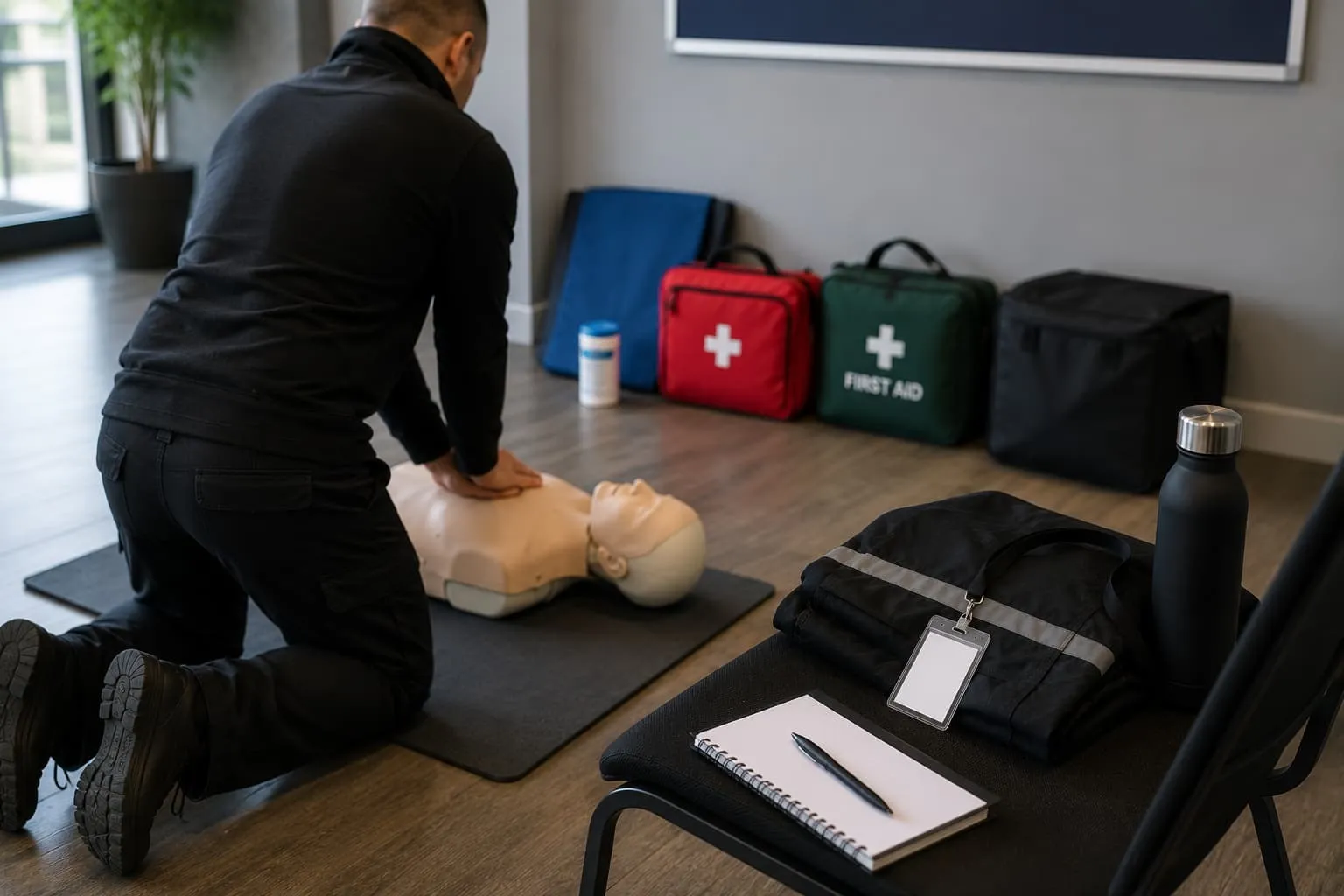
Do You Need First Aid Training for an SIA Course?
Yes, first aid is required for most core SIA licence-linked courses, most commonly Door Supervisor and Security Guard. You usually need an in-date Emergency First Aid at Work (EFAW) certificate, or an accepted equivalent, before you can complete the SIA course and/or apply for your SIA licence. Always check the course and SIA rules for updates.
If you do not already hold an in-date first aid certificate, the quickest way to become compliant is usually a one-day EFAW course. See Emergency First Aid at Work Training.
Compliance Note: First aid and SIA training rules can change. For the definitive licensing requirements, check GOV.UK, Apply for an SIA licence and the Security Industry Authority (SIA) pages before you book.
Do You Need First Aid Training For An SIA Course?
In most cases, yes. Since first aid became a prerequisite for many licence-linked qualifications, learners are often asked to show an in-date first aid certificate to:
- Start And/Or Complete Training: Many training centres must verify first aid before you can finish the licence-linked qualification.
- Apply For Your SIA Licence: Missing prerequisites can delay your licence application.
Security staff are often first on the scene in real incidents. First aid skills can help improve outcomes while emergency services are on the way. For guidance, see HSE, First aid at work and the Resuscitation Council UK.
Which SIA Courses Require A First Aid Certificate?
The clearest and most common first aid requirement applies to the main frontline pathways. Requirements can vary by licence type and qualification version, so confirm the rules before your start date.
| SIA Course Type | First Aid Required? | Typical Accepted Certificate | When You Must Have It |
|---|---|---|---|
| Door Supervisor | Usually Yes | EFAW or equivalent regulated first aid | Before you can complete the licence-linked training, often before day one |
| Security Guard | Usually Yes | EFAW or equivalent regulated first aid | Before you can complete the licence-linked training, often before day one |
| CCTV Operator | Sometimes | Provider and qualification dependent | Check before booking; requirements can differ |
| Close Protection | Often Expected | May require additional or higher-level medical training | Confirm the course prerequisites well in advance |
Door Supervisor Training
If you are booking Door Supervisor Training, first aid is commonly a prerequisite. Door Supervisors often work in busy venues where injuries, collapses, and intoxication-related incidents can happen.
- Plan Your Timeline: Book first aid first (or bundle it) to avoid being turned away on the course date.
- Bring Proof: Bring your certificate details and photo ID, as your training provider may need to verify them.
Security Guard Training
For Security Guard pathways, first aid is also commonly required. If you are unsure, assume you will need an in-date EFAW (or equivalent) unless your provider confirms otherwise.
CCTV Operator And Other SIA Pathways (What To Check)
For CCTV and other pathways, requirements can depend on the current licence-linked qualification rules. If you are considering a different route, start by comparing options on Lead Element Training Wing LTD training courses. Confirm prerequisites before you pay for a course.
What First Aid Qualification Is Accepted (EFAW Vs FAW And Equivalents)?
Most learners meet the requirement with Emergency First Aid at Work (EFAW). Some learners choose First Aid at Work (FAW) because it is more comprehensive. This can suit higher-risk sites or employer requirements.
| Option | Typical Duration | Depth | Best For |
|---|---|---|---|
| EFAW | One day | Core emergency response, CPR, incident management | Meeting a typical SIA prerequisite quickly |
| FAW | Three days | More comprehensive workplace first aid capability | Higher-risk environments and employer standards |
Emergency First Aid At Work (EFAW): What It Covers And Why It's The Usual Requirement
EFAW is the most common route because it is fast, practical, and focused on immediate response. It is often the simplest way to meet typical SIA prerequisites.
Emergency First Aid At Work Training - Fastest Way To Meet SIA Requirements

Emergency First Aid at Work Training is a practical course that helps you respond confidently to incidents at work. For many learners, it also meets typical SIA-linked prerequisites without delaying a course start date.
- Quick Completion: Completed in one day for most learners.
- Workplace-Relevant Skills: Focuses on immediate response, including CPR and casualty management.
- Ideal For SIA Timelines: Helps you avoid delays caused by missing prerequisites.
- Confidence On The Job: Builds readiness for venues, retail, and events.
Who it is best for: Learners who need an accepted first aid qualification quickly before starting Door Supervisor or Security Guard training.
To avoid delays, explore Emergency First Aid at Work Training here.
First Aid At Work (FAW): When It's Useful
FAW goes beyond the minimum. Employers often choose it when they want stronger cover on site, or when the working environment carries higher risk.
First Aid At Work Training - More In-Depth Workplace Cover
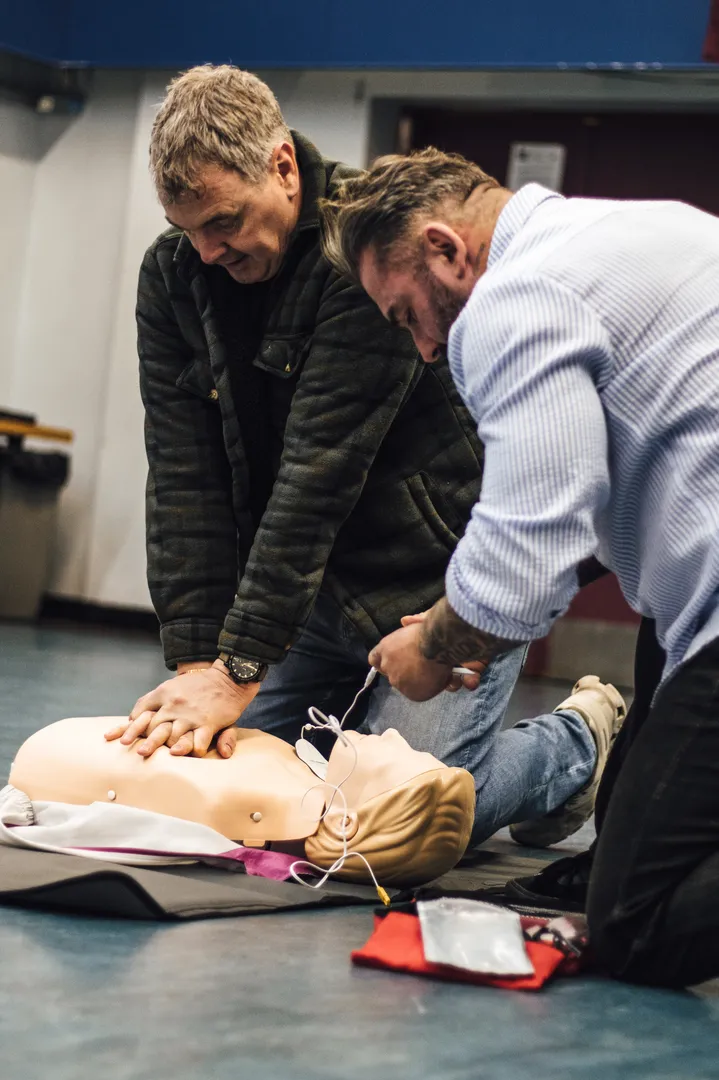
First Aid at Work Training is a more comprehensive first aid programme for workplaces that want deeper capability than the usual minimum.
- More Comprehensive Training: Greater depth than EFAW for workplace scenarios.
- Stronger Team Cover: Useful when you are the designated first aider on shift.
- Employer-Friendly: Suitable for organisations standardising first aid competence across teams.
- Better For Higher-Risk Sites: Helpful for environments with increased incident risk.
Who it is best for: Security professionals and employers who want more than the minimum first aid requirement.
If you want the more in-depth option, see the latest First Aid at Work course dates here.
Accepted Equivalents And Common Exemptions (For Example, Regulated Certificates)
Training providers typically accept regulated UK first aid qualifications that are equivalent to EFAW or FAW. They must be in date and include a practical assessment. Some regulated awards map closely to EFAW learning outcomes, which can make them acceptable.
- Regulated Qualification Check: Make sure the course is regulated (for example, an RQF regulated award), not just an attendance certificate.
- Practical Assessment Evidence: Online-only certificates are often not accepted because they do not include hands-on assessment.
- Medical Background: If you have professional medical training, ask your provider in advance what evidence they can accept.
When Do You Need The First Aid Certificate?
This is where many learners get caught out. What you need to attend and complete training can differ from what you need for the licence application.
Before Starting The SIA Course Vs Before Applying For The Licence
- Before Your SIA Training: Many centres ask for first aid proof before you start, or before they can issue your course certificate.
- Before Your SIA Licence Application: If you cannot provide the required evidence, your licence application may be delayed. Follow the official steps on GOV.UK.
If you are early in the process, these guides can help you plan the right order:
Certificate Validity: How Recent Does It Need To Be?
Most accepted first aid certificates are valid for a set period, commonly three years. To avoid issues:
- Check The Expiry Date: It must be in date on your SIA course start date. It should also be in date when you apply for your licence.
- Bring The Correct Details: Your provider may need certificate numbers, dates, and ID to confirm eligibility.
- If It Has Expired: Book first aid again before your SIA course, as expired certificates are usually not accepted.
What Happens If You Turn Up Without First Aid?
If first aid is a prerequisite and you arrive without an accepted, in-date certificate, you may not be able to complete the qualification as planned. This can mean wasted travel, time off work, and a delayed licence application.
Rebooking, Upgrades, And The Fastest Route To Get Compliant
- Rebook Your SIA Training: Move to a later date after completing first aid.
- Fast-Track EFAW: Book EFAW training first, then join the next available SIA intake.
- Upgrade To FAW If Needed: If your employer needs stronger cover, book FAW training instead.
Quick Pre-Course Checklist:
- First Aid Certificate: In date and accepted (EFAW, FAW, or approved equivalent).
- Photo ID: Valid and matches your booking details.
- Course Confirmation: Your joining instructions and start time.
- Licence Plan: Know your next step after training and apply via GOV.UK.
Best Option For Most Learners: Bundle First Aid With Your SIA Training
To avoid delays, many learners book first aid and SIA training close together (or as a bundle where available). This helps reduce admin mistakes and keeps your timeline on track.
If you want help choosing the right route, compare options on Lead Element Training Wing LTD courses, or contact Lead Element Training Wing LTD to confirm prerequisites before you book.
FAQs About First Aid And SIA Training
Do I Need First Aid For SIA Refresher Training?
Refresher requirements can differ by licence type and current rules, so check before booking. If you are renewing a Door Supervisor licence, start with Refresher Door Supervisor Security Training. Then confirm whether first aid must be in date for your course and renewal timeline.
Refresher Door Supervisor Security Training - Stay Compliant For Renewal

Refresher Door Supervisor Security Training is designed for existing licence holders who need to complete refresher training to stay compliant.
- Renewal-Focused: Built around refresher outcomes and current expectations.
- Helps Avoid Licence Lapses: Supports planning around expiry dates and training windows.
- Practical Skills Refresh: Reinforces key operational knowledge for frontline work.
Who it is best for: Door Supervisors approaching licence renewal who want a clear route back to compliance.
To plan your renewal timeline, view refresher dates and availability here.
Do I Need First Aid If I'm Renewing An SIA Licence?
Renewal requirements can change, and they can depend on the licence you hold. Check the latest guidance on the SIA and follow the steps on GOV.UK. If your first aid has expired, book it early to avoid delays.
Can I Use An Online-Only First Aid Course?
Often, no. Many providers require first aid training with a practical element and assessment. Online-only certificates may be rejected if they do not meet the regulated requirements or workplace learning outcomes. If you are unsure, confirm with your training provider before you book.
Is First Aid Included In The SIA Course Price?
Sometimes it is included, and sometimes it is separate. Always check what your booking covers. If you need to arrange it separately, EFAW is usually the quickest option. FAW is the more in-depth alternative.
CCTV Operator Training - Control Room Focused Pathway

CCTV Operator Training suits learners aiming for monitoring and control room roles. Prerequisites can differ by pathway, so confirm which requirements apply to your licence type.
- Role-Specific Skills: Focuses on CCTV operations and control room responsibilities.
- Alternative Frontline Route: May suit learners who prefer monitoring over physical guarding.
- Clear Next Steps: Helps you plan training and then your licence application.
Who it is best for: Learners interested in CCTV and control room work who want a licence-linked course pathway.
To compare options, explore CCTV Operator Training here.
Close Protection Training - Advanced Pathway For Specialist Roles

Close Protection Training is an advanced option for learners aiming for bodyguard and executive protection roles. These roles can include extra expectations around planning, risk, and emergency response. Confirm all prerequisites early.
- Advanced Role Preparation: Designed for specialist security work.
- Strong Employability Signal: First aid competence is valued in operational roles.
- Prerequisite Planning: Helps you avoid delays by checking requirements early.
Who it is best for: Learners planning a specialist security career path who want structured, advanced training.
If you are exploring specialist routes, view Close Protection Training details here.
Door Supervisor Training - Common Route Where First Aid Applies

Door Supervisor Training is one of the most common routes into frontline security work. Because first aid is often required, arrange EFAW early to keep your training and licence application on track.
- Frontline Ready: Designed for venue, event, and public-facing security roles.
- Licence-Linked Qualification: Supports your next step towards an SIA licence.
- Clear Prerequisites: Easier planning when you arrange first aid in advance.
Who it is best for: Learners who want to work as Door Supervisors in the night-time economy, events, and public venues.
To plan your training dates, compare Door Supervisor course options here.
Popular Courses At Lead Element Training Wing LTD
- Emergency First Aid at Work Training
- First Aid at Work Training
- Door Supervisor Training
- Refresher Door Supervisor Security Training
- CCTV Operator Training
Fun Fact: Why First Aid Was Added To Many SIA Courses
The first aid requirement for many SIA licence-linked courses was introduced to improve public safety. It reflects how often security staff are first on the scene when someone collapses, is injured, or needs urgent help, especially in busy night-time economy venues.
Conclusion
If you are taking a Door Supervisor or Security Guard licence-linked course, you should usually assume first aid is mandatory. EFAW (or an accepted equivalent) is the standard route for most learners. A sensible order is: get your first aid in date, complete your SIA training, then apply for your licence via GOV.UK.
To avoid delays, book first aid early, or speak to Lead Element Training Wing LTD to confirm the right option for your pathway.

![How much does a security guard course cost [city]](https://security-guard-training.co.uk/wp-content/uploads/2026/04/How-Much-Does-a-Security-Guard-Course-Cost-768x512.webp)
![What do you need to revise for sia refresher training [city]](https://security-guard-training.co.uk/wp-content/uploads/2026/05/What-do-you-need-to-revise-for-SIA-refresher-training-768x512.webp)

![How much does it cost to start a career in security [city]](https://security-guard-training.co.uk/wp-content/uploads/2026/06/How-much-does-it-cost-to-start-a-career-in-security-768x512.webp)
