![What do you need to revise for sia refresher training [city]](https://security-guard-training.co.uk/wp-content/uploads/2026/05/What-do-you-need-to-revise-for-SIA-refresher-training.webp)
What Do You Need To Revise For SIA Refresher Training?
For SIA refresher training, revise the up-to-date core knowledge for your licence type. Focus on current legislation and SIA standards, terror threat awareness, incident response and reporting, communication and conflict management, and, for Door Supervisors and Close Protection, physical intervention safety. Use a checklist, practise scenarios, and review exam-style questions before your course.
If you are renewing your SIA licence and it has been a while since your initial training, the quickest way to feel confident is to revise what is taught and assessed today. Do not rely on what you remember from years ago.
This guide breaks revision down by licence type. It also includes a scan-friendly checklist and a realistic 7-day mini plan.
Choose Your Refresher (Most Popular)
- Door Supervisor Refresher: For renewing Door Supervisor licences, including key safety topics and physical intervention (PI) revision.
- Close Protection Refresher: For renewing Close Protection licences, focusing on updated operational thinking.
Trust Note: This article is practical and revision-led. It aligns with official licensing expectations from the Security Industry Authority (SIA) and with how regulated training and assessment is overseen in England by Ofqual. It is not legal advice. Module emphasis can vary slightly by awarding organisation and training centre.
What Is SIA Refresher Training (And Why You Must Do It)?
SIA refresher training is required for certain SIA licence holders when renewing. It confirms you are up to date with current threats, standards, and safe working practices.
Put simply, it helps you meet today’s expectations for public safety and professional behaviour. These expectations may have changed since you first qualified.
Which SIA Licences Require Refresher Training For Renewal?
Refresher requirements depend on your licence type and when you originally qualified. The SIA sets the direction for licensing and renewals, so check official guidance and your renewal journey through the SIA.
- Door Supervisor: Typically requires refresher training for renewal under current rules.
- Close Protection: Typically requires refresher training for renewal under current rules.
- Other SIA Licences: Requirements vary. Check your licence type and renewal prompts.
For a plain-English explanation of who needs it, see SIA licence renewal and refresher training requirements.
Refresher Training Vs Initial Training: What’s Different?
Initial training teaches the full foundation from scratch. Refresher training assumes you already have core competence. It focuses on what has changed and what matters most for safety and standards.
- More Focus On Current Risk: Covers terror threat awareness, incident readiness, and modern expectations.
- More Focus On Safe Application: Uses scenarios, decision-making, and correct reporting.
- Door Supervisor And CP Go Deeper: Revisits PI safety for Door Supervisors and dynamic risk thinking for Close Protection.
If you want a deeper comparison, read SIA refresher vs initial training.
What You Need To Revise For SIA Refresher Training (Quick Checklist)
If you are short on time, revise the checklist below first. Then move on to licence-specific topics.
- SIA Role and Standards: Understand professional expectations, accountability, and why compliance matters.
- Key Legislation Basics: Refresh the legal framework you work within, including powers and limitations.
- Reasonable Force Principles: Know what “reasonable, necessary, and proportionate” means in practice.
- Searching Awareness: Revise consent, venue policies, and what to do if someone refuses.
- Terror Threat Awareness: Recognise suspicious behaviour and know your immediate safety actions.
- Major Incident Response: Revisit roles, priorities, and communication during emergencies.
- Communication Skills: Revise radio use, face-to-face communication, and giving clear instructions.
- Conflict Management: Practise de-escalation, emotional control, and safe disengagement decisions.
- Safeguarding Awareness: Recognise vulnerability, intoxication risks, and duty-of-care behaviours.
- Incident Recording: Know what a good notebook entry includes, including times and continuity.
- Evidence Handling Basics: Understand what you should record, preserve, and pass on.
- Professional Conduct: Reconfirm equality, respect, and lawful decision-making under pressure.
| Topic Area | Core Refresher Revision | Licence-Specific Emphasis |
|---|---|---|
| Law And Powers | Reasonable force, roles, limitations | Door Supervisor: Searching and venue policy. CP: Risk decisions in transit |
| Threat Awareness | Suspicious behaviour, immediate actions | CP: Pre-planning and contingencies |
| Conflict Management | De-escalation, communication, control | Door Supervisor: Intoxication and queues. CP: Team coordination |
| Incident Reporting | Notebook structure, statements, handover | Door Supervisor: Ejections and refusals. CP: Movement logs and comms notes |
Current Legislation, Licence Conditions And Professional Standards
Your goal is not to memorise every statute. Your goal is to apply lawful, defensible judgement in realistic scenarios.
- Powers and Limitations: Reconfirm what you can do, what you cannot do, and what needs consent or police involvement.
- Reasonable Force: Revise how you justify actions using necessity and proportionality.
- Professional Standards: Revisit expectations around behaviour, equality, and accountability.
You can also explore industry standards and skills frameworks via Skills for Security.
Terror Threat Awareness And Responding To Major Incidents
Modern refresher delivery often puts strong emphasis on recognising threats early and responding safely.
- Recognising Suspicious Behaviour: Focus on observation, reporting routes, and avoiding tunnel vision.
- Immediate Priorities: Prioritise life safety, clear communication, and site procedures.
- Post-Incident Actions: Record what you saw, preserve evidence where appropriate, and hand over properly.
Communication, Conflict Management And De-Escalation
People often struggle in scenarios because they escalate too early. Unclear language and missed vulnerability cues also cause problems.
- Verbal De-Escalation: Use a calm tone, set clear boundaries, and offer safe choices.
- Non-Verbal Skills: Revise stance, distance, and positioning to stay safe without posturing.
- Team Communication: Practise brief, structured handovers and good radio discipline.
To sharpen your exam technique, use these SIA exam preparation tips.
Incident Recording, Evidence, Statements And Reporting
Good notes are clear, chronological, and specific. They should let another person understand what happened without guessing.
A Strong Incident Note Structure:
- Time and Location: Start with the time, date, and where you were positioned.
- Who Was Involved: Describe people using neutral identifiers and factual descriptions.
- What You Observed: Record behaviour, relevant words used, and actions taken.
- What You Did And Why: Link actions to safety and policy. Keep it factual.
- Continuity: Note who you informed, when police were called, and any reference numbers.
Common Omissions To Avoid: Missing times, vague phrases (such as “became aggressive” with no detail), and forgetting who you handed over to.
Door Supervisor Refresher: The Extra Topics To Revise
If you are renewing a Door Supervisor licence, focus on conflict management in public-facing settings. You will also revise PI safety.
Physical Intervention (PI) Safety: Stance, Movement, Holds And Disengagement
PI is not about strength. It is about safe mechanics, positioning, and knowing when to disengage. Your trainer looks for control, safety, and awareness.
- Stance And Distance: Keep your balance and avoid standing too close.
- Movement And Positioning: Step and pivot safely to protect yourself and others.
- Holds And Releases: Focus on correct placement and controlled disengagement.
- Aftercare And Monitoring: Know what to do after restraint, including welfare checks and escalation.
Quick Prep Tip: Wear comfortable clothing to practise movement at home. Avoid rehearsing holds with force. Save technique correction for your trainer in a controlled setting.
Searching And Entry Policies: What You Can/Can’t Do
- Consent-Based Searching: Most searches rely on consent and venue entry conditions.
- Refusal Handling: Practise a calm script for refusal, including how you document decisions.
- Seizure and Handover: Know site policy for prohibited items and when police involvement is appropriate.
Working In Venues And Retail: Queues, Intoxication, Vulnerable People
- Queue Management: Use clear, polite communication that keeps flow moving.
- Intoxication Indicators: Focus on welfare, safeguarding, and de-escalation.
- Vulnerability Awareness: Recognise when someone may need medical help or safeguarding support.
Refresher Door Supervisor Security Training: Best For Fast Licence Renewal
If you want structured revision, a course can help you focus on what matters most for renewal. It also gives you safe, trainer-led practice for PI and scenarios.

Refresher Door Supervisor Security Training from Lead Element Training Wing LTD is built for learners returning to training. It provides a clear update on today’s requirements, plus supported practical revision in a controlled environment.
- Revision-Led Delivery: Focuses on updated topics that commonly appear in refresher learning and assessment.
- PI Safety Reinforcement: Gives structured time to revisit stance, movement, and safe disengagement.
- Scenario Confidence: Helps you practise decision-making in venue and retail-style situations.
- Clear Next Steps: Helps you understand what you must do for renewal and what is best practice at work.
Who It’s Best For: Door Supervisors renewing their licence who want guided revision, not guesswork.
Explore dates and options on Refresher Door Supervisor Security Training. You can also compare costs via how much SIA refresher training costs.
Close Protection Refresher: The Extra Topics To Revise
Close Protection refresher revision should prioritise dynamic judgement, calm communication, and planning basics. The aim is safe, professional protection work.
Threat And Risk Assessment Refresh (Dynamic Decision-Making)
- Baseline Threat Thinking: Refresh how you identify threats, vulnerabilities, and likely consequences.
- Dynamic Updates: Practise adjusting decisions when plans change, timings slip, or crowds build.
- Legal and Ethical Boundaries: Reconfirm lawful decision-making and proportionate responses.
Operational Planning Basics (Routes, Venues, Contingencies)
- Route Selection: Revise how to think about choke points, alternatives, and exits.
- Venue Awareness: Practise quick site familiarisation, including control points and safe rooms.
- Contingencies: Revisit what you do if plans fail, including comms, regrouping, and extraction.
Communication And Teamwork Under Pressure
- Clear Comms: Practise short, unambiguous messages and confirmations.
- Team Roles: Refresh how roles support each other during movement and incidents.
- Professional Demeanour: Reinforce a calm presence and professional communication with clients and venues.
Refresher Close Protection Training: Best For Renewing Your CP Licence
If you prefer a guided refresh, training can help you practise decision-making and planning with clear feedback. It can also highlight gaps before they become issues on assessment day.

Refresher Close Protection Training from Lead Element Training Wing LTD is designed to update your operational mindset, refresh risk judgement, and reinforce professional standards that matter in real deployments.
- Modern Risk Thinking: Supports dynamic decision-making rather than rigid memorisation.
- Operational Refresher: Revisits routes, venues, and contingency basics in a structured way.
- Pressure Communication: Reinforces teamwork behaviours and clear information flow.
- Renewal Clarity: Helps you understand refresher expectations so you can prepare efficiently.
Who It’s Best For: CP operatives renewing who want focused revision that maps to current expectations.
See options on Refresher Close Protection Training. You can also start with Close Protection refresher guidance.
How To Revise Efficiently: A 7-Day Mini Study Plan
This plan is for adult learners returning after a gap. Aim for 30 to 60 minutes per day. Do a short review on the final day.
Day-By-Day Revision Breakdown (30 To 60 Minutes/Day)
| Day | Focus | Outcome |
|---|---|---|
| Day 1 | Core standards and your role | You can explain expectations and professional conduct clearly |
| Day 2 | Law basics and reasonable force | You can justify actions using necessity and proportionality |
| Day 3 | Threat awareness and major incidents | You know what to spot and how to respond safely |
| Day 4 | Conflict management scenarios | You can de-escalate using a repeatable structure |
| Day 5 | Incident notes and reporting | You can write a clear, chronological account |
| Day 6 | Licence-specific topics (DS or CP) | You cover PI and searching (DS), or planning and comms (CP) |
| Day 7 | Mock questions and weak spots | You can answer under time and recognise common traps |
For exam-style practice, use SIA mock test questions. Focus on why an option is correct, not only on picking an answer.
Best Ways To Learn: Scenarios, Flashcards And “Teach-Back”
- Scenario Practice: Turn each topic into “What would I do next?” Then say your decision out loud.
- Flashcards: Use short prompts like “reasonable force” or “incident notebook”, then recall the key points.
- Teach-Back: Explain a topic to a colleague or friend. If you can explain it simply, you understand it.
Common Reasons People Struggle (And How To Avoid Them)
Mixing Up ‘Reasonable Force’, Searching Rules And Citizens’ Powers
- Common Mistake: Trying to apply police-style powers to a private security role.
- Fix: Anchor answers to consent, policy, and safety. Escalate when police are needed.
Not Practising PI Safely (Or Ignoring Trainer Cues)
- Common Mistake: Rushing techniques, holding your breath, or using force instead of mechanics.
- Fix: Slow down, listen to corrections, and prioritise posture, balance, and controlled movement.
Weak Incident Notes: Missing Times, Descriptions, Continuity
- Common Mistake: Writing “He was aggressive” without describing what happened.
- Fix: Use observable behaviours, relevant quotes only, and record who you informed and when.
What To Bring On The Day (And What To Expect)
ID Requirements, Arrival Time And Dress Code For Practical Elements
- Photo ID: Bring the ID your training provider requests. Make sure it is valid and matches your booking details.
- Arrival Time: Arrive early to avoid missing the start and any required checks.
- Clothing: Wear comfortable, practical clothing for active elements, plus suitable footwear.
- Notebook and Pen: Useful for incident-note exercises and personal reminders.
If you are unsure what applies to your course, message Lead Element Training Wing LTD via the contact page for confirmation.
Reasonable Adjustments And Learning Support
If you have a diagnosed condition, a learning difficulty, or an accessibility need, you can usually request reasonable adjustments. Raise it in advance so your provider can confirm what evidence is needed and what support is available.
FAQs: SIA Refresher Revision
Do I Need First Aid As Well As Refresher Training?
First aid is separate from refresher training. However, many employers and sites expect security staff to hold a current first aid qualification.
UK workplace first aid expectations are set out by the Health and Safety Executive (HSE). Your employer’s risk assessment may also require it.
Emergency First Aid At Work Training: Best For Quick Workplace Readiness
If you want a short, recognised certificate to support work in retail, events, and venues, Emergency First Aid at Work is a common option.

Emergency First Aid at Work Training from Lead Element Training Wing LTD is a practical option if you need a first aid certificate quickly.
- Practical Skills Focus: Builds confidence responding to common workplace incidents.
- Employability Boost: Supports roles where immediate response is valued.
- Complements Refresher Learning: Reinforces incident response, communication, and calm decision-making.
Who It’s Best For: Security professionals who want a straightforward first aid qualification alongside renewal.
See course details on Emergency First Aid At Work Training.
First Aid At Work Training: Best For Broader First Aid Responsibilities
If your workplace has higher risk, or you may take on wider responsibilities, the longer First Aid at Work course is often a better fit.
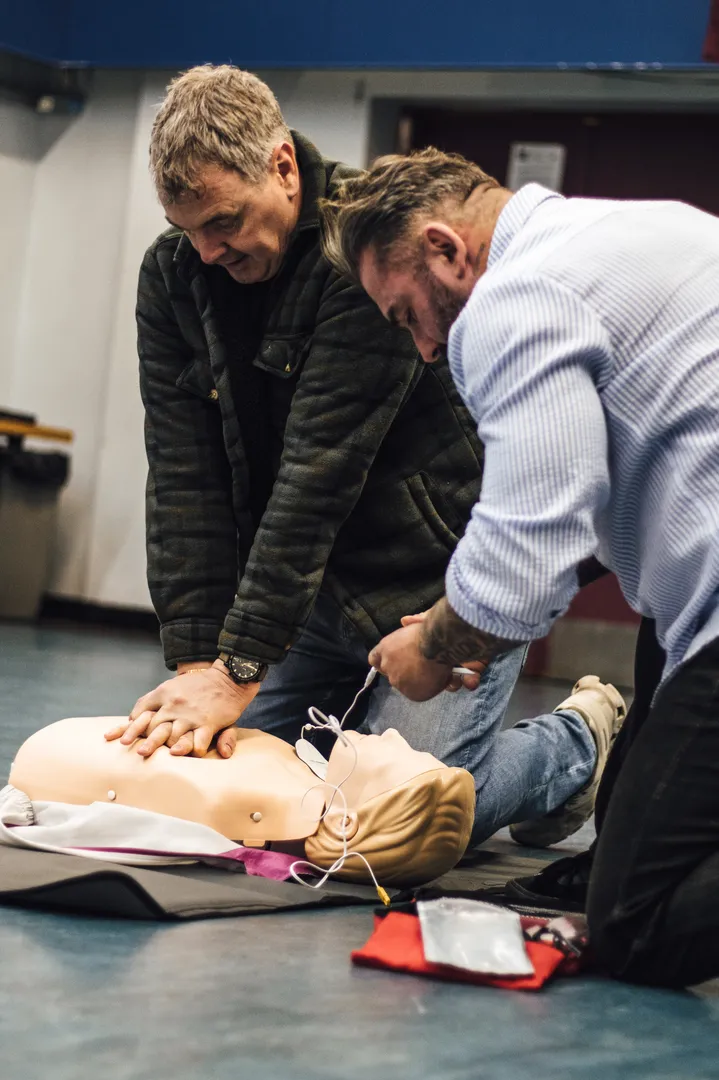
First Aid At Work Training from Lead Element Training Wing LTD suits workplaces where you may need to manage a wider range of incidents.
- Wider Coverage: Helps you respond to more situations with confidence.
- Workplace Fit: Useful where risk assessments require deeper first aid provision.
- Confidence Under Pressure: Supports calm, structured action during emergencies.
Who It’s Best For: Security staff working longer shifts or higher-footfall sites where stronger first aid cover is needed.
Explore First Aid At Work Training if your employer asks for the more comprehensive option.
How Long Should I Spend Revising?
Most learners do well with 4 to 7 hours total across a week. Add 20 to 30 minutes of mock questions. If it has been several years since you last trained, allow extra time for law basics and reporting structure.
Can I Fail Refresher Training, And What Happens Next?
Refresher training includes assessed elements. If you do not meet the required standard, your provider will explain next steps. This may include extra learning, reassessment, or resitting a component.
To avoid surprises, revise the checklist in this guide and ask questions early in the course.
Fun Fact: The Law Behind The SIA Licence
SIA licensing was introduced under the Private Security Industry Act 2001. It created one of the UK’s most recognisable “licence to work” systems. Today it helps thousands of security professionals in retail and events prove competence and stay compliant.
Book Your Refresher Training
Once you have revised the checklist above, choose the correct refresher course for your licence type. Then book a date that fits your renewal timeline.
- Door Supervisor Renewal: Compare and book Refresher Door Supervisor Security Training.
- Close Protection Renewal: Explore Refresher Close Protection Training.
If you realise you need the full course (for example, if your licence has lapsed and you are not eligible for a refresher route), review:
- Initial Door Supervisor Course: Door Supervisor Training.
- Initial Close Protection Course: Close Protection Training.
CCTV Operator Training: Best For Broadening Retail And Control Room Options
If you want more flexibility in retail security operations, logistics sites, or control rooms, CCTV training can pair well with a refresher. It builds skills that support better reporting and evidence handling.

For those looking to broaden job options, CCTV Operator Training can be a logical next step alongside your refresher.
- Operational Upskill: Adds monitoring and incident-handling capability to your profile.
- Evidence Awareness: Reinforces what to record and how footage can support investigations.
- Career Flexibility: Opens additional pathways beyond front-of-house roles.
Who It’s Best For: Security staff who want more shifts, more variety, or a move into control room work.
Compare options on CCTV Operator Training. If you are unsure which route fits your licence goals, contact Lead Element Training Wing LTD here: get in touch.
Final Reminder: Revise early, arrive prepared, and treat refresher training as a professional reset. It is a simple way to protect your licence, your confidence, and the public you work around.

![Security by buildings [city]](https://security-guard-training.co.uk/wp-content/uploads/2024/04/5_Security-by-buildings-768x512.webp)
![Security operators by escalators [city]](https://security-guard-training.co.uk/wp-content/uploads/2024/04/3_2-security-operators-by-escalators-768x512.webp)