

Who qualifies for a fully funded SIA course in London?
Direct Answer: In London, fully funded SIA training is usually available to eligible adults (often 19+) who have the right to work in the UK. Eligibility depends on the rules of a specific funding scheme. This is often through a Jobcentre Plus/DWP referral if you are unemployed, or via the Adult Education Budget (AEB) and Skills Bootcamps for low-income learners or people looking to upskill. You will usually need photo ID, proof of address, and National Insurance details.
Searches for “fully funded SIA course London” and “free SIA course London” often come down to one key question: Do you meet the scheme rules right now? Funding is genuine, but it is scheme-led. Availability can change, and the evidence you provide (ID, address, right to work, benefits status) determines whether you can enrol.
Important: Funding approval does not automatically mean you will get an SIA licence. The Security Industry Authority (SIA) makes the licensing decision separately. See official guidance at GOV.UK, Apply for an SIA licence and the SIA organisation page.
If you meet the criteria above, your next step is choosing the SIA course that suits the work you want in London. For many learners, that means retail security, events, hospitality, or CCTV monitoring roles. You can browse options on Lead Element Training Wing LTD training courses or speak to our team via contact us.
Choose Your Course (Most Popular In London)
- Door Supervisor: Great for retail, events and nightlife. See Door Supervisor Training.

- CCTV: Great for control room and monitoring roles. See CCTV Training.

Who Qualifies For A Fully Funded SIA Course In London? (Quick Checklist)
Use this as a quick self-check. The funding body and training provider will confirm final eligibility. Places are also subject to availability.
- Age: Usually 19+ for Adult Education Budget routes, although some schemes differ.
- Right To Work: You must be allowed to work in the UK.
- Residency: You typically need to live in London (or the funded area) and meet scheme residency rules.
- Documents Ready: Photo ID, proof of address, and National Insurance number details are commonly required.
- Learning Readiness: You must be able to attend all days and complete assessments in English (with support where eligible).
Minimum Eligibility: Age, UK Right To Work, ID, and Residency
- Adult learner status: Funding commonly targets adults, especially 19+, under London skills funding routes.
- Identity checks: Providers must verify your identity before they can award certification.
- Right to work checks: Schemes usually require evidence that you can legally work in the UK.
- London residency: Many funded places link to London budgets and borough priorities.
Common Priority Groups: Unemployed, Low Income, Or Returning To Work
Many “Jobcentre funded SIA course” enquiries fit one of these profiles:
- Unemployed learners: Often referred via Jobcentre Plus/DWP, where training supports a clear job goal.
- People on low income: Some Adult Education Budget (AEB) routes prioritise low wage or low household income criteria.
- Career changers: Bootcamps and employability programmes may support people moving into security roles.
- Returning to work: Some local programmes support parents, carers, or people returning after a break.
Quick Self-Check: Who Usually Won’t Qualify
- No right to work: Most funding routes cannot support you without valid right to work evidence.
- Cannot attend the full course: Funding can be withdrawn if you miss days or do not complete the course.
- Already funded recently: Some schemes restrict repeat funding for the same level or aim.
- Higher income learners: Some AEB rules can exclude higher earners.
Which Funding Routes Can Pay For An SIA Course In London?
In London, fully funded security training is most commonly accessed through one of these routes. Each route has its own paperwork and approval steps.
| Funding Route | Who It Commonly Helps | Typical Proof Needed | Key Notes |
|---|---|---|---|
| Jobcentre Plus / DWP Referral | Unemployed, or on Universal Credit with a work coach plan | Benefits status, ID, address, NI details | Referral-led. Your work coach usually confirms suitability. |
| Adult Education Budget (AEB) / GLA | Adults upskilling, often 19+, sometimes with low-income criteria | ID, address, residency, right to work, income evidence (if required) | London skills funding context via GLA Adult Education Budget. |
| Skills Bootcamps / Local Employability Programmes | People moving into in-demand roles, sometimes employed learners | ID, address, eligibility form, motivation and availability | Cohort-based. May include employability support. |
Jobcentre Plus / DWP Referral (Common Route For ‘Free SIA Courses’)
If you are unemployed or on Universal Credit with agreed work-search activity, a work coach may refer you to funded training. Funding is usually linked to a realistic job outcome.
- How it usually works: Your work coach confirms whether security work is suitable and whether funding is available.
- What you’ll usually prove: Identity, address, NI details, and benefits status.
- What can block it: Not being able to attend all training days, or not having the required documents ready.
Adult Education Budget (AEB) / GLA Funded Training (London)
AEB is part of the wider London skills system. Eligibility can depend on age, residency, prior attainment, and sometimes income rules.
For context on London’s adult skills funding, see Greater London Authority, Adult Education Budget.
Skills Bootcamps And Local Employability Programmes
Bootcamps and borough-linked programmes can support learners moving into in-demand work. Depending on the programme, you may still be eligible if you are employed. This is more likely if you want to upskill or change careers.
If you are weighing roles, the National Careers Service is a helpful, neutral reference for job profiles and expectations.
What Does ‘Fully Funded’ Cover (And What Might You Still Pay For)?
This is a common confusion point. “Fully funded” often means the training and exams are covered. It does not always cover the SIA licence application fee.
Usually Included: Training, Assessments, and Certificates
- Course delivery: Classroom learning and required units.
- Assessments: Exams and practical assessments where applicable.
- Certification: Proof that you completed the qualification, needed before you apply for the licence.
Often Not Included: SIA Licence Application Fee
You apply for the SIA licence separately, and there is a fee. Funding schemes vary. Some cover the fee, but many do not, so always check before you enrol.
Review the official application process and fees at GOV.UK: Apply for an SIA licence.
Possible Extras: First Aid, DBS/ID Checks, Resits, Travel
- First aid: Commonly required for Door Supervisor training. It may be funded or charged separately.
- DBS: You do not usually need a DBS to start training, but the SIA will carry out checks during licensing.
- Resits: Some schemes cover first attempts only. Resit fees can apply if you fail an exam.
- Travel and food: These are typically not covered, so plan your budget for getting to the venue.
Emergency First Aid At Work Training Course, Best For Meeting SIA Prerequisites
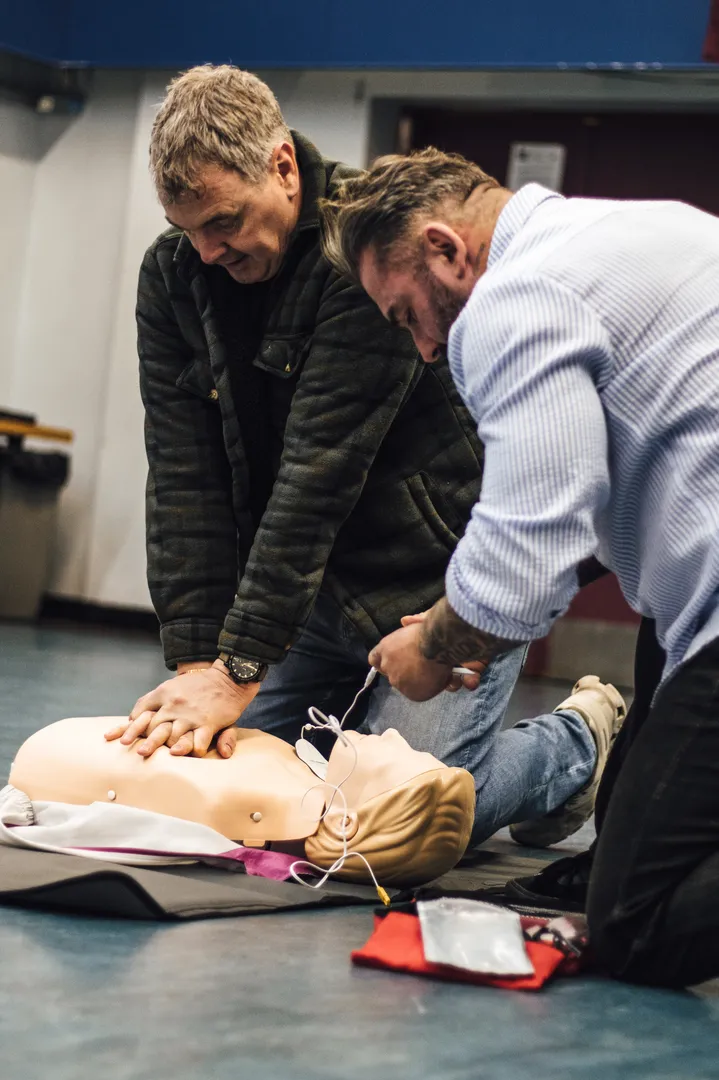
Emergency First Aid at Work Training Course is a practical option if your funding route requires first aid before you can complete SIA Door Supervisor training. It also helps if first aid is not included in your funded package.

- Fast prerequisite cover: Suitable for meeting common SIA-linked first aid requirements.
- Workplace-ready skills: Focuses on immediate response essentials.
- Flexible add-on: Useful when funding covers the SIA course but not first aid.
- Confidence boost: Helps you feel prepared for front-line roles.
Who it’s best for: Learners booking Door Supervisor training who need first aid sorted quickly.
If you want to line up your dates, see Emergency First Aid at Work options here.
First Aid At Work Training, Best For Added Responsibility And Progression
First Aid at Work Training is a more in-depth option. It suits learners planning a longer-term security career, including roles where employers prefer broader first aid competence.
- Deeper coverage: More comprehensive than entry-level emergency first aid.
- Strong employability signal: Helpful for security roles with greater site responsibility.
- Workplace confidence: Supports safer decision-making on shift.
Who it’s best for: Learners who want broader first aid skills alongside SIA training.
To compare dates, explore First Aid at Work here.
Eligibility Factors That Can Affect Approval
Even if you meet the basic checklist, a few extra factors often decide whether a funded place can be confirmed.
Benefits And Work Status (Universal Credit, JSA, Low-Hours Work)
- Universal Credit: A work coach referral may be required for DWP-funded routes.
- Low-hours work: Some programmes still accept employed learners, depending on income and programme goals.
- Work search commitments: Attendance must fit your agreed commitments, otherwise funding can be refused.
Accepted Documents: Proof Of Address, NI Number, Immigration Status
Exact requirements vary, but most funded enrolments in London ask for:
- Photo ID: A passport or UK driving licence is commonly used.
- Proof of address: Utility bill, bank statement, council letter, or a similar official document.
- National Insurance number: NI card or letter, payslip, or official correspondence showing your NI number.
- Right to work evidence: A share code or documents where applicable.
Common reasons enrolments get delayed:
- Mismatch across documents: Different name spelling or an old address.
- Out-of-date proof: An address document that is older than the scheme allows.
- Missing NI evidence: You know the number, but cannot evidence it.
- Unclear immigration status evidence: No share code when one is required.
English Level, ESOL Needs, and Reasonable Adjustments
- Functional English: You need enough English to follow safety-critical content and complete assessments.
- Support options: Some programmes offer additional learning support, depending on the funding rules.
- Reasonable adjustments: If you have a disclosed need, ask early so the provider can explore options.
Criminal Record: Training Eligibility Vs SIA Licensing Decisions
You can sometimes attend training if you have convictions, but licensing decisions are separate. The SIA uses its own criteria and checks. To avoid wasted time and cost, read the official guidance and consider speaking to the SIA if you are unsure. Start at GOV.UK: Apply for an SIA licence.
How To Apply For A Fully Funded SIA Course In London (Step-By-Step)
This process helps you move faster and avoid common enrolment delays.
Step 1: Choose The Right Funding Route
- If you are unemployed: Ask your Jobcentre Plus work coach about security training options and referral routes.
- If you are on a low income or upskilling: Ask about AEB and London skills funding options and eligibility.
- If you want a fast route into work: Ask about Skills Bootcamps or employability cohorts.
Step 2: Prepare Your Documents (Avoid Enrolment Delays)
- Bring ID and proof of address: Make sure your documents are up-to-date and easy to read.
- Bring NI evidence: A screenshot alone might not be accepted.
- Bring right-to-work evidence: Include share code details if required.
If you are unsure what you need, speak to Lead Element Training Wing LTD via our contact page. We will confirm what to bring for your funding route.
Step 3: Skills Check/Assessment And Booking
- Initial assessment: Some schemes include a short English or suitability check.
- Confirm dates: Choose a London venue and a start date you can attend in full.
- Confirm what is included: Ask specifically about first aid and the SIA licence fee.
You can also browse all Lead Element Training Wing LTD course options here to compare routes before you commit.
Step 4: Attendance Rules (How To Avoid Losing Funding)
- Attend every day: Missing days can stop you from completing the qualification.
- Be on time: Late arrival may count as non-attendance on funded programmes.
- Complete assessments: Funding often requires completion, not just participation.
Which SIA Course Should You Take For London Jobs? (Door Supervisor Vs CCTV)
Once funding is confirmed, you need to pick the right licence route. Many learners start with Door Supervisor for flexibility across retail, venues, and events. Others prefer CCTV roles for control room work.
| Course | Best For | Typical London Roles | Prerequisites (Common) |
|---|---|---|---|
| Door Supervisor | Front-of-house security work and wider job access | Retail security, events, hospitality, and venues | First aid is often required before training, plus ID and right to work checks |
| CCTV | Monitoring and control room work | Control room operator, CCTV monitoring | ID and right to work checks, first aid is not always required |
Door Supervisor: Best For Retail, Events, Hospitality, and Nightlife
Door Supervisor is often the most versatile option in London. It suits busy sectors like retail, events, hospitality, and licensed venues.
Door Supervisor Training, Best For Maximum Employability In London
Door Supervisor Training is the main route for many learners aiming for front-line work across London. It is often a strong option once your funding eligibility is confirmed.
- Wide job fit: Supports roles in retail, events, hospitality and nightlife.
- Practical learning: Built around real front-line scenarios you may face on shift.
- Clear next step: Designed to prepare you to apply for the SIA licence after certification.
- London-friendly access: Choose a venue and dates that suit your travel and schedule.
Who it’s best for: Learners targeting public-facing security roles in London.
To check upcoming options, explore Door Supervisor Training here.
CCTV: Best For Control Room And Monitoring Roles
If you prefer observation, reporting, and working from a fixed site, CCTV can be a better match. It may also suit learners who want a less customer-facing role.
CCTV Training, Best For Control Room And Monitoring Work
CCTV Training suits learners who want monitoring and surveillance-focused roles. It is also a useful option if you want to focus on reporting and procedures rather than front-of-house work.
- Role alignment: Focuses on CCTV operations and observation skills.
- Great for stable sites: Often aligns with control rooms and monitoring posts.
- Alternative pathway: Useful if Door Supervisor work is not your preference.
Who it’s best for: Learners targeting CCTV operator and monitoring roles in London.
If you want to compare routes, see CCTV Training options here.
First Aid Requirement: When You Need It And Which Course To Choose
- Door Supervisor: First aid is commonly required before you can complete training, depending on current rules and your provider.
- CCTV: First aid is not always required, but confirm before you book.
If your funded SIA package does not include first aid, you can book it separately through Emergency First Aid at Work or choose the more in-depth First Aid at Work.
London Locations And Local Options
When funding is involved, choose a venue you can reach reliably. If you miss days, you may lose your funded place.
Choosing A Nearby Venue: Travel Time, Start Dates And Borough Coverage
- Keep travel realistic: Choose a location you can reach on time, even with disruptions.
- Match the start date to your schedule: Funding usually expects full attendance.
- Check local pages: Explore options in Westminster, Hackney, Islington, and Lambeth.
FAQs About Fully Funded SIA Courses In London
Can I Qualify If I’m Employed But On A Low Income?
Sometimes, yes. It depends on the scheme. Some AEB and Bootcamp routes can accept employed learners, especially where training supports progression or a move into better work. If the scheme has income rules, you should expect to provide evidence.
Do I Need A DBS Check Before I Start?
Usually, no. Training providers typically check identity and eligibility documents, while the SIA carries out checks during the licence application. Always read the official steps at GOV.UK.
How Long Until I Can Apply For My SIA Licence After The Course?
You usually apply after you pass and receive the required certification. Processing times vary, and the SIA makes the final decision.
What Happens If I Miss A Day Or Fail An Exam?
- Miss a day: You may not be able to complete the qualification, which can affect funding and certification.
- Fail an exam: Resits may be possible, but fees and rules depend on the scheme and provider.
If you are concerned about attendance or resits, speak with Lead Element Training Wing LTD early via contact us. We will explain your options before you start.
Refresher Door Supervisor Security Training, Best For Licence Holders Renewing
Refresher Door Supervisor Security Training is for existing licence holders who need to meet refresher requirements. Funding rules for refresher training can differ from first-time funded SIA routes.

- Stays compliant: Helps you meet refresher expectations where applicable.
- Fits working learners: Designed for people already in the industry.
- London availability: Useful if you want a convenient local venue.
Who it’s best for: Door Supervisors renewing and staying job-ready in London.
To plan ahead, see Door Supervisor refresher options here.
Close Protection Training, Best For Progressing Into Specialist Roles
Close Protection Training is a progression route for people who start with SIA licences and later move into higher responsibility work. It is separate from first-time funded SIA training schemes.

- Career progression: Suitable for those aiming to build beyond entry-level roles.
- Specialist pathway: Aligns with close protection work and higher expectations.
- Clear separation: Not the same as a funded Door Supervisor starter route.
Who it’s best for: Learners planning a specialist security path after gaining experience.
If you are exploring long-term options, explore Close Protection Training here.
Refresher Close Protection Training, Best For Staying Current
Refresher Close Protection Training supports experienced professionals who need to stay current. Like other refresher routes, it is usually separate from “fully funded SIA course London” schemes.

- Maintains readiness: Helps experienced operatives refresh key knowledge.
- Designed for professionals: Best suited to those already working in the field.
- London-based option: Useful for keeping travel manageable.
Who it’s best for: Experienced close protection professionals needing refresher training.
To review requirements, see the refresher close protection details here.
Fun Fact: Door Supervisor And Security Guard Licences Differ
Door Supervisor and Security Guard licences are not the same. Door Supervisor covers a wider range of front-of-house activities (including many roles in licensed venues and events). That is why it is often the most requested SIA qualification for London’s nightlife and events work.
Next Steps: Check Eligibility And Book Your London Training
If you want to move quickly, focus on two things: confirm your funding route and get your documents ready.
- Browse courses: Start at Lead Element Training Wing LTD or view all training options.
- Pick your path: Compare Door Supervisor Training vs CCTV Training based on the work you want.
- Ask about funding evidence: Message us via contact us, and we will tell you what to bring and what to expect for your situation.
Reminder: Funding rules and places can change quickly. Always confirm what is covered, including first aid and the SIA licence fee, before you enrol.



![Security operators by escalators [city]](https://security-guard-training.co.uk/wp-content/uploads/2024/04/3_2-security-operators-by-escalators-768x512.webp)
![What is the cheapest route to getting an sia licence [city]](https://security-guard-training.co.uk/wp-content/uploads/2026/06/What-is-the-cheapest-route-to-getting-an-SIA-licence-768x512.webp)
