![Man in white shirt on a radio [city]](https://security-guard-training.co.uk/wp-content/uploads/2024/04/2_Man-in-white-shirt-on-a-radio.webp)
Table of Contents
- What Hotel Security Work Involves In London
- Do You Need An SIA Licence For Hotel Security In London?
- Eligibility Checklist Before You Book Training
- Step-By-Step: How To Get Hotel Security Work In London
- Where To Find Hotel Security Jobs In London
- Skills And Add-On Training That Help You Stand Out
- Recommended Training Options That Improve Your Chances
- Interview Tips: Questions Hotels Ask (And How To Answer)
- FAQs About Hotel Security Work In London
- Fun Fact: Why London Hotels Often Prefer Door Supervisors
- Conclusion: Your Best Next Step
How do you get hotel security work in London?
To get hotel security work in London, you will usually need an SIA licence, often a Door Supervisor licence for guest-facing roles and sometimes CCTV for control-room duties. Check you meet the SIA eligibility rules, complete the right training, apply for your licence, then target hotel contractors, agencies and hotel career sites with a hospitality-friendly CV and interview-ready scenarios.
Hotel security is one of the most people-facing parts of the industry. You are not just preventing incidents; you are protecting the guest experience. This guide covers the steps to take, the best licence route for different hotel areas (lobby, bar, staff entrances and control room), and the London-specific ways hotels hire.
- Quick Route (Most Applicants): Book Door Supervisor Training, add first aid, then apply for your licence via GOV.UK.
Helpful Links From Lead Element Training Wing LTD: Browse all options on security training courses, or speak to the team via Contact us.
What Hotel Security Work Involves In London
Typical Duties: Access Control, Patrols, Incident Response, Guest Support
Hotel security officers in London handle a mix of safety, security and service tasks. Duties vary by property type, such as business hotels, luxury hotels, conference venues and apart-hotels. Your day-to-day work may include:
- Access Control: Managing staff entrances, deliveries, contractor sign-in and restricted areas.
- Patrols: Checking floors, stairwells, fire exits, car parks and perimeter points.
- Incident Response: De-escalating disputes, responding to disturbances, dealing with intoxication and supporting management.
- Guest Support: Giving directions, escorting guests or staff, helping with welfare issues and staying discreet.
- Reporting: Completing accurate incident logs, preserving evidence and escalating correctly.
Front Of House Vs Back Of House: Where You’ll Be Placed
Many London hotels run several security environments in one building. Where you are placed affects the licence employers prefer and the skills they assess.
- Front Of House (Lobby, Reception, Bar, Events): Guest-facing with a higher chance of conflict. Many employers prefer Door Supervisor licensing.
- Back Of House (Staff Entrances, Loading Bays, Plant Rooms): More process-led access control. Some duties align with Security Guarding, depending on the role.
- Hybrid Hotels: Many shifts rotate between reception presence, patrols and responding to radio calls.
Shift Patterns: Days, Nights, Weekends And Events
Hotels operate 24/7, so shift patterns are broader than many static sites.
- Day Shifts: Guest flow, deliveries, contractor access and visible deterrence.
- Night Shifts: Lone-working risk, intoxication issues, noise complaints and welfare incidents.
- Weekends And Events: Weddings, conferences, parties and VIP arrivals often need extra cover.
Do You Need An SIA Licence For Hotel Security In London?
In most London hotel security jobs, yes, an SIA licence is required. The SIA is the regulator for private security licensing. For official guidance, use GOV.UK’s SIA licence overview and the step-by-step page at Apply for an SIA licence.
Door Supervisor Vs Security Guarding: Which Hotels Commonly Ask For
Hotels often advertise “hotel security officer”, but the best licence depends on where you will work inside the property.
- Lobby, Bar, Events: Many employers favour Door Supervisor because it fits guest-facing conflict management and can include searching elements where relevant to the role.
- Staff Entrances, Goods-In, Patrol-Heavy Roles: Some roles align more closely with Security Guarding. However, many hotels still prefer Door Supervisor because you may support front-of-house incidents.
If you are unsure, a practical approach for London hotels is to choose Door Supervisor first. It is the most flexible route and keeps you eligible for more shifts.
When CCTV Training Helps (Control Rooms And Hybrid Roles)
Many larger London hotels use extensive CCTV. Some have dedicated control rooms, while others run monitoring from a security office. CCTV training is especially useful if you want to:
- Move Into Monitoring Roles: Supporting detection, guest safety and staff-only area security.
- Improve Evidence Quality: Writing clearer logs, escalating correctly and improving handovers.
- Access Hybrid Jobs: Combining patrols with monitoring duties.
Common Misconceptions: In-House Roles, Exemptions And Subcontracting
- “Hotels Hire In-House So I Do Not Need A Licence”: Many hotels use contractors. If the role is licensable, you still need the correct SIA licence.
- “If I Am Just Standing In Reception, I Am Exempt”: If you carry out licensable security activity, an SIA licence is usually required.
- “The Agency Will Sort My Licence”: Employers can advise, but you normally apply yourself through the official process.
Eligibility Checklist Before You Book Training
A common mistake is booking training before checking basic eligibility. Always follow the official SIA requirements published by the Security Industry Authority and the GOV.UK application guidance.
Right To Work, ID Checks And Address History
- Right To Work In The UK: You must prove you can legally work in the UK.
- ID Matching: Your name and details must match across your documents, training records and licence application.
- Address History: Gaps, missing postcodes or inconsistent dates can delay processing.
Criminality Checks: What Can Delay Or Affect An Application
The SIA completes background checks as part of licensing. Delays often come from:
- Incomplete Information: Missing address details or unclear identity records.
- Unresolved Document Requests: Not responding quickly when extra evidence is requested.
- Disclosure Complexity: Some cases need further review, which can take longer.
If you have concerns, keep your application accurate and be ready to provide supporting documents. Do not guess dates or addresses.
Communication And Presentation Standards For Guest-Facing Work
London hotels, especially luxury properties, care about how security supports the guest experience. Employers often assess:
- Communication: Calm, clear and polite language under pressure.
- Presentation: Good grooming, uniform standards and professional posture.
- Discretion: Knowing when to step forward and when to stay in the background.
Step-By-Step: How To Get Hotel Security Work In London
Step 1: Pick The Right Training Route (Usually Door Supervisor)
If you want guest-facing hotel security roles, the most commonly requested route is Door Supervisor. It keeps you eligible for lobby, bar, concierge-style and event cover shifts.
Door Supervisor Training, Best For Guest-Facing Hotel Roles
Door Supervisor Training from Lead Element Training Wing LTD is a practical starting point for hotel security jobs in London. It suits roles where you may deal with conflict, late-night incidents or event entry management.
- Wider Role Coverage: Suitable for many front-of-house hotel security positions.
- Conflict Management Focus: Helps with de-escalation, refusal skills and calm control.
- Employability Boost: Often the licence route recruiters shortlist first for hotel shifts.
- Stronger Event Readiness: Useful when hotels host conferences, weddings and VIP arrivals.
Who It’s Best For: New starters, career switchers and anyone targeting concierge security or luxury hotel security in London.
Explore Door Supervisor Training here: See course dates and options.
Step 2: Add First Aid (Often Preferred For Hotel Shifts)
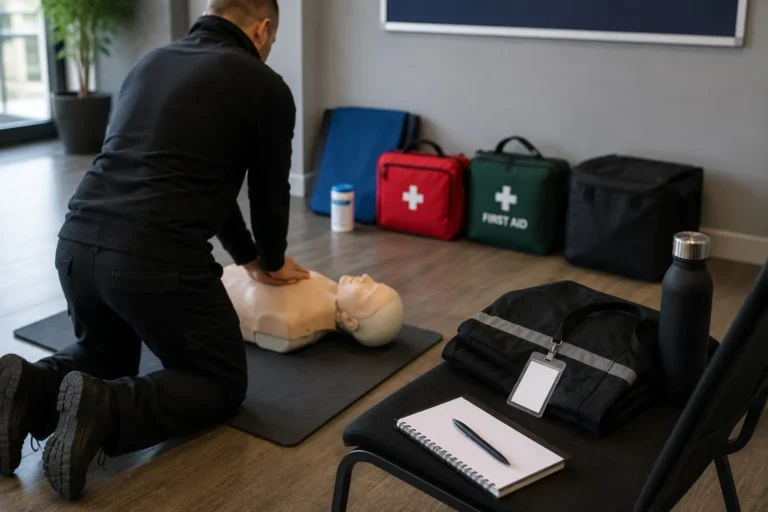
Hotels deal with slips, trips, intoxication, guest illness and welfare issues. First aid on your CV can make you more useful on nights and weekends. For workplace first-aid good practice, see HSE first aid at work guidance.
Emergency First Aid At Work Training Course, Best For Fast CV Impact
Emergency First Aid at Work Training Course is a practical qualification that strengthens your hotel security profile. It is particularly helpful for night shifts and lone-working scenarios.
- Guest Welfare Confidence: Helps you respond to collapses, falls and medical calls.
- Night Shift Advantage: Supports safer decisions when fewer managers are on site.
- Employer Preference: Often viewed favourably for hotels with high footfall.
Who It’s Best For: Anyone applying for hotel security officer roles in London who wants a fast employability boost.
See the Emergency First Aid course here: Compare upcoming course availability.
First Aid At Work Training, Best For Higher Responsibility Sites
First Aid at Work Training is a more in-depth option. It can help you stand out for larger hotels, lead shifts or roles with more welfare responsibility.
- Deeper Skill Coverage: Supports stronger on-site response capability.
- Progression Friendly: Useful for team leader or supervisor routes.
- Stronger Trust Signal: Reassures employers you can handle welfare incidents professionally.
Who It’s Best For: Candidates aiming for premium properties or long-term hotel placements.
Explore First Aid at Work here: See course details.
Step 3: Apply For The SIA Licence (What To Prepare And How Long It Can Take)
Apply through the official GOV.UK service: Apply for an SIA licence. Processing times vary, so avoid planning around a fixed start date.
Common Reasons SIA Applications Get Delayed:
- ID Mismatch: Your name format differs across documents and training records.
- Address History Gaps: Missing postcodes or unclear dates.
- Missing Documents: Not providing what is requested quickly.
- Background Review Complexity: Some applications need extra checks.
Step 4: Build A Hotel-Ready CV (Security Plus Hospitality Tone)
A hotel security CV should read differently from a retail or construction-site CV. Hotels want security plus service. Include:
- Guest Service Proof: Examples of assisting lost guests, calm communication and discreet complaint handling.
- Incident Logging: Bullet points showing factual, time-stamped reporting.
- Appearance and Standards: Professional presentation and working to site SOPs.
- Relevant Keywords: Access control, patrols, incident response, concierge security and CCTV monitoring (where relevant).
For more advice, see the latest tips on the Lead Element Training Wing LTD blog.
Step 5: Apply Via The Best London Hiring Channels
In London, hotel security recruitment often runs through contractors and agency rosters, not only job boards. Prioritise:
- Contractor Recruitment Pipelines: Many hotels outsource security, so the contractor is often the employer.
- Hotel Career Sites: Some properties hire directly for security, nights or loss-prevention style roles.
- Temp And Event Cover: A common way to reach better permanent placements.
Where To Find Hotel Security Jobs In London
Security Contractors And Approved Supplier Lists
Hotels often use approved suppliers for guarding, concierge security and events. A strong approach is to identify the contractor providing security at your target hotel. Then apply to that contractor for placements in your preferred area, such as the West End, the City or Canary Wharf.
Hotel Careers Pages (Including Luxury Groups)
Check hotel group career pages and individual property recruitment pages. Luxury hotels may use titles like “security officer”, “loss prevention”, or “safety and security”. Tailor your application to guest experience and discretion.
Recruitment Agencies: Temp, Event Cover And Temp-To-Perm
Agencies can help you build hotel experience quickly. If you are new, temp shifts can help you gain:
- London Hotel Experience: A key credibility marker.
- References: Supervisors and duty managers who can confirm performance.
- Shift Variety: Lobby, nights, events and control room exposure.
Networking: Referrals, LinkedIn And Local Hospitality Connections
- LinkedIn: Follow hotel security managers, contractors and hospitality operations leaders.
- Referrals: Many roles fill through trusted recommendations, especially for nights.
- Local Connections: Concierge teams, event coordinators and bar staff often hear about extra cover first.
Skills And Add-On Training That Help You Stand Out
De-Escalation, Conflict Management And Discretion
Hotels want calm professionals who can manage problems without creating a scene. Strong candidates show:
- Verbal De-escalation: Clear warnings, choices and calm boundaries.
- Discretion: Moving issues away from public view where appropriate.
- Teamwork: Coordinating with reception, duty managers, housekeeping and maintenance.
Report Writing And Evidence Handling (CCTV And Logbooks)
Good reporting supports promotions and protects you professionally. If you want to move into monitoring roles, a CCTV training course can improve evidence handling and control-room readiness.
CCTV Training, Best For Control Room And Monitoring Roles
CCTV Training from Lead Element Training Wing LTD adds a specialist skill that larger London hotels often value for incident prevention, investigations and evidence-led reporting.
- Broader Job Options: Opens up control room and monitoring vacancies.
- Better Incident Documentation: Helps you record observations clearly and accurately.
- Supports Progression: Useful for moving towards control room supervisor pathways.
Who It’s Best For: Candidates targeting control rooms, night monitoring, or hybrid patrol plus CCTV roles.
Explore CCTV Training here: See course information.
Progression Paths: Supervisor, Control Room, Close Protection (When Relevant)
Hotel security can be a strong platform for progression. You build people skills, procedural discipline and incident-handling experience.
- Supervisor or Team Leader: Often needs strong reporting, calm leadership and good client communication.
- Control Room Lead: Usually benefits from CCTV competence and high reporting standards.
- VIP or Luxury Hotel Work: In some settings, close protection training can be a longer-term progression step.
Close Protection Training, Best For Progression Into VIP Hospitality Work
Close Protection Training is an advanced route for experienced operatives who want VIP-focused assignments linked to luxury hospitality, high-profile guests and event-led work in London.
- Progression Focused: A next-step option after building hotel security experience.
- Planning And Risk Awareness: Useful for VIP arrivals and discreet protective tasks.
- Professional Credibility: Supports applications for higher-end roles.
Who It’s Best For: Operatives with solid front-of-house experience who want to specialise.
Explore Close Protection Training here: Read the full course overview.
Recommended Training Options That Improve Your Chances
- Door Supervisor Training: Best for lobby, bar, events and guest-facing hotel security. Explore the course.
- Emergency First Aid At Work: Best for quick CV impact and night shift readiness. See the course.
- First Aid At Work: Best for larger hotels and higher responsibility. Compare options.
- CCTV Training: Best for control room and monitoring roles. View the course.
- Refresher Door Supervisor Security Training: Best for returning to work and staying compliant. Check refresher training.
- Close Protection Training: Best for progression into VIP or luxury hospitality-related work. Learn more.
Quick Decision Box:
- Front Of House (Lobby, Bar, Events): Door Supervisor is commonly requested.
- Back Of House (Goods-In, Staff Entrances): Door Supervisor or Security Guarding depends on duties. Door Supervisor often keeps you flexible.
- Control Room: CCTV training can be a strong advantage.
- Nights: First aid is often viewed favourably.
Mini Comparison Table (Hotel Area To Training Route):
Use this mapping when you tailor applications to specific London hotels.
Interview Tips: Questions Hotels Ask (And How To Answer)
Scenario Questions: Aggressive Guest, Theft, Fire Alarm, Medical Incident
- Aggressive Guest In The Lobby: Explain how you stay calm, set boundaries and involve the duty manager early when needed.
- Theft Allegation: Focus on evidence-led thinking, CCTV checks where relevant and accurate reporting.
- Fire Alarm Activation: Describe following site procedures, supporting evacuation and keeping exits clear.
- Medical Incident: Highlight first-aid awareness, calling emergency services and giving clear handovers.
What Hotels Look For: Calm Communication, Guest-First Service And Teamwork
- Calm Professionalism: You reduce risk without escalating tension.
- Guest Experience Mindset: Your presence should feel reassuring, not intimidating.
- Team Fit: You work smoothly with reception, housekeeping and management.
FAQs About Hotel Security Work In London
Can I Apply For Roles While My SIA Licence Is Processing?
Yes. Be transparent and say your SIA application is in progress. Some employers will shortlist you pending proof, while others require the licence before onboarding.
Do Hotels Prefer Door Supervisor Over Security Guarding?
Many London hotels prefer Door Supervisor for guest-facing roles, such as the lobby, bar and events. Back-of-house requirements vary, but Door Supervisor often keeps you eligible for more shifts.
Do I Need First Aid To Work Hotel Security?
Not always, but it is often preferred, especially for night shifts, lone working and high-footfall properties. For context, see First aid at work (HSE).
I Already Have A Licence, Do I Need Refresher Training?
Depending on your licence type and current requirements, you may need refresher learning to stay compliant. If you are returning to hotel security work, Refresher Door Supervisor Security Training is worth considering.
Fun Fact: Why London Hotels Often Prefer Door Supervisors
Large London hotels can operate like small public venues. With lobbies, bars, conference suites and multiple staff entrances, they manage thousands of daily movements. That complexity is one reason many hotels prefer Door Supervisor-licensed staff for front-of-house security and conflict management.
Conclusion: Your Best Next Step
If you want hotel security work in London, match the hotel area you are targeting to the right licence route. For most guest-facing roles, Door Supervisor is the most flexible option. Then add first aid to strengthen your CV, and consider CCTV if you want control-room opportunities.
When you are ready, explore training options with Lead Element Training Wing LTD on the full courses page, or ask for guidance via the contact page.

![Is the security guard training better than the door supervisor training [city]](https://security-guard-training.co.uk/wp-content/uploads/2026/04/Is-the-Security-Guard-Training-Better-Than-the-Door-Supervisor-Training-768x512.webp)