
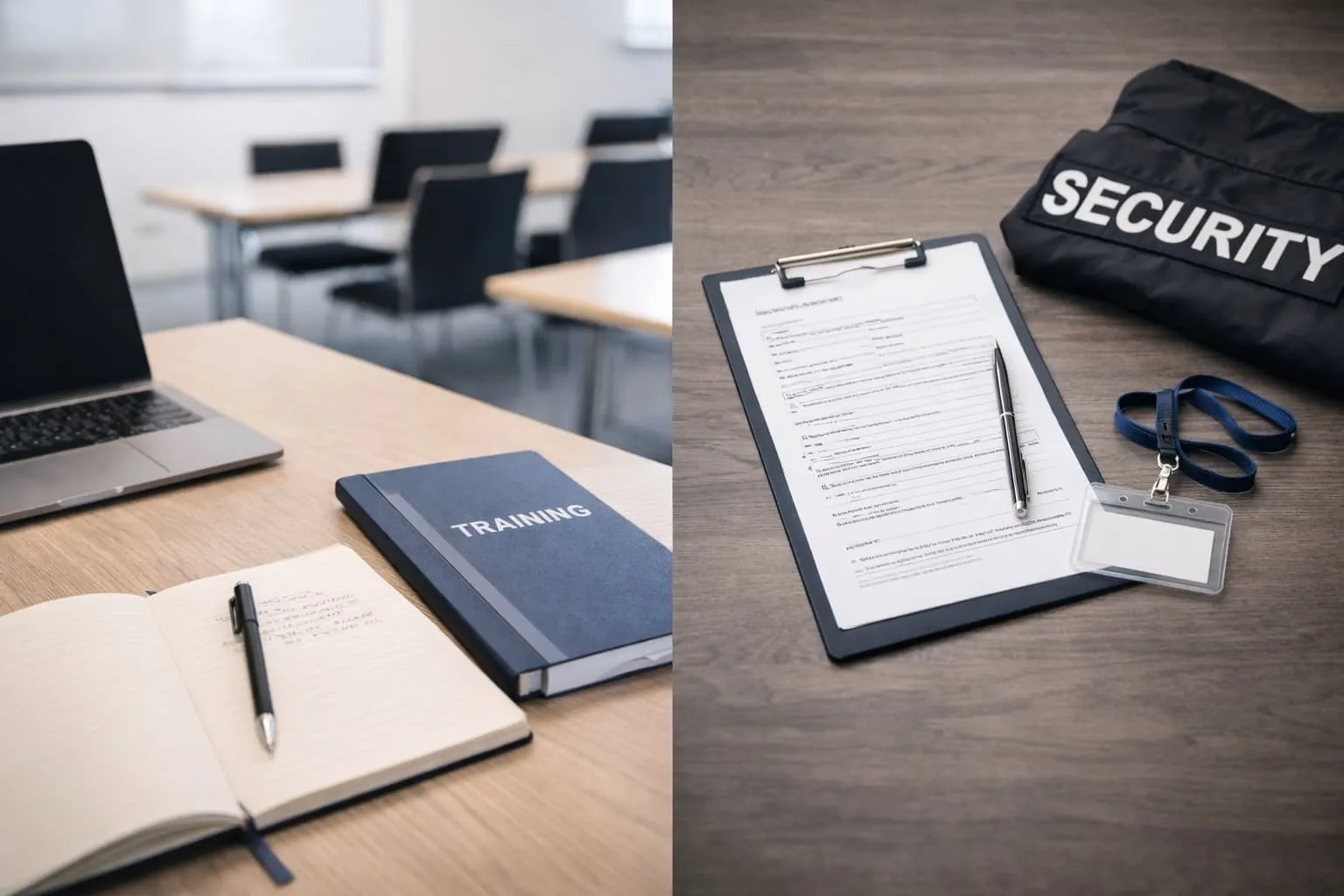
What is the Difference Between an SIA Licence and SIA Training?
An SIA licence is the legal card issued by the Security Industry Authority (SIA) that lets you work in a specific security role in the UK. SIA training is the qualification you must pass with an approved training provider before you can apply for the licence. Training is the prerequisite, the licence is the permission to work.
If you are looking to start work in private security, one detail matters more than anything else: passing an SIA course does not automatically allow you to work. Employers must check your licence status before they can deploy you.
In this guide, Lead Element Training Wing LTD explains the difference between SIA training and the SIA licence. We also cover what to do first, typical costs and timelines, and how to choose the right licence type for your goals.
SIA Licence Vs SIA Training: The Difference In One Minute
- SIA training: A qualification you take with an approved provider. You study key topics (law, safety, conflict management), pass assessments, and then receive a qualification or certificate.
- SIA licence: The permission to work, issued by the regulator (the SIA). You apply after training and must pass checks (identity, right to work, criminality).
- The order: Training first, then apply for the licence.
- Why it matters: You can pass training and still not be able to work until the SIA grants the licence.
For official background and licensing guidance, see the Security Industry Authority (SIA) organisation page and the GOV.UK guide on applying for an SIA licence.
What Is An SIA Licence?
An SIA licence is a regulator-issued licence that allows you to work in certain roles in the UK private security industry. The SIA issues it, not a training centre.
What The SIA Licence Allows You To Do (And What It Does Not)
- It allows you to: Work legally in the licensable activity printed on your licence (for example, Door Supervisor or CCTV).
- It allows employers to deploy you: Many employers will check your status online and may ask to see your card before you start shifts.
- It does not guarantee a job: You still need to apply for roles and meet employer requirements (availability, references, experience).
- It does not replace training: The licence is permission to work. It is not proof that you completed a course recently, and refresher requirements can apply.
Common SIA Licence Categories (Door Supervisor, CCTV, Close Protection)
Here are three common licence categories people ask about:
- Door Supervisor: Frontline roles at venues and events, plus some retail security and guarding roles, depending on duties.
- CCTV (Public Space Surveillance): Monitoring CCTV in control rooms and certain surveillance environments.
- Close Protection: Specialist protection work (bodyguarding) for individuals and teams.
Choosing the right category is crucial because your training and your licence must match the job you intend to do.
What Is SIA Training?
SIA training is the learning and assessment you complete with an approved training provider to gain the qualification linked to the licence type you want. Your training centre does not issue your SIA licence. Instead, you receive a qualification or certificate that supports your licence application.
What “SIA-Approved” Training Means (Qualifications And Awarding Bodies)
In practice, “SIA-approved training” means the course content, structure, and assessments meet SIA requirements for that licence-linked qualification. You take it with a recognised training provider through an appropriate awarding organisation.
- Provider role: Delivers teaching, runs assessments, and supports pre-course checks and guidance.
- Awarding body role: Issues the qualification or certificate when you successfully complete the course.
- SIA role: Processes your licence application and decides whether to grant the licence.
What You Learn: Core Units, Practical Assessments, And Exams
Exact units vary by licence type, but most SIA-linked courses cover:
- Working in the private security industry: Roles, responsibilities, professionalism, and standards.
- Law and legislation: Powers, searching, use of force principles, and incident reporting.
- Safety and emergency procedures: Risk awareness, safeguarding, and responding to incidents.
- Conflict management: Communication, de-escalation, and practical scenarios.
- Role-specific content: For example, CCTV operations or physical intervention (where applicable).
Key Differences: SIA Licence Vs Training (Quick Comparison Table)
| Comparison Point | SIA Training (Course) | SIA Licence |
|---|---|---|
| What It Is | A qualification you study and pass | Legal permission to work in a licensable role |
| Who Issues It | Training provider and awarding body | Security Industry Authority (SIA) |
| Legal Status | Evidence of competence and prerequisite | Right to work in the licensed activity |
| When You Need It | Before you apply for the licence | Before you can start licensable work |
| How Long Does It Take | Often, a few days, depending on the course | Processing time varies; check GOV.UK for current guidance |
| Cost | Set by training providers (varies by course and location) | Fee set by the regulator (see the official GOV.UK licensing page) |
| What You Receive | Qualification or certificate | Licence card and online licence status |
Who Issues It, How Long It Lasts, And What It Costs
Training fees vary by provider, while the SIA licence fee is set by the regulator. For the most accurate, up-to-date licensing information, use GOV.UK: Apply for an SIA licence.
Legal Status: Qualification Vs Right To Work
Think of it like driving. Training is learning to drive and passing the test. The licence is what legally allows you to drive on the road. In security, you need both in the correct order.
Once you understand the difference, the next step is choosing training that matches the licence you plan to apply for. Explore options on Lead Element Training Wing LTD training courses.
Door Supervisor Training, Best For Frontline Venue Work

Door Supervisor Training is a popular starting point if you are aiming for door work, events, or frontline roles. It gives you the qualification you need before applying for the SIA Door Supervisor licence.
- Role-Relevant Learning: Covers core security knowledge plus practical scenario skills for frontline work.
- Employer-Friendly Licence Path: Helps you follow the standard route: Pass the course, then apply for the correct licence.
- Confidence On The Job: Focuses on communication, safety, and professional conduct in public-facing roles.
- Clear Next Steps: You finish with a qualification, then move into the SIA application stage.
Who it is best for: People aiming for pubs, clubs, events, retail security, and many general frontline roles.
Compare course dates and options on Door Supervisor Training.
CCTV Training, Best For Control Rooms And Monitoring Roles

CCTV Training suits learners who want CCTV (Public Space Surveillance) roles, often in control rooms or monitoring environments. The key is matching the course to the licence category you intend to apply for.
- Role-Specific Knowledge: Focuses on CCTV operations, observation, and incident response.
- Correct Licence Alignment: Helps you avoid the common mistake of taking training that does not match your intended licence.
- Workplace-Ready Skills: Builds practical understanding of monitoring responsibilities and reporting.
Who it is best for: People aiming to work as CCTV operators in control rooms or public space surveillance settings.
See current options for a CCTV SIA training course.
Close Protection Training, Best For Specialist Bodyguard Roles

Close Protection Training is designed for specialist work protecting individuals. This pathway has different expectations from venue or CCTV roles, so it helps to choose the right route from the start.
- Specialist Pathway: Built around the realities of close protection work and professional standards.
- Better Role Fit: Helps you align training, mindset, and outcomes with the correct licence category.
- Structured Learning: A clear route that supports moving into the licensing stage properly.
Who it is best for: People aiming for professional close protection and bodyguard roles.
Explore the full programme on Close Protection Training.
Which Comes First? The Correct Order (Training To Licence Application)
Step-By-Step: From Booking A Course To Getting Your Badge
1) Choose the right licence category: Pick Door Supervisor, CCTV, Close Protection, or another licence type based on the role you want.
2) Book SIA training with an approved provider: Browse options via Lead Element Training Wing LTD trainings.
3) Prepare your entry requirements: Bring valid ID, complete right to work checks, and arrange first aid evidence if required (see below).
4) Attend training and pass assessments: This includes exams and practical elements, depending on your course.
5) Apply for your SIA licence: Apply after training using the official process on GOV.UK.
6) Complete SIA checks: Identity, right to work, and criminality checks form part of the decision.
7) Receive your licence decision: Once granted, you can work in that licensable role, and employers can verify your status.
Typical Timelines (Training Duration And SIA Processing Time)
- Training duration: Often completed in a few days, depending on the licence type and schedule.
- Licence processing: Times vary, so use GOV.UK and SIA updates for the latest guidance.
- Planning tip: Do not resign from a job or promise a start date until your licence is granted.
Which SIA Course And Licence Should You Choose?
If you are unsure, start with the job setting, then match the course and licence to that environment. If you want help picking the right route, contact Lead Element Training Wing LTD here: contact us.
Door Supervisor: Best For Venues And Frontline Roles
If you want customer-facing security work, a Door Supervisor is often the most flexible option. For venues and frontline work, Door Supervisor training is usually the right starting point.
- Typical settings: Pubs, clubs, bars, events, retail, and some guarding roles.
- Good fit if you: Want active shifts, public interaction, and incident-prevention responsibilities.
Explore the Door Supervisor training course and compare options if you are looking for a Door Supervisor training course in London.
CCTV: Control Rooms And Monitoring Roles
CCTV training and licensing, suit monitoring and observation work. This can be a strong option if you prefer a control room environment rather than a frontline role.
- Typical settings: CCTV control rooms, public space surveillance environments, monitoring hubs.
- Good fit if you: Are detail-oriented and confident writing accurate incident notes and reports.
Compare course options on CCTV Training.
Close Protection: Specialist Bodyguard Roles
Close protection is a specialist route. It can suit people who want a professional protective career pathway.
- Typical settings: Protective details, travel assignments, high-profile client work.
- Good fit if you: Want a specialist role and understand the need for discipline, planning, and professionalism.
Read more about the specialist route on Close Protection Training.
Do You Need First Aid For SIA Training?
Many SIA-linked courses require valid first aid evidence, and it must be in date. Requirements can change by licence type and awarding body rules, so confirm before you book.
What Counts As Acceptable First Aid (Evidence And Expiry)
- Acceptable evidence: A valid first aid qualification that meets the course requirements. Your provider will confirm what is accepted.
- It must be in date: Expired first aid certificates are usually not accepted.
- Bring proof: You will normally need your certificate before or at training.
If you need first aid training, Lead Element Training Wing LTD offers Emergency First Aid at Work and First Aid at Work so you can meet prerequisites smoothly.
Renewals And Refreshers: What Changes When Your Licence Expires
This is where many learners get caught out. Renewing an SIA licence is not the same as refresher (top-up) training. They are linked, but they are separate steps.
Refresher (Top-Up) Training Vs Reapplying For A Licence
- Refresher (top-up) training: Updates your training where required, especially when standards change.
- Licence renewal or reapplication: Applying again to the SIA so your permission to work continues.
- What to do: Check if you need refresher training, complete it if required, then renew with the SIA.
For refresher options, see Refresher Door Supervisor Security Training and Refresher Close Protection Training.
Refresher Door Supervisor Security Training, Best For Keeping Your Door Supervisor Qualification Current

Refresher Door Supervisor Security Training supports licence holders who need to update their Door Supervisor qualification as part of staying aligned with renewal requirements.
- Requirement-Focused: Built around refresher needs rather than repeating the full initial course.
- Renewal Support: Helps you complete training that may be required before you reapply.
- Time-Efficient Learning: Focuses on updates and key competencies.
Who it is best for: Door Supervisor licence holders approaching renewal who need refresher training.
See dates and details on Refresher Door Supervisor Security Training.
Refresher Close Protection Training, Best For Updating Specialist Competence

Refresher Close Protection Training is designed for professionals who need to update close protection learning as part of maintaining competence and meeting refresher expectations.
- Specialist Refresh: Tailored to the close protection pathway rather than general security roles.
- Supports Licence Continuity: Helps you stay aligned with training requirements linked to renewal cycles.
- Professional Standard: Focuses on best practice and readiness.
Who it is best for: Close Protection licence holders planning their next renewal period.
Explore the course on Refresher Close Protection Training.
Common Mistakes To Avoid
Assuming Training Equals A Licence, Booking The Wrong Course, Or Missing ID Checks
- Assuming training means you can work: You cannot work legally until the SIA grants the licence.
- Booking the wrong course: Choose training that matches the licence you need for your intended job.
- Not preparing ID and right to work documents: Mismatched names, expired IDs, or missing paperwork can delay progress.
- Ignoring first aid requirements: Arriving without valid first aid evidence (where required) can stop you from starting or completing training.
- Planning start dates too early: Licence processing can vary, so keep your timeline realistic.
If you want a quick check before booking, speak to Lead Element Training Wing LTD via the contact page, and we will help you choose the right course.
FAQs About SIA Licences And Training
Is An SIA Licence The Same As An SIA Badge?
People often say “SIA badge”, but they usually mean the SIA licence card. It is not a training certificate. It is your regulator-issued permission to work.
Can I Apply For An SIA Licence Without Training?
In most cases, no. You normally need to pass the relevant SIA-linked qualification first, then apply for the matching licence category.
How Do I Apply For An SIA Licence?
You apply through the official GOV.UK process: Apply for an SIA licence. The SIA will carry out checks before deciding whether to grant your licence.
How Long Does It Take To Get An SIA Licence After Training?
Training can often be completed in a few days. However, the licence decision timeline varies. Check current guidance and allow time for processing after you pass your course.
Do I Need First Aid Before Starting An SIA Course?
Often yes, depending on the course and current requirements. Confirm with your provider before the start date. If you need training, you can book Emergency First Aid at Work or First Aid at Work.
What If I Have A Criminal Record?
The SIA considers criminality as part of licensing decisions. A conviction does not automatically mean you will be refused, but it can affect eligibility. For official guidance, see SIA on GOV.UK and the licence application page.
Where Can I Find SIA Courses In London?
You can browse Lead Element Training Wing LTD courses or check local listings such as Croydon training options and Kingston upon Thames training options.
Fun Fact: The “SIA Badge” Is Not Your Certificate
Many people call it an “SIA badge”, but the card is not a training certificate. It is a regulator-issued licence. You can pass the course and still be unable to work until the SIA grants the licence, because employers must check your licence status before deploying you.
Conclusion
The simplest way to remember the difference is this: SIA training proves you have met the learning standard, while an SIA licence is the legal permission to work. Get the order right, choose the licence category that fits the job you want, and allow time for application checks.
If you are ready to start, explore SIA training courses with Lead Element Training Wing LTD, or ask for help choosing the right option via contact us.

![Can you take a mock test for security guard training [city]](https://security-guard-training.co.uk/wp-content/uploads/2026/04/Can-You-Take-a-Mock-Test-for-Security-Guard-Training-768x512.webp)

![Are there night shift security jobs in london that require an sia licence in [city]](https://security-guard-training.co.uk/wp-content/uploads/2026/07/Are-there-night-shift-security-jobs-in-London-that-require-an-SIA-licence-768x512.webp)
![Security by buildings [city]](https://security-guard-training.co.uk/wp-content/uploads/2024/04/5_Security-by-buildings-768x512.webp)
