
![Does first aid training help you get more security jobs [city]](https://security-guard-training.co.uk/wp-content/uploads/2026/06/Does-first-aid-training-help-you-get-more-security-jobs.webp)
Does first aid training help you get more security jobs?
Yes, first aid training can help you get more security jobs because many employers prefer, and some sites require, staff who can give immediate assistance. This is common in retail, events, and the night-time economy. First aid is not usually an SIA licence requirement, but it can strengthen your CV, widen the roles you can cover, and help you stand out for better shifts.
In practical terms, first aid is one of the simplest ways to become more “deployable”. That means a security company can place you on more assignments, often at short notice.
Fastest Way To Boost Employability: If you want a quick, recognised qualification that employers understand, start with Emergency First Aid at Work (EFAW). It is a strong add-on for door supervision, retail guarding, and event work.
Important: First aid training helps you provide initial care while you wait for emergency services. It does not replace professional medical treatment. Always follow your training and site procedures, and call 999 when needed.
Does First Aid Training Help You Get Security Jobs?
The Short Answer: Not Always Mandatory, But A Real Hiring Advantage
For most UK security roles, a first aid certificate is not compulsory. However, it is a genuine advantage because it:
- Strengthens your CV: It shows duty of care, calm decision-making, and practical incident response.
- Expands the roles you can cover: Some sites want a first aider on shift, especially in high-footfall environments.
- Helps with shift allocation: When a client asks for first-aid-trained staff, scheduling teams often prioritise people who are in date.
What Employers Actually Mean By ‘First Aid Preferred’
When a job advert says “first aid preferred”, it usually means one or more of the following:
- The client site has a higher incident likelihood: For example, intoxication in nightlife, slips and trips in retail, or crowd issues at events.
- The employer needs more first aid cover per shift: They may already have first aiders, but want cover for holidays and sickness.
- The role is public-facing: First aid supports confident, customer-focused responses while you keep the scene safe.
Is First Aid Training Required For UK Security Work (SIA Roles)?
What The SIA Licence Covers Vs What Employers And Clients Ask For
The Security Industry Authority (SIA) is the UK regulator for licensed roles such as Door Supervisor and CCTV Operator. Your SIA licence is separate from workplace first aid qualifications. To avoid confusion, check the official guidance on GOV.UK, Security Industry Authority (SIA).
First aid often comes in through client and employer expectations. Under UK health and safety law, workplaces must make suitable first aid arrangements. The Health and Safety Executive explains this in its guidance on First Aid At Work, and in more detail in HSE L74 (First Aid At Work Guidance). This is why some security assignments strongly prefer, or effectively require, first-aid-trained staff on shift.
When An Assignment May Require On-Shift First Aid Cover
Even if the role does not legally require you to hold first aid, the site may staff shifts to ensure first aid cover. You are more likely to see first aid requested for:
- Busy retail: Large stores, shopping centres, and multi-tenant sites.
- Events: Crowd management, entry searches, and venue security.
- Night-Time Economy: Pubs, clubs, bars, and late-night venues.
- Remote or lone-working posts: Where ambulance response times may be longer and early support matters.
Why Security Employers Value First Aid Trained Staff
Faster Response While Waiting For Emergency Services
Security staff are often first on scene. If someone collapses, chokes, has a suspected overdose, or suffers a serious bleed, the first few minutes matter. Employers value staff who can:
- Assess the scene: Make it safe, manage bystanders, and reduce further risk.
- Support casualty care: Give appropriate first response until handover.
- Communicate clearly: Share accurate information with 999 operators and arriving crews.
For general first aid principles and examples, see the NHS First Aid overview. This is not a substitute for training.
Lower Risk For Venues, Clients And The Public
From a client perspective, first-aid-trained security can reduce the chance of incidents escalating. It supports:
- Better documentation and handover: Clear notes, timings, and escalation steps.
- Safer decisions under pressure: Especially in crowds or high-tension situations.
- More compliant operations: Sites often assess first aid needs as part of risk management, aligned with HSE guidance.
Stronger Customer Care And Calmer Incident Management
Retail and events are customer-experience environments. A calm first response can protect a brand’s reputation and reduce complaints. It also shows you can manage welfare incidents professionally, not only conflict.
Which Security Jobs Benefit Most From First Aid Training?
Retail Security And Shopping Centres
Retail has high footfall and frequent welfare incidents, including fainting, slips, panic attacks, and medical episodes. First aid training helps you respond while you coordinate:
- Store staff: Accessing the first aid kit, defibrillator, and incident support.
- Comms and control: Calling management, logging the incident, and capturing CCTV where appropriate.
Door Supervisors (Nightlife)
Door supervision often involves intoxication, minor injuries, and welfare management outside venues. A first aid certificate can show you handle welfare issues safely while following venue policy.
If nightlife and events are your goal, compare options on SIA Door Supervisor Training and pair it with a workplace first aid qualification.
Event Security And Crowd Management
Events bring crowd density, heat, trips, and occasional surges. First aid training supports early response, while you escalate to medics and follow event control procedures.
Corporate, Reception And Concierge Security
Corporate sites may feel lower risk, but first aid still helps with workplace incidents, visitor welfare, and lone working. It also adds credibility in front-of-house roles where professionalism matters.
Close Protection And High-Profile Environments
Close protection comes with higher duty-of-care expectations. First aid is often seen as part of a professional protection mindset, supporting immediate response while you remove the principal from risk.
For a specialist route, explore Close Protection Training once you have your core qualifications mapped out.
Emergency First Aid At Work Vs First Aid At Work: Which Should You Choose?
Both EFAW and FAW are recognised workplace first aid qualifications. The right choice depends on how quickly you need certification, and where you want to work.
| Comparison Point | EFAW | FAW |
|---|---|---|
| Best For | Entry-Level Security, Quick Employability Boost | Higher Responsibility Sites, Busy Venues, Supervisory Expectations |
| Time Commitment | Typically 1 Day | Typically 3 Days |
| Depth Of Training | Core Life-Saving First Response Skills | More Comprehensive Workplace First Aid Skills |
| Typical Security Fit | Retail, Events Add-On, Door Supervision Support | High-Footfall Sites, Longer Shifts, Higher Duty Of Care |
| How To List On CV | “EFAW, Issued: Month Year, Expires: Month Year” | “FAW, Issued: Month Year, Expires: Month Year” |
Who EFAW Is Best For (Fast Certification, Entry-Level Roles)
EFAW is ideal if you want a recognised certificate quickly. It suits retail, events, and door supervision roles, where first aid cover can improve deployment options.
Emergency First Aid At Work Training Course (EFAW) For Security Applicants, Best For Quick Deployment

Emergency First Aid at Work training course (EFAW) is a practical option that can make you more employable quickly. It is especially useful when employers need first aid cover on busy retail or event shifts.
- Recognised And Understood By Employers: A straightforward qualification that recruiters can check quickly.
- Relevant To Common Security Incidents: Supports first response for collapse, choking, bleeding, and unconsciousness.
- Improves Shift Eligibility: Helps you qualify for sites that ask for first-aid-trained staff.
- Strengthens Your CV: Shows welfare awareness and calm incident handling.
Who It Is Best For: New starters, career switchers, and guards who want a fast add-on to widen job options.
To turn this into job-ready credentials, book EFAW training with Lead Element Training Wing LTD and add the issue and expiry dates to your CV.
Who FAW Is Best For (Higher Responsibility, Higher-Risk Environments)
If you work long shifts, cover busy venues, or want to show a higher level of responsibility, FAW can be a better fit. It can also suit contracts that expect stronger first aid competence than a one-day course.
First Aid At Work Training (FAW) For Security Officers, Best For Higher Responsibility Roles
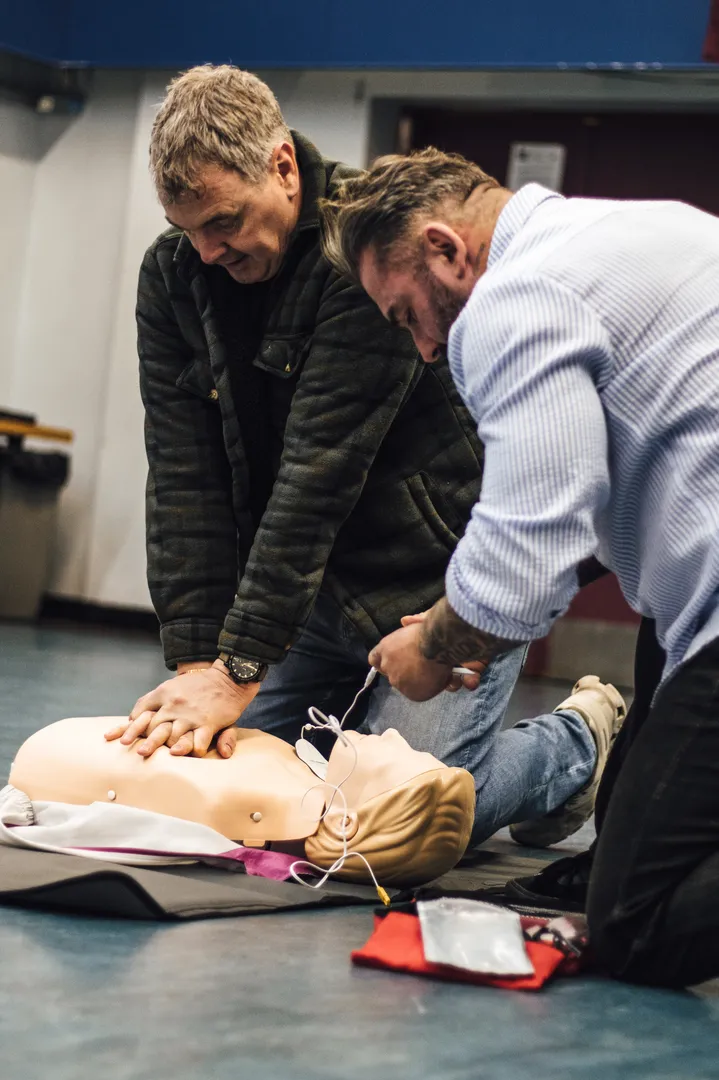
First Aid at Work training (FAW) is a more comprehensive workplace first aid qualification. For security officers, it can help you stand out when applying for high-footfall retail sites or roles with greater duty-of-care expectations.
- Stronger Employability Signal: Shows a higher commitment to welfare and safety.
- Useful For Busier Sites: Builds confidence for more complex incidents and longer handovers.
- Helps With Client Requirements: Some contracts favour deeper first aid cover across teams.
- Supports Progression: Complements supervisory ambitions and specialist pathways.
Who It Is Best For: Experienced guards, supervisors, and anyone targeting demanding venues or high-traffic assignments.
Compare dates and availability, then explore FAW training with Lead Element Training Wing LTD to strengthen your applications.
Certificate Validity And Refreshers: What Recruiters Expect To See
Most workplace first aid certificates are valid for three years. Recruiters can shortlist faster when you clearly show your certificate is in date.
- On Your CV: Include the course level, provider, plus issue and expiry dates.
- At interview or onboarding: Bring your certificate (or a clear scan) and photo ID.
- Before expiry: Plan a refresher so you do not lose eligibility during peak seasons.
How To Use First Aid To Win More Security Work
How To List First Aid On Your CV (With Dates And Level)
Use a clear, recruiter-friendly format, for example:
- Emergency First Aid at Work (EFAW): Issued Month Year, Expires Month Year, Provider: Lead Element Training Wing LTD.
- First Aid at Work (FAW): Issued Month Year, Expires Month Year, Provider: Lead Element Training Wing LTD.
Add it under “Certificates” near your SIA licence details, rather than hiding it at the bottom.
How To Talk About It In Interviews (Ready-To-Use Examples)
Keep it practical and role-relevant. Here are examples you can adapt:
- Retail: “I am EFAW trained and in date, so I can support welfare incidents such as collapses or falls, secure the area, and coordinate with staff while emergency services are called.”
- Nightlife: “I understand welfare is part of safe door supervision. My first aid training helps me respond appropriately to intoxication-related incidents while following venue policy and escalation procedures.”
- Events: “I can help with first response and clear communication to event control, while maintaining crowd safety and preventing secondary incidents.”
How It Can Unlock More Shifts And Assignments
First aid can help you get more shifts because it makes scheduling easier. When a site asks for a “first aider on shift”, a company can meet that requirement by placing you. This is especially useful for:
- Urgent cover: Last-minute staffing where clients still want welfare capability on site.
- High-footfall days: Weekends, seasonal retail peaks, and major event days.
- Multi-role staffing: When one person can support security and basic first response, teams stay flexible.
What Other Training Pairs Well With First Aid (To Increase Job Eligibility)
Door Supervisor Training Plus First Aid (Nightlife And Events)
If you want more access to nightlife and event work, Door Supervisor training is often the biggest unlock. Adding first aid can help you stand out for public-facing deployments.
Door Supervisor Training (SIA), Best For Nightlife And Event Roles

Door Supervisor training (SIA) is the core pathway for licensed work on licensed premises and many event roles. Pairing it with EFAW or FAW helps you present as a safer, more complete candidate.
- Opens More Roles: Adds access to door supervision and many event security jobs.
- Supports Welfare Expectations: First aid complements real venue and crowd demands.
- Improves Shortlisting: Helps when employers need staff who can cover more site needs.
- Builds Confidence: Supports calmer control during high-pressure incidents.
Who It Is Best For: Anyone targeting clubs, bars, venues, festivals, and event contractor work.
Once first aid is sorted, explore Door Supervisor training with Lead Element Training Wing LTD to widen your options.
CCTV Training Plus First Aid (Control Room And Retail Operations)
If you want to widen beyond front-line guarding, CCTV training can open control room roles. First aid still helps because many control rooms coordinate welfare responses and dispatch officers.
CCTV Training, Best For Control Room And Retail Monitoring Roles

CCTV training helps you move into monitoring, reporting, and incident escalation. Combined with first aid, it positions you as a well-rounded operator who understands both response and coordination.
- Broadens Job Eligibility: Adds CCTV operator roles to your options.
- Improves Incident Quality: Supports clearer escalation, logging, and response coordination.
- Useful In Retail Operations: Many retail sites blend guarding and CCTV tasks.
- Supports Progression: Can support a move into control room or supervisory routes.
Who It Is Best For: Guards who want variety, indoor roles, or more operational responsibility.
To broaden your options, compare and book CCTV training with Lead Element Training Wing LTD alongside first aid.
Close Protection Training Plus First Aid (Higher Duty-Of-Care Expectations)
In close protection, first aid is often part of professional duty of care. Requirements vary by employer, but the ability to respond to medical emergencies is a strong credibility marker in high-profile environments.
Close Protection Training, Best For Specialist And High-Profile Security Work

Close Protection training is designed for those aiming at specialist roles. First aid complements this route because close protection work often expects rapid response with minimal delay.
- Supports Duty Of Care: Helps demonstrate welfare readiness for principals and teams.
- Strengthens Professional Profile: Adds credibility for high-expectation employers.
- Aligns With Real-World Risks: Supports early response while you remove someone from risk.
- Builds A Progression Path: Helps you move beyond entry-level guarding roles.
Who It Is Best For: Experienced security professionals planning to move into higher-end work.
If you are planning a specialist pathway, see Close Protection training with Lead Element Training Wing LTD and keep your first aid certificate in date.
Refresher Training: Staying Current And Deployable
Employability is not only about gaining qualifications. It is also about staying eligible. You can browse options in the full training list, including Door Supervisor refresher training and Close Protection refresher training.
FAQs
Will First Aid Training Increase My Pay In Security?
Sometimes, but not always. First aid is more reliably a shift and deployability advantage than a guaranteed pay rise. Some employers pay more for first-aid-qualified staff on specific contracts. Others use it to decide who gets the best shifts or the most consistent hours.
How Quickly Can I Get First Aid Certified?
EFAW is often the quickest route because it is typically completed in one day. FAW takes longer, but it can be worth it for higher-responsibility environments. If you need help choosing, contact Lead Element Training Wing LTD and share the type of security work you want.
Does Online-Only First Aid Training Count For Security Work?
Many employers and clients prefer first aid training that includes practical, in-person assessment because first aid is hands-on. Online learning can help as preparation, but online-only certificates may not meet expectations for workplace first aid cover. When in doubt, ask the employer what they accept for that contract.
How Long Does First Aid Certification Last In The UK?
Most workplace first aid certificates are valid for three years. Recruiters often want to see that your certificate is in date, with clear issue and expiry details.
Fun Fact: A Simple CV Detail That Speeds Up Shortlisting
Most UK workplace first aid certificates are valid for three years. If you add the course level plus the issue and expiry dates on your security CV, recruiters can quickly see you are in date and ready to deploy.
Next Steps: Choose The Right Course And Apply For Roles Confidently
If your goal is more security work, treat first aid as a deployability tool. Then stack it with the licence and skills that match your target environment.
- Step 1, Pick Your First Aid Level: Start with EFAW for speed, or choose FAW for deeper coverage.
- Step 2, Choose Your Security Path: For nightlife and events, consider Door Supervisor training. For control room roles, look at CCTV training. For specialist routes, explore Close Protection training.
- Step 3, Apply With Proof: Put your certificate level and expiry date on your CV, bring documentation to onboarding, and stay current with refreshers.
For more career guidance, visit the Lead Element Training Wing LTD blog or speak to the team via the contact page to match your training to the roles you want.


![What do you need to revise for the security guard course [city]](https://security-guard-training.co.uk/wp-content/uploads/2026/04/What-Do-You-Need-to-Revise-for-the-Security-Guard-Course-768x512.webp)
![What is the difference between emergency first aid and first aid at work [city]](https://security-guard-training.co.uk/wp-content/uploads/2026/06/What-is-the-difference-between-emergency-first-aid-and-first-aid-at-work-768x512.webp)
