

How Much Does Emergency First Aid at Work Training Cost?
Direct Answer: In the UK, Emergency First Aid at Work (EFAW) training typically costs around £60 to £150 per person for an open (public) 1-day course, or roughly £350 to £900 for on-site training for a group (often 6 to 12 learners). Prices vary by location, accreditation, included materials and certificate, and whether you choose EFAW or the longer First Aid at Work course.
If you are searching for the Emergency First Aid at Work training cost because you need to stay compliant, protect staff, or book quickly for a new role, this guide breaks down common UK pricing models and what changes the total. It also explains EFAW vs First Aid at Work in plain English, so you can book the right level of cover for your workplace risk.
Recommended courses from Lead Element Training Wing LTD:
- Emergency First Aid at Work Training: Compare dates, locations, and availability for the 1-day EFAW option.
- First Aid at Work Training: Explore the longer, more in-depth course for higher-risk workplaces.
Emergency First Aid At Work Training Cost (UK): Typical Price Ranges
Most UK providers price EFAW in one of two ways: a per-person seat on a public course, or a fixed daily rate for on-site workplace delivery. Knowing which model you are viewing helps you compare prices accurately.
| Pricing model | Typical UK cost | What you are paying for | Best for |
|---|---|---|---|
| Open/public 1-day EFAW | £60 to £150 per person | A single learner’s place on a scheduled course | Individuals, small teams, quick bookings |
| On-site workplace EFAW | £350 to £900 per day (often 6 to 12 learners) | An instructor delivering at your site for a group | Employers training multiple staff, best per-head value |
If you are comparing providers, the quickest way to confirm your exact price is to check course dates and locations. You can explore options on Lead Element Training Wing LTD’s Emergency First Aid at Work page, or browse the wider training course list.
Open/Public Course Price Per Person
For a public (open) course, the most common EFAW 1-day course cost per person is £60 to £150.
- Lower end (£60 to £90): Usually outside central London, booked in advance, and with fewer add-ons.
- Mid-range (£90 to £120): Often includes a course manual, assessment, and certificate with a straightforward booking process.
- Upper end (£120 to £150+): Often London locations, last-minute dates, premium venues, or extra support such as replacement guarantees.
Public courses are ideal when you only need one or two staff trained. They also suit anyone who wants a quick "near me" booking without organising a training room and rotas.
On-Site Workplace Training Price For Groups
The cost of on-site Emergency First Aid at Work training is usually quoted as a fixed daily rate. Most providers charge around £350 to £900, depending on location, trainer travel, and group size.
A simple way to estimate the break-even point is:
- If you have 6 learners: On-site can be cheaper than public seats if local per-person prices are high.
- If you have 8 to 12 learners: On-site is often the best per-person value.
- If you have fewer than 4 learners: Public courses usually cost less unless you need on-site convenience.
Employers often choose on-site training for retail teams, security staff, and facilities roles. It reduces disruption when you need several people trained at once.
What’s Usually Included In The Price (Certificate, Materials, Assessment)
In most UK EFAW bookings, the course price usually includes:
- Training and practical sessions: Instructor-led learning covering the EFAW syllabus and scenario practice.
- Assessment: Ongoing practical assessment, plus any required knowledge checks set by the provider.
- Certificate: Proof of completion, usually valid for three years (depending on the qualification route).
- Course materials: A learner handbook or digital resources, plus any required paperwork.
Before you pay, it is sensible to confirm:
- VAT: Whether prices include or exclude VAT.
- Replacement certificates: Whether reprints are free, charged, or time-limited.
- Rescheduling terms: Whether you can change dates, and any admin fees for changes.
Emergency First Aid At Work Training, Best For Fast 1-Day Workplace Cover

Emergency First Aid at Work Training from Lead Element Training Wing LTD is a 1-day option for workplaces that need a designated first aider in lower-risk environments. It is also suitable when your needs assessment shows EFAW is appropriate.
- 1-day format: Easier to schedule around shifts and rotas.
- Workplace-relevant scenarios: Builds confidence for incidents such as bleeding, choking, or collapse.
- Compliance-friendly: Helps employers meet UK first aid expectations when EFAW is sufficient.
- Good for retail and front-of-house roles: Useful where staff are customer-facing, and incidents can happen suddenly.
Who it’s best for: Employers and individuals who need quick, recognised training for lower-risk sites, reception, hospitality, retail, and many security environments (depending on risk).
If you want to book an EFAW course near you, you can check dates and locations for Emergency First Aid at Work Training here.
What Affects The Price Of EFAW Training?
Two courses can share the same title but cost different amounts. The final price often changes with delivery style, location, and what happens if someone needs to rebook.
Training Format: Classroom, Blended, Or On-Site
- Classroom (public): Typically lower admin for employers, but priced per person and limited to scheduled dates.
- On-site (in-company): Typically best value per head for groups, but may involve minimum numbers and travel costs.
- Blended: Sometimes reduces classroom time, but you still need an in-person practical element to build real competence.
When you compare prices, confirm the guided learning hours and what is face-to-face. For first aid, hands-on skills (such as CPR technique and casualty handling) are essential.
Location And Venue Costs (London Vs Other Areas)
Location affects pricing because of venue hire, trainer travel time, and demand. For example, first aid training London cost is often higher than in many other UK areas.
If you are booking around London, these local pages can help you compare options quickly:
- First Aid Training Courses In Westminster: Useful for central access and transport links.
- First Aid Training Courses In Croydon: Useful for South London availability.
- First Aid Training Courses In Kingston Upon Thames: Useful for South West London options.
Group Size, Employer Bookings And Per-Head Savings
For employers, group pricing is where costs can shift most. A fixed on-site day rate spread over 10 learners can reduce the per-person price significantly.
- More learners: Lower per-head cost, up to the maximum safe class size set by the provider.
- Fewer learners: Higher per-head cost, unless you use public courses.
- Multiple cohorts: Better planning reduces disruption, especially for 24-hour operations such as security and retail.
Accreditation/Recognition And Course Provider Standards
Not all first aid courses are delivered to the same standard, even if the content sounds similar. Prices can rise when providers use robust quality assurance, qualified trainers, and recognised qualification pathways.
When you compare providers, look for clear answers on:
- Recognition: Whether the course aligns with UK workplace first aid expectations and is accepted by employers.
- Trainer competence: Whether instructors have up-to-date first aid competence and delivery experience.
- Quality checks: Whether the provider explains assessment methods and verification processes.
Extra Costs To Watch For (Rebook Fees, Replacements, Travel)
Unclear charges can make a low headline price expensive. Common extras include:
- Rescheduling or cancellation fees: Charges if someone changes dates within a set window.
- No-show fees: A full fee if someone misses the course without notice.
- Parking and travel: Costs for attending a venue, especially in city centres.
- Replacement certificates: Fees if the original is lost and you need a reprint.
- On-site minimum numbers: Some providers require a minimum group size for workplace delivery.
Emergency First Aid At Work Vs First Aid At Work: Which One Do You Need?
Choosing the right course is not only a cost decision. Start with your workplace first aid needs assessment and the level of risk your team faces.
Duration And Coverage (1-Day Vs 3-Day)
In simple terms:
- EFAW (1 day): Focuses on emergency first aid skills for immediate response.
- First Aid at Work (FAW) (3 days): Covers a wider range of situations. It is often used in higher-risk workplaces or larger sites.
For detailed course information, compare EFAW guidance with First Aid at Work guidance on Lead Element Training Wing LTD.
Typical Price Difference And Best-Fit Scenarios
As a rule of thumb, the 3-day FAW course costs more because it runs longer and covers more scenarios.
| Course | Typical Duration | Typical UK Price Tendency | Best For |
|---|---|---|---|
| Emergency First Aid at Work (EFAW) | 1 day | Lower cost, commonly £60 to £150 per person | Lower-risk workplaces, smaller sites, front-of-house cover |
| First Aid at Work (FAW) | 3 days | Higher cost due to length and depth | Higher-risk settings, larger teams, broader first aid cover needs |
If your needs assessment suggests a higher level of cover, the full First Aid at Work option may be a better fit.
First Aid At Work Training, Best For Higher-Risk Or Broader Cover
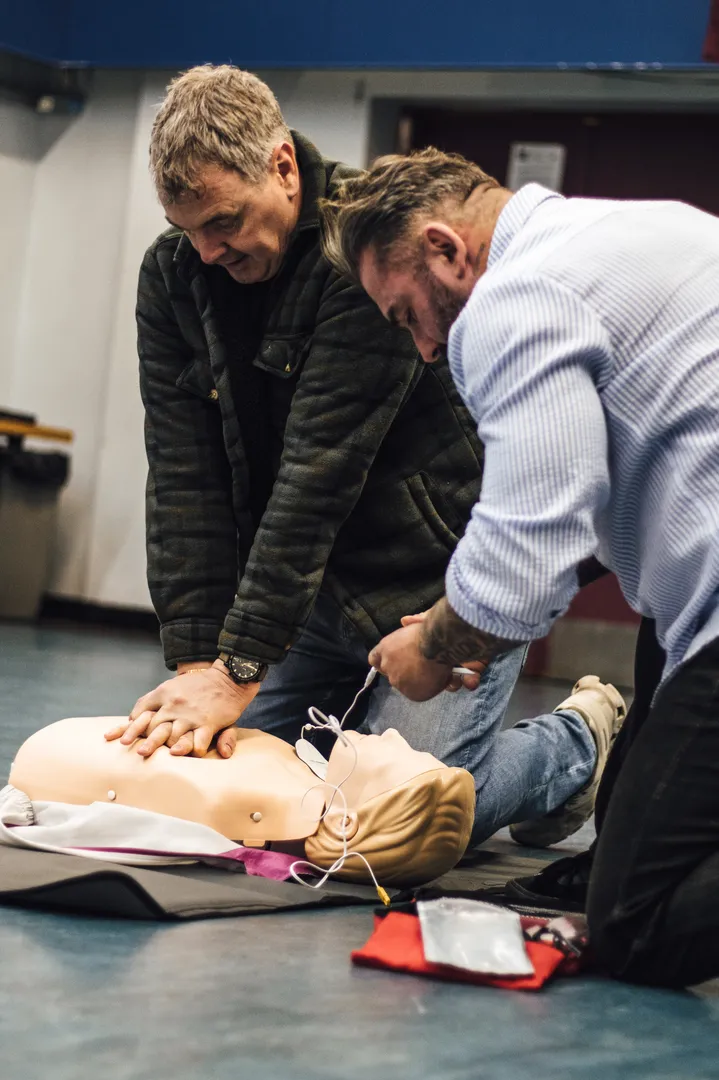
First Aid at Work Training from Lead Element Training Wing LTD is a more comprehensive option for workplaces with higher risk, larger teams, or a need for wider first aid capability.
- Broader scenario coverage: More time to build confidence through repetition and realistic situations.
- Stronger fit for higher-risk sites: Often chosen where hazards, machinery, or higher headcounts increase incident risk.
- Deeper skill development: More guided time for CPR and incident management steps.
- Employer-friendly planning: Helpful when you need reliable coverage across shifts and leave.
Who it’s best for: Employers who need a higher level of first aid provision, or anyone whose role involves increased risk exposure.
To compare dates or see the latest First Aid at Work options, explore First Aid at Work Training here.
Quick Decision Tip: If you are unsure whether EFAW or FAW is right, start with your first aid needs assessment. Then choose the course that matches the risk level and likely incident types.
Do Employers Legally Need First Aid Training? (HSE Guidance)
In Great Britain, employers have legal duties around first aid provision. The legal basis comes from the Health and Safety (First-Aid) Regulations 1981. Most employers follow the practical guidance from the Health and Safety Executive (HSE) first aid at work guidance.
The law does not set one rule such as "every workplace needs X first aiders". Instead, employers must provide adequate and appropriate equipment, facilities, and personnel for their workplace.
How The First Aid Needs Assessment Impacts How Many People You Train
A first aid needs assessment turns good intentions into a workable plan. It typically considers:
- Workplace hazards and risk level: Higher-risk environments usually need more robust first aid cover.
- Workforce size and shift patterns: You need cover for holidays, sickness, and multi-shift operations.
- Layout and travel time: Large sites may need more first aiders to reach incidents quickly.
- Public-facing work: Retail and security roles often deal with customers, conflict risk, slips, and medical emergencies.
- Lone working: Common in security, which can affect response plans and escalation procedures.
For medical best-practice references (not a replacement for training), the NHS first aid guidance is a useful public resource. For CPR and AED standards, many providers align content with the Resuscitation Council UK.
How To Reduce EFAW Training Costs Without Cutting Corners
You can often reduce total training costs without choosing a low-quality course. Focus on improving value per learner while keeping delivery standards high.
Book On-Site For Teams
- Reduce travel and downtime: Staff stay on-site, which can be easier for retail stores and security operations.
- Lower per-person cost: Once you reach a typical group size, the fixed day rate spreads more efficiently.
- Use your own scenarios: Training can reflect your actual risks, layouts, and incident procedures.
If you want pricing for group training, the simplest route is to contact Lead Element Training Wing LTD with your postcode, preferred dates, and number of learners.
Bundle Training For Security/Retail Teams
If you manage security or retail teams, bundling training can make planning easier. It can also help you standardise incident response across sites and shifts.
Two common add-ons for security operations are:
Door Supervisor Training, Best For Front-Line Venue And Retail Security

Door Supervisor Training from Lead Element Training Wing LTD supports security staff in customer-facing environments where conflict, ejections, and late-night incidents can occur. Pairing role training with first aid can strengthen on-site response.
- Role readiness: Helps staff understand expected behaviours, responsibilities, and safer interventions.
- Incident response alignment: Supports clearer escalation, which can reduce time to first aid in real situations.
- Useful for retail and venues: Particularly relevant where footfall and late opening increase incident risk.
Who it’s best for: Learners aiming to work in licensed venues, events, and high-footfall retail security roles.
To plan a pathway alongside first aid, you can explore Door Supervisor Training here.
CCTV Operator Training, Best For Control Room And Incident Escalation

CCTV Operator Training from Lead Element Training Wing LTD suits teams responsible for detection and escalation. Faster detection can mean faster first aid response, especially in large retail sites or multi-floor venues.
- Better incident detection: Helps teams spot issues earlier, before they escalate.
- Stronger reporting workflows: Supports accurate incident logs and handovers.
- Operational co-ordination: Helps align security response, first aiders, and emergency services when needed.
Who it’s best for: Security professionals working in surveillance, monitoring, or control room roles.
If you are building a training programme, you can compare CCTV Operator Training options here.
Plan Training Around Certificate Expiry
Late renewals can limit your options and push costs up. To manage this, you can:
- Track expiry dates: Schedule refresher or requalification early, before peak periods.
- Stagger renewals: Avoid retraining your whole team in the same month.
- Use planned intakes: Add first aid to onboarding cycles for new starters.
FAQs About Emergency First Aid At Work Cost And Certification
How Long Does The Certificate Last?
In many UK workplace first aid routes, the certificate is valid for three years. Employers often schedule refresher training or requalification before expiry so cover does not lapse.
Is EFAW Accepted For SIA/Security Roles?
EFAW is widely valued in security because incidents can happen without warning. However, whether it is enough depends on the employer’s risk assessment and site requirements. For higher-risk environments, the full First Aid at Work option may be more appropriate. If you want help choosing, speak to Lead Element Training Wing LTD via the contact page.
Can I Do EFAW Online?
Be cautious with "online-only" first aid claims. Workplace first aid training normally includes hands-on learning and practical assessment. Some providers offer blended options, but you should expect an in-person practical element.
Is There Funding Or Employer Support Available?
Many learners have their course paid for by an employer as part of compliance and staff development. If you are employed, ask whether your workplace has a training budget or can organise a group booking to reduce per-head costs.
Fun Fact: Why First Aid Costs Vary So Much
UK law does not say every workplace must have a "qualified first aider". It requires employers to provide "adequate and appropriate" first-aid equipment, facilities and personnel based on a needs assessment. That is why the right course, and the cost, can vary widely between workplaces.
Conclusion
The typical EFAW course price UK ranges from £60 to £150 per person for a public 1-day course, or around £350 to £900 for on-site delivery for a group. The biggest price drivers are location, delivery format, group size, and what is included (especially rescheduling and certificate policies).
If you are ready to compare options, you can:
- Check dates and book Emergency First Aid at Work Training: Ideal for fast 1-day cover.
- Review First Aid at Work Training: Better suited when your needs assessment indicates broader cover.
- Enquire about on-site group training with Lead Element Training Wing LTD: Useful for teams and multi-shift operations.
For more guidance on workplace training and compliance topics, you can also browse the Lead Element Training Wing LTD blog.

![Security operators by escalators [city]](https://security-guard-training.co.uk/wp-content/uploads/2024/04/3_2-security-operators-by-escalators-768x512.webp)

![Which sia course offers the best value for money [city]](https://security-guard-training.co.uk/wp-content/uploads/2026/06/Which-SIA-course-offers-the-best-value-for-money-768x512.webp)
![Man in white shirt on a radio [city]](https://security-guard-training.co.uk/wp-content/uploads/2024/04/2_Man-in-white-shirt-on-a-radio-768x512.webp)
