
How Do You Pass the Door Supervisor Course First Time?
To pass the SIA Door Supervisor course first time, choose an SIA-approved provider, attend every session, revise key law and conflict management topics daily, practise mock questions, and take physical intervention seriously. Learn safe techniques and aftercare, arrive with valid ID, focus on scenario-based answers, and ask trainers to clarify anything you are unsure about.
If you are aiming to pass first time, the goal is simple: turn up prepared, learn the assessment style early, and revise like you are training for a job, not just an exam.
This guide covers what you will be assessed on, the topics that most commonly cost marks, a realistic 7-day revision plan, and a practical checklist for the day.
Ready to book? Explore Door Supervisor Training with Lead Element Training Wing LTD if you want structured delivery, clear feedback, and assessment-focused preparation.
What You’ll Need To Pass The Door Supervisor Course (UK)
Eligibility, ID Checks, and What To Bring
Many first-time issues are not knowledge-based. They are admin problems that stop learners being admitted or sitting assessments.
Before you start revising, make sure you can attend training and complete all assessment steps.
- Age: You must be 18 or over to apply for an SIA licence.
- Right to train/work: You must have the appropriate status to work in the UK.
- English level: You must be able to read, write, speak, and understand English for classroom learning and scenario questions.
- Valid ID: Bring the exact ID your provider requests, as identity checks are strict.
What to bring (typical for most centres):
- Photo ID: A current passport or UK driving licence, if required by your provider.
- Proof of address: A recent utility bill or bank statement, if requested.
- Stationery: Pens, a notebook, and any allowed revision aids your trainer advises.
- Food and water: Training days are long, and staying hydrated helps concentration.
- Comfortable clothing: You will practise physical intervention, so wear clothing you can move in.
Rules vary slightly by venue and awarding organisation. If anything is unclear, confirm with your training provider in advance. If you are training with Lead Element Training Wing LTD, you can check details before your start date via our contact page.
First Aid Requirement And Why It Matters
Door supervisors are often first on scene when someone is injured, intoxicated, or vulnerable. Depending on current SIA rules and your circumstances, a recognised Emergency First Aid at Work (EFAW) qualification may be required alongside your Door Supervisor qualification.
- Why it matters for passing: It reduces last-minute delays that can stop you from completing the full route to licensing.
- Why it matters for the job: It supports safer incident response and better outcomes for the public.
For official workplace first aid context, see HSE guidance on first aid at work.
If you need the qualification, Lead Element Training Wing LTD offers Emergency First Aid at Work and First Aid at Work options that you can align with your training plan.
How The SIA Door Supervisor Course Is Structured
Core Modules You’ll Be Assessed On
The Door Supervisor qualification focuses on practical safety, legal knowledge, and professional behaviour. While modules can change over time, most courses cover the areas below.
These skills apply across venues, including bars and nightclubs, events, shopping centres, and retail security roles.
- Working in the private security industry: Roles, responsibilities, professional standards, and the SIA framework.
- Working as a door supervisor: Venue procedures, searching, incident response, and public safety.
- Conflict management: Communication, de-escalation, and managing challenging behaviour.
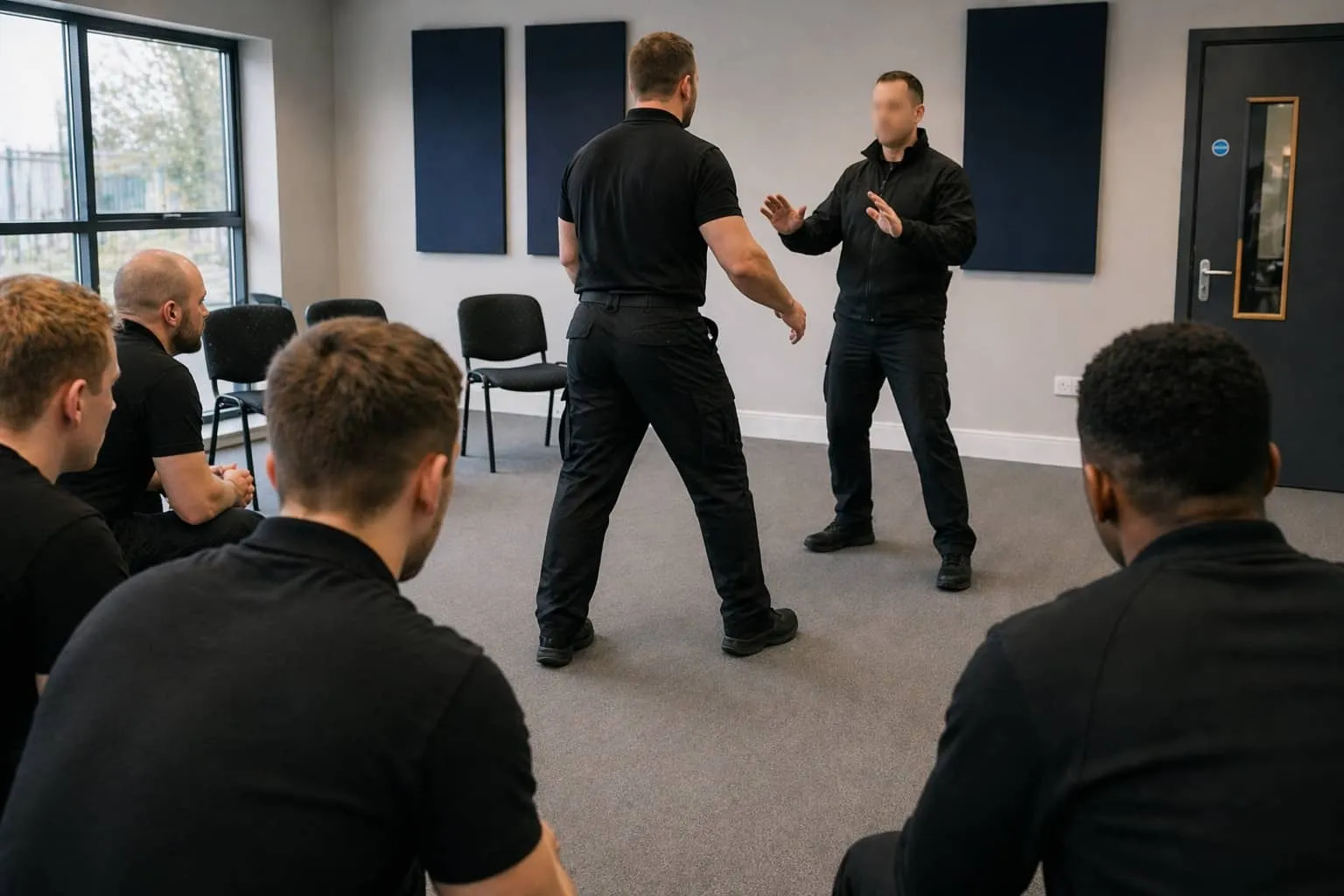
- Physical intervention (PI): Safe, legal, proportionate techniques, teamwork, and aftercare.
Because this is a regulated qualification, assessment standards and awarding bodies operate within UK qualifications rules. For background on regulated qualifications, see Ofqual.
What The Exams And Assessments Feel Like
Expect a mix of knowledge checks and scenario-based questions. Many learners lose marks on scenarios because the reasoning is close, but not correct.
In most cases, it comes down to missing one of these four points.
- Legality: Whether you have the power or consent to act.
- Proportionality: Whether your response matches the risk.
- Justification: Whether you can explain your decision clearly.
- Policy thinking: Whether you follow venue procedures, reporting, and escalation steps.
Simple mindset shift: Answer like you are writing an incident report for your supervisor. Be clear, factual, and explain why your action is the safest lawful option.
Choose an SIA-Approved Course: Once you understand what is assessed, choose a provider that teaches to the full specification and builds in mock practice. Compare options on Lead Element Training Wing LTD training courses or go straight to Door Supervisor Training.
How To Revise To Pass First Time (A Simple Plan)
7-Day Revision Timetable You Can Actually Stick To
This plan assumes you attend training and then revise for 45 to 75 minutes daily. Keep it short, consistent, and active.
Passive reading feels helpful, but it usually does not improve recall under time pressure.
Day 1, Course overview: Write a one-page summary of each module, then list 10 key terms you must be able to define.
Day 2, Law and powers: Practise scenarios on searching, refusal of entry, ejection, and use of force, then check your answers against your course notes.
Day 3, Conflict management: Rehearse de-escalation models out loud, then write short “what I would say” scripts for three common door situations.
Day 4, Vulnerability and safeguarding: Create a checklist for spotting vulnerability, then practise what you would do first, second, and third in each scenario.
Day 5, Physical intervention theory: Learn safety principles, team roles, disengagement, and aftercare, then summarise in bullet points.
Day 6, Mock exam day: Sit a timed mock, review every mistake, then create a “mistakes list” of 10 points to fix.
Day 7, Light review: Re-test your weakest areas, prepare your ID and kit, and get an early night.
If you want extra question practice, use SIA mock test questions and the guide on how to prepare for your SIA training exam.
Active Recall, Mock Tests, and Spaced Repetition (What Works)
Many learners revise the wrong way. Re-reading notes feels productive, but it does not build strong recall.
Instead, use the techniques below.
- Active recall: Close your notes, explain a topic in your own words, then check what you missed.
- Spaced repetition: Revisit the same topic over several days in short bursts.
- Mock questions: Practise “best answer” selection and scenario reasoning under timed conditions.
Practice Support That Actually Helps: If you want structured support with mock practice and trainer feedback, a dedicated programme like Door Supervisor Training can help, especially with scenarios and PI aftercare.
High-Impact Topics Candidates Commonly Fail On
Powers, Arrest, Searching, and Use Of Force (Getting The Wording Right)
This is where wording matters. Many answers fail because learners assume security staff have “police powers”.
As a door supervisor, you must stay within the law and your venue’s policies.
- Searching: You usually need consent and clear conditions of entry, and you must follow professional conduct.
- Use of force: It must be lawful, necessary, and proportionate, and you must be able to justify it.
- Detention and arrest concepts: Know what you can do, what you must record, and when to call the police.
- Evidence and reporting: Accurate notes protect you, the public, and your employer.
Exam technique tip: If you are stuck, choose the answer that reduces risk, uses communication first, escalates appropriately, and records the outcome.
Conflict Management: De-Escalation And Communication Models
Conflict questions are rarely about being “tough”. They are about staying controlled, respectful, and safe.
This matters in every setting, from late-night venues to retail entrances and shopping centres.
- Non-verbal skills: Stance, distance, open hands, and calm tone.
- Verbal de-escalation: Active listening, empathy, clear boundaries, and options.
- Triggers: Recognising when to disengage and call for support.
How marks are lost on scenarios: Learners jump straight to physical solutions, use disrespectful language, fail to offer options, or forget to involve colleagues and follow reporting steps.
Vulnerability, Safeguarding, and Incident Response
Modern door supervision is as much about safeguarding as it is about access control. You can expect questions about recognising vulnerability and taking appropriate action.
That includes public-facing environments such as transport hubs, high streets, and retail sites.
- Vulnerability indicators: Intoxication, injury, fear, confusion, being separated from friends, or risk of exploitation.
- Immediate actions: Move to safety, get medical support if needed, involve a supervisor, and keep clear records.
- Professional boundaries: Maintain respect and privacy, and escalate to emergency services when needed.
Physical Intervention: How To Prepare Without “Overthinking It”
Safety, Positioning, Teamwork, and Disengagement
Physical intervention (PI) is a practical unit. The fastest way to struggle is to treat PI as a set of “moves”, rather than safety principles.
Focus on protecting everyone involved, including colleagues and bystanders.
- Positioning: Use safe distances and angles, and stay aware of exits, obstacles, and bystanders.
- Teamwork: Communicate clearly, assign roles, and avoid everyone grabbing at once.
- Disengagement: Prioritise breaking contact safely and creating space, not “winning”.
- Proportionality: Use the least intrusive option that keeps people safe.
How to prepare: Ask your trainer to check your stance and footwork early. Practise slowly and focus on safety cues, not speed.
Aftercare And Reporting (Often Missed In Revision)
Aftercare is one of the most missed parts of PI assessments and written answers. You should be ready to explain and demonstrate what happens after any intervention.
- Immediate aftercare: Check for injury, breathing, and distress, and get first aid support if needed.
- De-escalation after PI: Use calm communication and clear instructions to reduce further risk.
- Handover: Share factual information with supervisors, medical staff, or police.
- Recording: Write accurate notes about what happened, why you acted, what force was used, and the outcome.
On The Day Checklist To Maximise Your Chances
Sleep, Hydration, Timing, and Exam Technique
Use this as a simple checklist for training and assessment days. It helps you avoid common, preventable mistakes.
- Arrive early: Plan to be 20 to 30 minutes early so ID checks and sign-in are stress-free.
- Bring required ID: Do not assume a photo on your phone will be accepted.
- Hydrate and eat: Bring water and a proper snack or lunch.
- Dress practically: Wear comfortable clothing and suitable footwear for PI sessions.
- Read questions twice: Look for words like “most appropriate”, “first action”, or “best response”.
- Scenario answers: Mention safety, communication, proportionality, policy, and reporting.
If you want a fuller run-through, see Lead Element Training Wing LTD’s SIA exam preparation guide.
Common Mistakes That Cost Marks
- Missing the point of the scenario: Answering what you wish the question asked, not what it actually asks.
- Overstating your powers: Writing answers that imply police-style powers.
- Skipping communication: Not showing de-escalation attempts before escalating.
- Forgetting aftercare: Not mentioning welfare checks, medical support, or post-incident procedures.
- Poor time management: Spending too long on one question and rushing the rest.
If You Fail A Unit: Resits, Timelines And How To Bounce Back
Failing one unit is not the end of the road. Most learners who resit successfully do two things differently: they target what went wrong, and they practise exam-style questions instead of re-reading notes.
Step 1, Identify the weak area: Was it law wording, scenario reasoning, or misreading the question?
Step 2, Get feedback: Ask your trainer what you missed and what a strong answer looks like.
Step 3, Rebuild with mocks: Complete timed mock questions daily for 5 to 7 days on the weak unit.
Step 4, Fix exam technique: Slow down, highlight keywords, and choose the safest lawful option.
Tip: If you are choosing a provider, ask about resit support and how they help learners close gaps. A strong provider will help you prepare properly, not just offer another attempt.
After You Pass: How To Apply For Your SIA Door Supervisor Licence
Passing the course gives you the qualification. To work as a door supervisor, you normally need to apply for your SIA licence through official channels.
- Where to apply: Use the official SIA online services portal.
- Official overview: See GOV.UK SIA licence guidance.
- Regulator context: The SIA is the regulator; learn more via GOV.UK, Security Industry Authority.
To understand typical steps, timelines, and what documents to prepare, read how to get an SIA licence in the UK and SIA licence cost in the UK.
What You Can Do While Your Licence Is Processing
- Update your CV: Add your qualification, first aid, and relevant customer service experience.
- Prepare for work: Practise professional communication, conflict scripts, and incident note-taking.
- Improve employability: Consider a complementary qualification, such as CCTV, if it fits your target roles.
Choosing The Right Course Provider (Quick Checklist)
SIA Approval, Trainer Experience, and Learner Support
If your goal is to pass first time, provider choice matters. Use this checklist to compare training options.
- Approved delivery: Confirm the provider delivers the correct SIA-linked qualification through a recognised awarding route.
- Trainer credibility: Look for trainers with real operational experience who can explain “why”, not just “what”.
- Learning support: Ask how they support learners who struggle with English, exams, or confidence.
- Reasonable adjustments: Ask what evidence is needed and how requests are handled.
Mock Exams, Revision Materials, and Pass Support
- Mock questions: Look for timed, scenario-style practice, not only slides.
- Feedback: Trainers should explain why one answer is better, especially for law and PI scenarios.
- Clear joining instructions: You should receive a simple list of what to bring, what to wear, and key timing rules.
Take the Free SIA Mock Test
Try a short set of mock SIA questions based on the topics above.
Recommended Training Options From Lead Element Training Wing LTD
If you want a clear pathway, these are common options learners choose. The right fit depends on your experience and your next goal.
| Course | Best For | Focus |
|---|---|---|
| Door Supervisor Training | New learners who want to qualify and apply for a Door Supervisor licence | Law, conflict management, and physical intervention with exam preparation |
| Refresher Door Supervisor Security Training (Top-Up) | Existing door supervisors who need to refresh skills and stay current | Updates, confidence building, and reducing knowledge gaps |
| CCTV Training | Learners who want more job options beyond the door | Control room awareness, evidence mindset, and monitoring skills |
Door Supervisor Training, Best For Passing First Time With Structured Support

Door Supervisor Training is a strong choice for new learners who want to understand the scenario style and feel confident with PI and aftercare.
- Assessment-focused teaching: Learn how to answer scenario questions clearly and safely.
- Mock question practice: Build confidence with timed question drills.
- Physical intervention readiness: Focus on safety principles, teamwork, and aftercare.
- Supportive trainer feedback: Fix mistakes early, before they become habits.
Who it’s best for: New learners who want the best chance of passing the first time and being job-ready.
Explore Door Supervisor Training here and compare it with other options on the full course list.
Refresher Door Supervisor Security Training (Top-Up), Best For Staying Current And Confident

Refresher Door Supervisor Security Training (Top-Up) is designed for existing door supervisors who want to stay compliant, refresh key knowledge, and sharpen decision-making.
- Knowledge refresh: Revisit higher-risk topics like use of force, searching, and reporting.
- Confidence rebuild: Reduce hesitation in scenarios by rehearsing best-practice responses.
- Professional standards: Reinforce communication, safeguarding, and customer care.
Who it’s best for: Previously qualified door supervisors who want to update their skills and avoid preventable mistakes.
See dates and details for the Door Supervisor refresher course here.
CCTV Training, Best For Broadening Job Options After You Pass

After you pass, many learners broaden their options with an additional qualification, such as CCTV Training. It is a good fit if you want to move into monitoring, control room, or site-based roles where evidence awareness matters.
- Progression pathway: Add a recognised skill that complements door supervision.
- Incident mindset: Strengthen your approach to logs, timelines, and clear reporting.
- Role flexibility: Support applications for a wider range of security jobs.
Who it’s best for: Learners who want more shifts available and a broader CV after licensing.
Compare options and see the latest availability for CCTV Training here.
Close Protection Training, Best For Ambitious Career Progression

If you enjoy the people, safety, and situational awareness side of door work, Close Protection Training can be a longer-term progression route. It builds on communication, planning, and professional conduct.
- Advanced skill development: Train for higher-responsibility protective roles.
- Professional mindset: Build structured planning and risk awareness.
- Career direction: Create a clear next step beyond venue work.
Who it’s best for: Learners aiming to progress into protective roles after gaining frontline experience.
Learn more about Close Protection Training here.
Free SIA Mock Tests 2026
Try a short set of mock SIA questions based on the topics above.
FAQ: Passing The Door Supervisor Course First Time
Is The Door Supervisor Course Hard To Pass?
It is very passable if you attend every session and revise properly. Most difficulties come from scenario wording, misunderstanding legal limits, and under-preparing for PI aftercare and reporting.
How Long Does The Door Supervisor Course Take?
Course lengths vary by provider and schedule. Check your course listing and plan time for daily revision during the week.
What Should I Revise The Most?
Prioritise lawful powers and limitations, searching and consent, use of force principles, conflict management models, vulnerability and safeguarding, PI safety principles, and aftercare and reporting.
What Happens If I’m Late Or Forget My ID?
Many centres will not allow you to join late or sit assessments without the correct ID. Treat this as non-negotiable and prepare the night before.
How Soon Can I Apply For The SIA Licence After Passing?
You can apply once you have completed the qualification and have the required supporting documents. Apply using official SIA channels and monitor progress via your SIA account.
Fun Fact: Door Supervision Is One Of The UK’s Biggest SIA Sectors
The SIA publishes official statistics on licence holders, and Door Supervision is consistently one of the largest licence sectors in the UK. That means small improvements in first-time pass preparation can have a real impact on employability and venue safety.
Conclusion
To pass the SIA Door Supervisor course the first time, focus on attendance, daily active revision, and scenario thinking. Learn the legal limits, practise conflict communication, and treat physical intervention as safety, teamwork, aftercare, and reporting, not just technique.
If you want structured support from day one, explore Door Supervisor Training with Lead Element Training Wing LTD. If you are already qualified and need to refresh, see Refresher Door Supervisor Security Training (Top-Up). For help choosing the best fit, contact Lead Element Training Wing LTD via this page.

![Security in doorway [city]](https://security-guard-training.co.uk/wp-content/uploads/2024/04/4_Security-in-doorway-768x609.webp)
![What does a concierge security role in London involve and how do you qualify in [city]?](https://security-guard-training.co.uk/wp-content/uploads/2026/08/male-security-guard-doing-his-job-shift-1-768x512.webp)

![What is the difference between sia refresher training and initial training in the uk [city]](https://security-guard-training.co.uk/wp-content/uploads/2026/05/What-is-the-difference-between-SIA-refresher-training-and-initial-training-in-the-UK-768x512.webp)
