
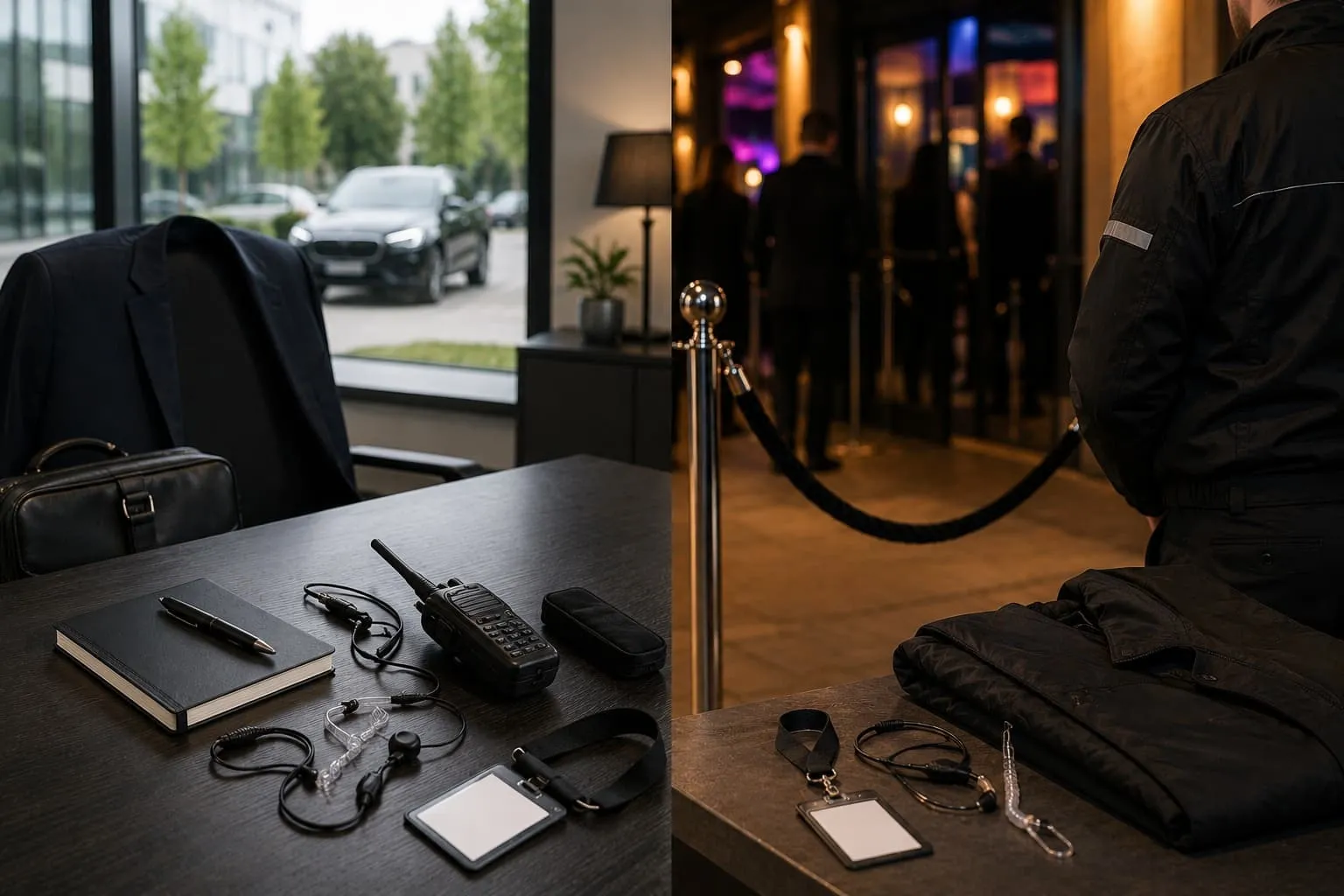
What is the Difference Between Close Protection and Door Supervisor Training?
Door Supervisor training is an SIA licence-linked course for guarding licensed premises, such as pubs, clubs, events, and some retail settings. It focuses on conflict management, physical intervention, and public safety.
Close Protection training prepares you for bodyguard-style work. It covers threat and risk management, route planning, surveillance awareness, and team protection. It is usually more intensive and leads to different job outcomes and expectations.
If you are deciding between the two, match the course to the environment you want to work in. Door supervision is public-facing and often fast-paced. Close protection is proactive and plan-led, where success is measured by prevention.
Close Protection Vs Door Supervisor Training: The Key Differences (Quick Comparison)
Both routes sit within the UK’s regulated private security world, but they lead to very different day-to-day work. Door Supervisor training is often the quickest entry point into licensed premises and event work. Close Protection training is geared towards specialist protective operations and typically expects higher operational discipline.
At-A-Glance Comparison Table (Role, Venues, Licence, Training Focus, Typical Shifts)
| Category | Door Supervisor Training | Close Protection Training |
|---|---|---|
| Primary Purpose | Public safety, access control, conflict management | Proactive threat management and protective operations |
| Typical Workplaces | Pubs, clubs, festivals, events, and retail security | Executive travel, residential, corporate, and high-profile clients |
| Typical Skills | De-escalation, incident handling, physical intervention, safety awareness | Threat assessment, advance work, route planning, comms, surveillance awareness |
| Licence Link | SIA Door Supervisor licence for licensed premises work | SIA Close Protection licence for CP operatives |
| Shift Reality | Often nights and weekends, high public interaction | Long days, travel, standby time, more planning and reporting |
If your goal is to start working on licensed premises and events, the most direct route is a recognised Door Supervisor course. If you are aiming for bodyguard-style work, explore Close Protection training and plan for a more specialist entry pathway.
What Does A Door Supervisor Do?
A Door Supervisor works at the front line of public-facing venues and events. Your job is to keep staff and customers safe, enforce venue rules, and stop incidents from escalating.
Typical Workplaces: Pubs, Clubs, Events, Festivals, Retail Security
- Night-time economy venues: Licensed premises where intoxication and refusals are common.
- Events and festivals: Crowd safety, entry checks, and incident response.
- Retail and public spaces: Deterrence, customer safety, and liaising with store management.
Core Responsibilities: Access Control, Searches, Incident Management, Customer Safety
- ID and entry decisions: Checking age, sobriety, and venue capacity rules.
- Searches and prohibited items: Conducting polite, lawful searches where required.
- De-escalation: Using communication to reduce conflict before it becomes physical.
- Physical intervention (When lawful and necessary): Applying taught techniques proportionately and safely.
- Incident reporting: Logging refusals, ejections, injuries, and police involvement.
Practical example: A customer becomes aggressive after being refused entry. A trained Door Supervisor uses a calm stance and clear instructions. They create space, guide the person away safely, then record the incident for the venue.
Door Supervisor Training, Best For Licensed Premises And Event Work

Door Supervisor Training is designed for people who want to work at licensed venues and events. It supports your SIA Door Supervisor licence application.
- Conflict management skills: Handling refusals, complaints, and aggression calmly.
- Physical intervention training: Learning safer, lawful methods for last-resort situations.
- Safety awareness: Understanding crowd risk, emergency procedures, and public protection.
- Incident response: Making sound decisions under pressure and documenting what happened.
Who It’s Best For: New starters who want a direct route into door work, events, and public-facing security.
Explore Door Supervisor Training here to compare dates and get started.
What Does A Close Protection Operative Do?
A Close Protection (CP) operative, often called a bodyguard, protects a specific person (or family/team). They do this through planning, risk management, and controlled movement. A lot of the work happens before the client arrives, using reconnaissance and advance planning.
Typical Workplaces: Executive Travel, High-Net-Worth Protection, Media/TV, Corporate Risk
- Executive travel: Airport runs, hotel transitions, meetings, and route planning.
- Residential protection: Static and mobile protection around a home environment.
- Media and public appearances: Managing crowds, access, and transport for high-profile individuals.
- Corporate and organisational settings: Risk-aware movements for senior personnel.
Core Responsibilities: Threat Assessment, Advance Work, Route Planning, Protective Formations
- Threat and risk assessment: Identifying hazards and likely threat scenarios.
- Advance work: Checking venues, entrances and exits, choke points, and safe areas in advance.
- Route planning: Selecting primary and secondary routes, plus contingencies.
- Team communication: Using clear comms, hand signals, and radio discipline where required.
- Protective formations: Moving a client through spaces with controlled positioning.
Practical example: Before a corporate event, a CP operative checks the car park layout and notes CCTV coverage. They confirm evacuation points and plan a primary route and an alternative exit.
Close Protection Training, Best For Specialist Executive Protection Roles

Close Protection Training is a specialist route focused on protective operations, planning, and the professional conduct expected in executive protection environments.
- Operational planning: Building protective plans, briefs, and contingencies.
- Reconnaissance skills: Spotting risks in venues, routes, and client movements.
- Surveillance awareness: Recognising suspicious behaviour and environmental cues.
- Professional communication: Producing clear reports and supporting team coordination.
Who It’s Best For: People aiming for CP roles who are ready for a more intensive, detail-driven training experience.
See upcoming options and course details, explore Close Protection Training here.
SIA Licensing And Legal Requirements (UK)
In the UK, the Security Industry Authority (SIA) regulates private security licensing. You can confirm the regulator’s role via the official SIA page on GOV.UK.
Which SIA Licence You Need For Each Role
- Door Supervisor work: Typically requires an SIA Door Supervisor licence, especially for licensed premises and events. See GOV.UK guidance on the Door Supervisor licence.
- Close Protection work: Typically requires the SIA Close Protection licence for CP duties.
- Important clarity: Training is not the badge. Training supports your SIA licence application.
If you are new to this, it helps to read the difference between SIA training and the SIA licence. You can then follow how to get an SIA licence in the UK step by step.
Eligibility: Right To Work, Criminality Checks, Identity, Application Basics
- Right to work in the UK: You must be legally allowed to work.
- Identity checks: You will need a valid ID and supporting documents.
- Criminality screening: The SIA assesses relevant convictions and suitability.
- Application process: This usually involves an online application, identity verification, and fee payment.
Plain-English terms that often confuse people:
- Physical intervention: Taught techniques for last-resort restraint and disengagement, focused on safety and legality.
- Advance work: Pre-visit checks of routes and locations to reduce risk before the client arrives.
- CP operative: A Close Protection professional working to a protective plan.
Training Content: What You’ll Learn On Each Course
Course structures vary by provider and qualification, but the themes are consistent. Door Supervisor training focuses on public conflict and safety. Close Protection training focuses on proactive protection, planning, and operational procedures.
Door Supervisor Syllabus Themes (Conflict Management, Physical Intervention, Safety)
- Conflict management: Verbal and non-verbal communication, decision-making, and de-escalation.
- Physical intervention: Safer methods, proportionality, and teamwork considerations.
- Safety awareness: Emergencies, evacuations, incident response, and protecting the public.
- Legal knowledge and reporting: Understanding powers, responsibilities, and documentation.
Close Protection Syllabus Themes (Risk, Reconnaissance, Surveillance, Planning, Comms)
- Threat and risk thinking: Assessing environments, behaviours, and vulnerabilities.
- Reconnaissance: Venue and route checks, identifying pinch points and safe areas.
- Operational procedures: Briefings, drills, and protective movements.
- Communications discipline: Clear, calm information flow within a team.
Entry Requirements And Who Each Course Suits Best
Be honest about your starting point. The best course is the one that matches your experience, the jobs available near you, and the lifestyle you can realistically work.
Best For Starting In Security And Getting Licensed Quickly
- Door Supervisor training is often the fastest route: It can lead to entry-level shifts on doors and events once licensed.
- It suits people skills: If you stay calm, communicate well, and follow procedures, you will do well.
- It builds a work history: Employers value reliability and real incident-handling experience.
If you are comparing similar roles, you may also find security guard vs door supervisor training helpful.
Best For Progressing Into Specialist/High-Risk Protection Work
- Close protection is specialist: It suits disciplined, detail-oriented people who can plan and report well.
- Professional presentation matters: You may work in corporate settings and around high-profile individuals.
- Expect a longer runway: Many people train, then build experience in related security work before landing regular CP shifts.
Duration, Assessment Style, and What ‘Good’ Looks Like
Assessments usually mix knowledge checks with practical scenarios. “Good” means safe decision-making, clear communication, and following taught procedures under pressure.
Classroom Learning Vs Practical Scenarios And Exams
- Door Supervisor assessment style: Conflict scenarios and physical intervention demonstrations, plus written or online exams.
- Close Protection assessment style: Planning exercises, operational scenarios, plus structured briefs and reports.
- What trainers look for: Safety first, proportionate actions, clear documentation, and professional conduct.
Career Outcomes: Jobs You Can Apply For After Each Course
To avoid disappointment, separate what you can do after training from what you can do after your SIA licence is granted. Training is a key step, but you normally need your SIA badge before you can take licensable roles.
Door Supervisor Roles And Progression (CCTV, Retail, Events, Team Leader)
- Entry roles: Door supervision at venues, event security, and venue safety roles.
- Progression: Supervisor or team leader roles, control-room pathways, specialist event work.
- Employability boosters: Adding CCTV and first aid can widen your options.
For a pay and progression overview, read Door Supervisor salary in the UK.
Close Protection Roles And Progression (EP Teams, Residential, Travel, Specialist Details)
- Entry outcomes: Some trainees move into CP support roles, then build towards regular close protection deployments.
- Progression: Residential protection, executive travel details, and specialist team roles depending on experience.
- Professional development: Strong reporting, discretion, and operational competence drive repeat work.
Pay, Hours, and Lifestyle Differences
Lifestyle is often the deciding factor. Door Supervisors commonly work nights and weekends in busy public settings. Close protection can involve long days, early starts, travel, and standby periods where you must remain ready.
Shift Patterns: Nights/Weekends Vs Travel/Standby
- Door Supervisor lifestyle: Night shifts, late finishes, and peak demand on weekends and holidays.
- Close Protection lifestyle: Early mornings, long movements, time away from home, and quieter hours spent planning and waiting.
Common Mistakes When Choosing Between The Two
Picking Based On ‘Status’ Vs Employability And Entry Pathway
- Chasing the title “bodyguard” too early: Many people benefit from building frontline experience first.
- Ignoring local job demand: Door supervision and events may offer more immediate shifts in many areas.
- Forgetting add-ons: First aid and CCTV can improve your profile and open different role types.
- Not planning for licence renewal: You may need refresher training. Check SIA guidance well before your badge expires.
Which Should You Do First?
There is no universal answer, but two common pathways work well for most people.
Recommended Pathways (Door Supervisor First Vs CP First)
- Pathway 1, Door Supervisor first: Build security experience, earn consistently, then specialise into CP when you are ready.
- Pathway 2, CP first: Train with a clear goal, then take suitable roles while you build your network and operational experience.
Once you know which route fits, browse the full range of options on Lead Element Training Wing LTD training courses.
Refresher Door Supervisor Security Training, Stay Current For Renewal

If you already hold a Door Supervisor badge, you may need refresher training to stay aligned with SIA-linked renewal requirements and employer expectations.
- Renewal readiness: Keeping knowledge and practical skills current.
- Confidence on shift: Revisiting safety, incident handling, and conflict scenarios.
- Employability support: Helping you remain site-ready for door and event work.
Who It’s Best For: Existing Door Supervisors approaching renewal, or returning after time away.
Check availability and details, see Refresher Door Supervisor Security Training here.
Refresher Close Protection Training, Keep Skills Sharp For CP Work

Close protection relies on discipline, planning, and professional standards. A refresher can reinforce core skills and help you stay operationally confident.
- Operational refresh: Revisiting planning, comms, and protective procedures.
- Professional standards: Supporting consistent conduct and reporting.
- Career continuity: Helping CP operatives stay current and employable.
Who It’s Best For: Licensed CP operatives who want to maintain competence and stay aligned with changing expectations.
Compare dates and course information, explore Refresher Close Protection Training here.
FAQs
Can A Door Supervisor Work As Close Protection?
Not automatically. Door Supervisor training prepares you for licensed premises and event work. Close Protection work typically requires CP-specific training and the relevant SIA Close Protection licence. Door supervision experience can help, but you still need the correct licence for CP duties.
Do You Need First Aid For SIA Work?
First aid is not always legally required for every role, but employers value it, and it supports safer practice. The HSE first aid at work guidance explains how employers should provide appropriate first-aid arrangements, and security staff are often part of that real-world response.
What’s The Difference Between SIA Training And The SIA Licence?
SIA training is the qualification course you take with a provider. The SIA licence is the badge granted by the regulator after you apply, meet eligibility checks, and pay the licence fee. This is explained in more detail in Lead Element Training Wing LTD’s guide to SIA training vs SIA licence.
Improve Employability With Add-On Training (First Aid And CCTV)
To strengthen your employability after you qualify, consider adding first aid or CCTV training. These extras can help you stand out when employers compare candidates with similar frontline experience.
Emergency First Aid At Work Training, Quick Boost For Frontline Confidence

Emergency First Aid at Work Training is a short, practical course that can make a real difference in public-facing security environments.
- Faster incident response: Helping you act decisively until emergency services arrive.
- Employer appeal: Many employers prefer candidates with current first aid training.
- Better public safety: Supporting safer outcomes in busy venues and events.
Who It’s Best For: Door Supervisors, event staff, and CP trainees who want an employability edge.
If you want a fast add-on, see Emergency First Aid at Work Training here.
First Aid At Work Training, More Comprehensive Workplace Cover

First Aid at Work Training goes beyond the basics and suits people working longer shifts or in higher-responsibility roles.
- Broader first aid competence: Supporting a wider range of workplace incidents.
- Stronger risk management: Useful for team leaders and higher-responsibility posts.
- Professional development: A respected add-on alongside SIA routes.
Who It’s Best For: Security professionals who want deeper capability and broader job options.
Compare course details, explore First Aid at Work Training here.
CCTV Operator Training, Great For Control Rooms And Evidence Handling

CCTV Operator Training is a smart progression step if you want to widen your options beyond the door line. It also helps you build monitoring and incident documentation skills.
- More job types: Opening doors to control room and monitoring roles.
- Stronger reporting: Improving evidence handling and incident logs.
- Useful crossover skills: Supporting surveillance awareness and situational judgement.
Who It’s Best For: Door Supervisors looking to progress, and security staff aiming for steadier indoor roles.
To broaden your options, compare CCTV Operator Training here.
Recommended Courses By Goal (Quick Picks)
- I want to start working on doors and events: Door Supervisor Training
- I want executive protection/bodyguard-style work: Close Protection Training
- I need to renew or stay current: Door Supervisor Refresher or Close Protection Refresher
- I want an employability boost: Emergency First Aid at Work and CCTV Operator Training
Fun Fact: Prevention Looks Different In Each Role
A door supervisor might handle dozens of micro-incidents in one night, including ID checks, refusals, and de-escalations. Close protection can involve hours of quiet planning, where success is measured by nothing happening at all.
Next Steps: Book The Right Course And Prepare
Start by choosing the role you actually want to do day-to-day. Then match your training to the correct SIA licence route. If you want help deciding, Lead Element Training Wing LTD can point you towards the most suitable option based on your goals and timeline.
- Pick your pathway: Door Supervisor for licensed premises and events, or Close Protection for specialist protection work.
- Plan for licensing: Use this SIA licence guide and verify current rules with the SIA before you apply.
- Build employability: Add first aid or CCTV if it fits your target jobs.
If you have questions about eligibility, course dates, or the best order to take training, speak to the team via Lead Element Training Wing LTD’s contact page.

![How quickly can you earn back the cost of an sia course [city]](https://security-guard-training.co.uk/wp-content/uploads/2026/06/How-quickly-can-you-earn-back-the-cost-of-an-SIA-course-768x512.webp)
![Which sia course offers the best value for money [city]](https://security-guard-training.co.uk/wp-content/uploads/2026/06/Which-SIA-course-offers-the-best-value-for-money-768x512.webp)
![Man in white shirt on a radio [city]](https://security-guard-training.co.uk/wp-content/uploads/2024/04/2_Man-in-white-shirt-on-a-radio-768x512.webp)
